 1 hour ago
Min Aung Hlaing defended his government's first 100 days and outlined a five-year plan in Parliament. The speech underscored the military's bid to tighten control despite conflict, criticism and public anger.

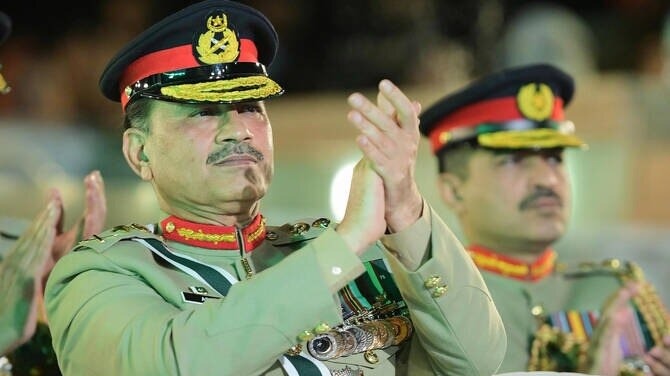
Stock photo used for illustration

Bangkok,UPDATED: Jul 31, 2026 16:52 IST
Myanmar President Min Aung Hlaing on Friday defended his government’s first 100 days in office and set out a five-year roadmap for his administration, as the country continues to face armed conflict and international criticism.
Min Aung Hlaing, the former army chief who seized power from a civilian government in 2021, was sworn in as president in April after an election that critics said was designed to entrench the military’s grip on power.
Addressing more than 900 lawmakers, officials and military representatives at Parliament in Naypyitaw, he said his government had laid “important foundations” since taking office by pursuing two priorities — restoring peace and stability, and promoting national development.
He said his administration would spend two years accelerating efforts to build a modern and developed nation based on democracy and a federal system, followed by another three years carrying out the build-up at full speed. He also said special elections would be held in 2027 in constituencies across 102 townships that were unable to vote during the three-phase election held late last year because of armed conflict.
Min Aung Hlaing said the government would continue implementing the military’s conscription law while strengthening the armed forces and police as they fight pro-democracy activists and ethnic minority rebels across much of the country. He said his administration had invited armed groups fighting the military to lay down their weapons and had held talks with 13 ethnic armed groups.
He also criticised a five-point consensus reached by Southeast Asian leaders in 2021 to end Myanmar’s civil strife, saying it had been issued without the agreement of all member states and that the regional bloc had discriminated against Myanmar. ASEAN had asked Myanmar to immediately end the violence and begin dialogue among contending parties through an ASEAN special envoy.
On development, he said the government would go ahead with 10 power generation projects, including the controversial Myitsone hydropower project, while continuing efforts to build a nuclear power plant. The hydropower project was suspended more than a decade ago after protests over its possible impact on the environment.
Min Aung Hlaing said the authorities were also working to combat money laundering, drug trafficking and online scam centres, adding that more than 72,000 foreigners linked to scam operations had been repatriated to 58 countries. He acknowledged that the departure of large numbers of young people from Myanmar was hurting economic development, but did not refer to the role of the military’s conscription law, which has been widely cited as a key factor behind the outflow.
Nan Lin, a spokesperson for the General Strike Coordination Body, a leading non-violent activist group, said the speech showed the military’s intention to maintain its grip on power and that the country would face worsening hardship under what he described as the junta’s failed policies. “No meaningful change can be expected from the junta,” Nan Lin said. “They will use the conscription law to control young people through fear, and the situation could worsen as they continue to sacrifice young people in order to hold on to power.”
The speech marked 100 days of Min Aung Hlaing’s presidency, with his government outlining plans on security, elections, diplomacy, energy and law enforcement, while critics continued to question the military’s hold on power and its policies.
With PTI Inputs
- Ends
Published By:
India Today Web Desk
Published On:
Jul 31, 2026 16:52 IST