 1 hour ago
The Securities and Exchange Board of India's (SEBI) revised framework for F&O expiry settlement is expected to improve price discovery for derivative traders while giving the regulator time to strengthen the Closing Auction Session (CAS) before considering further changes, according to Venkatachalam Shunmugam, Partner at MCQube.
The new framework, effective December 7, removes the one-year transition period that was part of the consultation paper and restores settlement based on the 30-minute volume-weighted average price (VWAP) window.
Shunmugam said the notification signals confidence in the revised mechanism, although SEBI retains the flexibility to modify the framework later as market infrastructure evolves.
"The consultation paper had said that for a one-year period we will have this... This notification did not clearly indicate that. That's a thing to note."
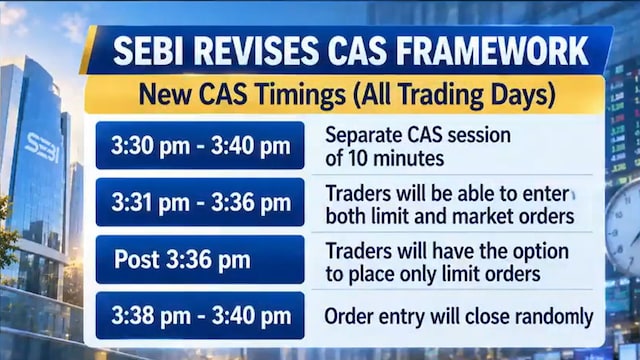
Shunmugam said SEBI's immediate focus should be on improving liquidity in the CAS by strengthening the securities lending and borrowing mechanism (SLBM) and introducing order types that encourage institutional participation.
He said reforms such as imbalance-only orders could increase trading activity during the auction window and help build a stronger cash market over time.
"SEBI has the power to change at any point in time... I believe SEBI should be working on how to strengthen the CAS."
Explaining why the new rules will come into effect only from December 7, Shunmugam said stock exchanges need time to amend their bylaws and operational rules before implementing the changes.
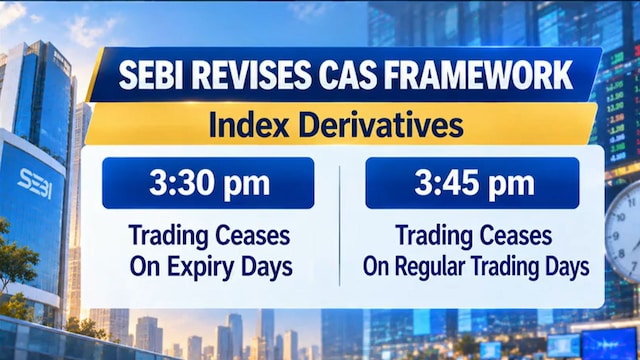
The revised framework will also see expiring index derivative contracts stop trading at 3:30 pm, aligning trading hours with the VWAP settlement window.
According to Shunmugam, the change also resolves a key issue faced by derivatives traders. Earlier, the gap between the reference price and the settlement price affected option premium decay on expiry days.
"It's a positive thing as far as derivative traders are concerned."
On the impact across exchanges, Shunmugam said BSE, which has relatively thinner liquidity on expiry days, is likely to benefit more from the revised settlement process. NSE, with deeper order books, is unlikely to see a material change.
However, he cautioned that arbitrage activity ending at 3:30 pm could reduce liquidity in the Closing Auction Session on expiry days. As a result, cash market volumes during CAS may decline on expiry sessions, while non-expiry days could see relatively higher participation.
For the full interview, watch the accompanying video

SEBI's F&O expiry changes improve price discovery, but CAS needs more liquidity: MCQube Partner
Catch all the latest updates from the stock market here