1 hour ago
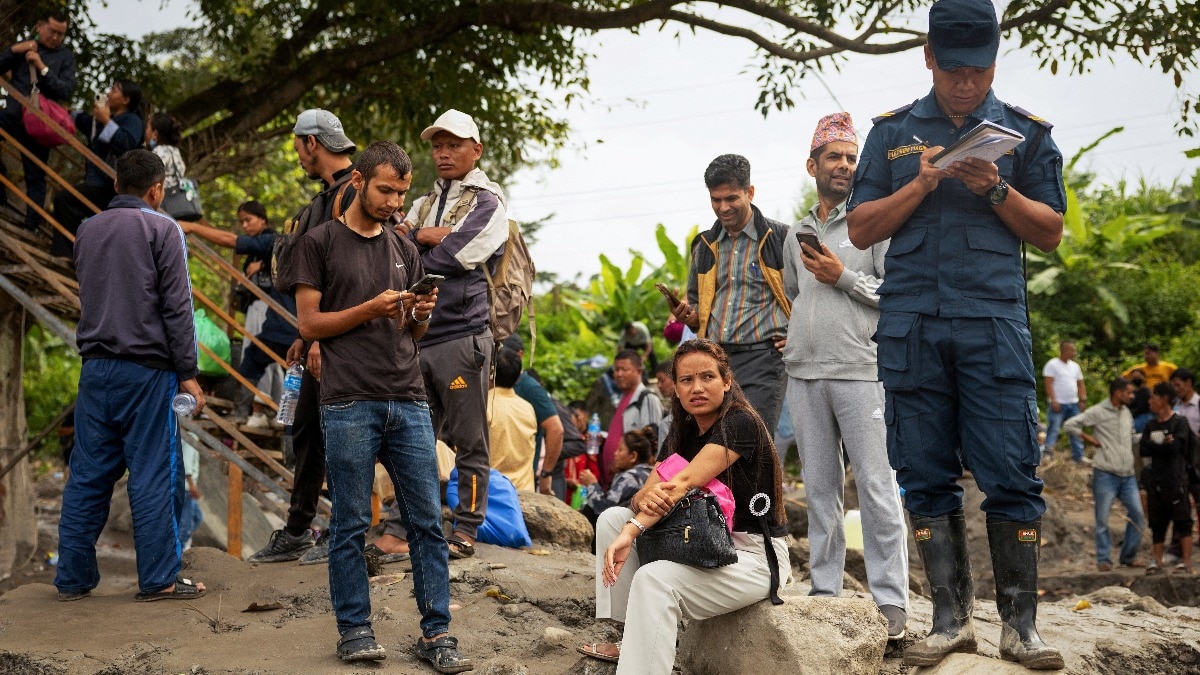
The death toll from the devastating flash floods in Nepal has risen to 1,344, while nearly 5,000 people remain missing as rescue teams continue searching through debris and flooded hydropower tunnels 11 days after the disaster.
The missing include 589 foreign nationals, according to Nepal Police. Around 13,400 people have been rescued so far.
The floods were triggered by an ice-and-rock avalanche near the Nepal-Tibet border on August 26. The collapse sent a massive surge of water, mud and debris through the Bhotekoshi River, sweeping away homes, vehicles, roads and bridges and damaging several hydropower projects.
The disaster also caused extensive destruction across the border in Tibet, where Chinese officials have confirmed 43 deaths and said 519 people remain missing. This takes the combined confirmed toll in Nepal and Tibet to 1,387.
Reuters reported that those missing in Tibet include 261 foreign nationals from 23 countries.
RESCUE OPERATIONS CONTINUE
Search operations remain focused on flood-hit settlements and hydropower tunnels, where hundreds of workers are believed to be trapped.
Three people have been rescued from tunnels since Friday. Two Nepalese workers were pulled out of the Trishuli 3A hydropower project, while a Chinese national was rescued from a tunnel linked to the Upper Trishuli I project after being trapped for 10 days.
An Indian tunnel-rescue team, working with the Nepalese Army, has constructed a temporary track inside the Chilime tunnel in Rasuwa district to allow heavy machinery to reach areas buried under debris.
In another dramatic rescue, 60-year-old Chandika Shrestha was pulled alive from a four-storey house in Nuwakot after being trapped under mud and rubble for 10 days.
Her family had begun symbolic last rites after failing to locate her. Shrestha was found unconscious inside an air pocket and taken to an army hospital for treatment, Reuters reported.
Meanwhile, a fresh flood in Gorkha district swept away four houses and a suspension bridge early on Sunday. Residents escaped after being alerted to the approaching floodwaters, and no casualties were reported. The flood also damaged two small hydropower projects, prompting authorities to warn communities along the Budhigandaki River to remain alert.
IDENTIFYING THE DEAD A MAJOR CHALLENGE
At least 85 children were among those killed in Nepal. Around 500 bodies were recovered with parts missing, making identification particularly difficult.
Chitwan reported the highest toll, with 362 bodies recovered. Other severely affected districts included Nawalparasi East, Nawalparasi West, Nuwakot, Rasuwa, Gorkha, Dhading and Tanahun.
Only 98 bodies had been identified and handed over to their families, according to the Disaster Risk Reduction and Management Authority.
Many victims were swept far downstream, with their bodies remaining submerged in water and mud for days. Others were decomposed, severely damaged or recovered only in parts.
Nepal Police has begun collecting DNA samples from relatives of missing people to identify unclaimed bodies and human remains. Families can provide samples at the Nepal Police Hospital in Kathmandu or their nearest district police office.
More than 1,000 unidentified bodies have been temporarily buried after DNA samples were collected. Hospitals remain crowded with people carrying photographs of missing relatives and examining images of recovered bodies.
SCALE OF DESTRUCTION EMERGES IN TIBET
China opened the devastated Gyirong County in Tibet to select foreign media for the first time on Sunday, revealing the scale of destruction at the China-Nepal border crossing.
The Gyirong immigration post was swept away without a trace. Rescue officials struggled to identify where the building had stood, with only iron rods protruding from the ground offering clues.
A makeshift memorial with yellow flowers was erected near what was believed to be the former entrance to the immigration building. The surrounding area was covered in mud and debris, while roads leading to the border remained severely damaged.
Chinese authorities are using heavy machinery and radar equipment to search the area. Fingerprints, tattoos and personal belongings are also being used to identify victims.
Many of the foreigners killed or missing were believed to have been inside or near the immigration building when the flood struck.
Chinese officials said the mudslide travelled about 22 kilometres down the valley and reached Gyirong Port in just seven minutes. As it moved downhill, it gathered rocks, water and debris from the riverbed and banks, greatly increasing its destructive force.
WARNING OVER UNSTABLE HIMALAYAN GLACIERS
Officials from Nepal and China concluded that the disaster was caused by the collapse of a high-altitude glacier in Nepal.
Gao Rong, deputy director of China’s Climate Centre, warned that glaciers across the Tibetan Plateau were likely to become increasingly unstable, raising the risk of similar cascading disasters.
The glacier-covered area of the Tibetan Plateau has shrunk by around 24 per cent over the past six decades, while nearly 7,000 small glaciers have disappeared, Gao said.
Researchers said future risk assessments must consider not only the initial ice-and-rock collapse but also how the mass gathers water, rocks and other debris as it moves downstream.
- Ends
Published By:
Aprameya Rao
Published On:
Sep 6, 2026 21:35 IST