1 hour ago
North Korea used its UN address to defend its nuclear posture and attack regional rivals. The measured tone signalled resolve without an immediate threat of escalation.

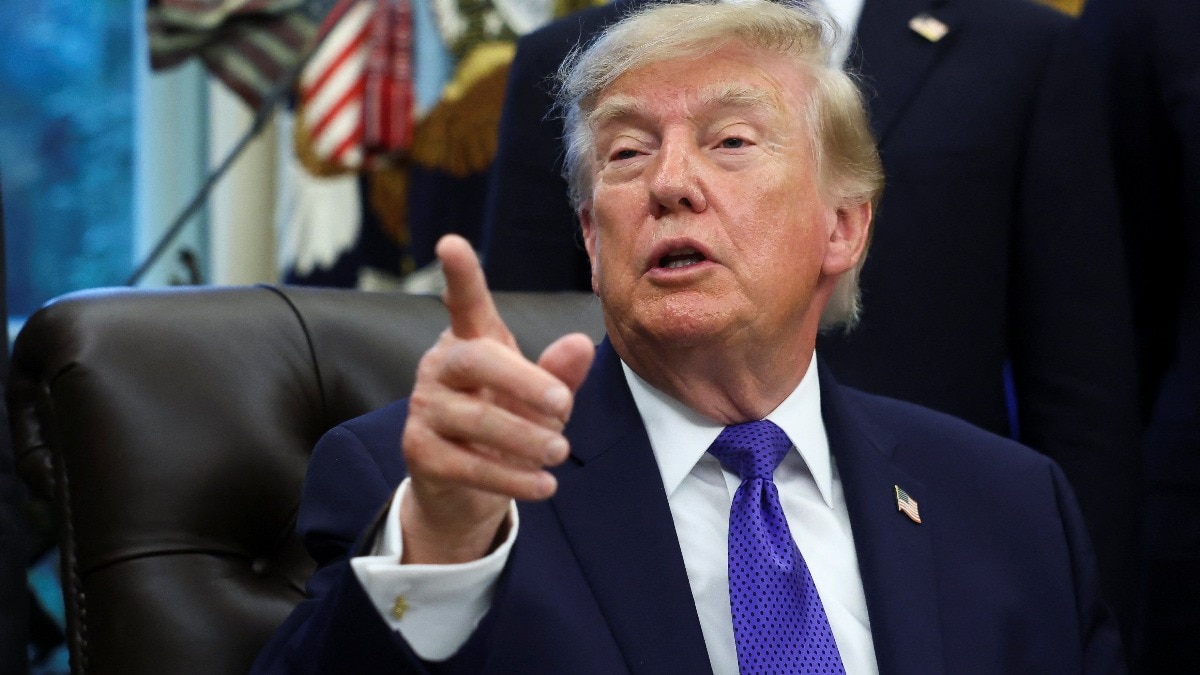
Stock photo used for illustration
Unitednations,Sep 29, 2026 01:08 IST

North Korea used its annual address at the United Nations on Monday to warn world leaders of what it called “a harsh reality rampant with unprecedented mutual distrust and confrontation”, while also saying it would endure and, in a multilateral world, “surely attain all that we plan to, relying entirely on our own efforts”. By Pyongyang’s standards, the speech was relatively mild and did not contain any direct threats.
Speaking at the General Debate, Vice Foreign Minister Kim Son Gyong backed the idea of UN-focused multilateralism but repeatedly stressed that North Korea could, and would if necessary, act on its own. Much of his speech centred on the country’s self-defence, its nuclear deterrent and its criticism of the United States, South Korea and Japan.
Kim said, “Gone are the days when an individual member state unilaterally imposed its will on the rest of the world and dominated the international political arena. Instead, multilateralism and multipolarization have emerged as an irresistible aspiration and trend of the times based on justice and equity.”
North Korea is often at odds with South Korea, Japan and the United States, which are closely aligned on security matters in East Asia. Kim said his country was prepared to defend itself regardless of external threats.
“No physical conflict has occurred on and around the Korean Peninsula, a hot spot of the world, and the security index is being maintained at a higher level than any other part of the globe,” he said. “We owe it to the fact that the DPRK has a war deterrent in place powerful enough to break anyone’s will to start a war of aggression against the DPRK and that we are thoroughly containing and managing the hostile forces’ intention to use force.”
As in many North Korean speeches at the UN, Kim’s remarks ranged across several issues while placing special emphasis on the country’s ability to defend itself in a volatile security environment in East Asia. On Japan, he called it “An A-class war criminal.” On the regional balance of power in East Asia, he said it was “maintained by the DPRK’s self-defensive capabilities.” On the UN, he said, “The organisation still fails to recover from functional paralysis owing to the high-handedness and unilateralism of a handful of countries pursuing only chauvinistic interests.” On nuclear weapons, he said, “The DPRK’s nuclear deterrent is the absolute might and irresistible force designed, from A to Z, to safeguard the sovereignty, security and peace against aggression and threat from outside.”
Kim also said, “The DPRK will continue to strictly control and manage every external threat by dint of her supremacy in overwhelming strength.”
North Korea’s rhetoric at the UN is often sharp, and Monday’s speech was no exception. But this time it appeared more formal in tone, with no threats that suggested any immediate move that could destabilise the region or force countries such as Japan, South Korea or the United States to prepare for a specific action.
Saying that “a more offensive and aggressive military bloc with a nuclear element” and its activities had provoked North Korea and destabilised the Korean Peninsula, Kim criticised what he described as the collusion of Tokyo, Seoul and Washington against Pyongyang. He did not mention North Korea’s own role in tensions on the peninsula, including sporadic missile launches that have caused alarm among its rivals.
Two days before the UN meeting began, North Korea launched two short-range ballistic missiles towards the sea, days after it said it would strengthen its nuclear deterrent capabilities.
Kim is a relatively mid-level official in leader Kim Jong Un’s third-generation government, and he spoke as one of the final speakers on the final day of the General Debate. The Korean Peninsula was divided after the 1950-53 war between North Korea and South Korea, backed by China and the United States respectively. Although an armistice was signed, the two sides technically remain at war, and their border is guarded by a heavily fortified Demilitarised Zone.
In summary, North Korea used its UN platform to push a message of self-reliance, multilateralism and military deterrence, while criticising its regional rivals and the UN system, but without issuing any direct threat.
With PTI Inputs
- Ends