1 month ago
Benjamin Netanyahu said Israel's campaign with the US against Iran had removed a major threat. He also warned that action against Tehran and its regional allies would continue despite the emerging US-Iran agreement.
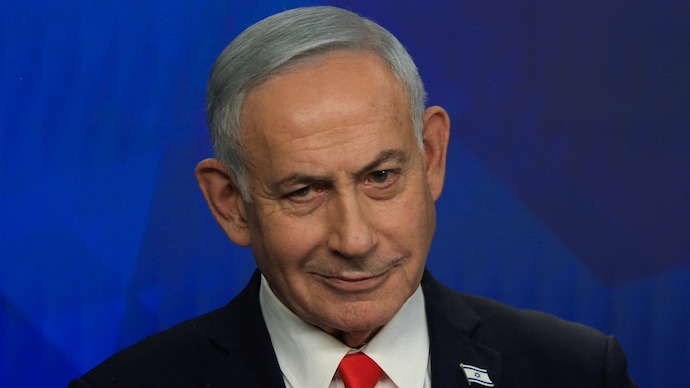
Israeli Prime Minister Benjamin Netanyahu holds a news conference, following a US-Iran deal, in Jerusalem. (Photo: Reuters)
Israeli Prime Minister Benjamin Netanyahu on Monday declared that Israel had been saved from "annihilation" by its joint military campaign with the US against Iran, describing the operation as one of the most significant in the country's history. But even as Washington and Tehran move towards a peace agreement, he warned that Israel's fight against Iran and its regional allies is "not over."
In his first address since US President Donald Trump announced a preliminary agreement with Iran, Netanyahu sought to reassure Israelis concerned that the emerging deal could leave Iran's nuclear ambitions intact. The Israeli leader portrayed the military campaign as a strategic success and pledged that Israel would continue acting against threats across Lebanon and Gaza regardless of developments.
NETANYAHU'S RED LINE ON IRAN
Netanyahu made one point repeatedly throughout his address: Iran will never be permitted to possess a nuclear weapon.
"With an agreement or without an agreement, Iran will not have nuclear weapons -- not today and not tomorrow. As long as I am prime minister of Israel, it will not happen."
According to Netanyahu, Israel and the US succeeded in significantly weakening Iran's military capabilities, targeting nuclear infrastructure and damaging key defence assets. He claimed the campaign had pushed back threats that Israeli leaders believed posed a direct danger to the country's security.
"We removed, for years to come, this danger hanging over us of the elimination of Israel's population. That is what we did. We saved the State of Israel from annihilation."
Despite presenting the campaign as a success, Netanyahu made clear that Israel does not view the conflict as fully resolved.
"We have saved Israel from annihilation but our struggle is not over," he said, as quoted by Time of Israel.
"This is true not only of Iran," he said, adding that Israel's fight would also continue against what he called "Iran's terror arms" across Gaza, Lebanon, Syria, Yemen and the West Bank.
Behind Netanyahu's defiant tone lies a concern in Israel: that the emerging US-Iran agreement could constrain Israeli military action without fully addressing its security demands. He is also facing backlash over it.
Netanyahu sought to counter those concerns by stressing that Israeli forces would remain deployed in areas captured during recent operations.
ISRAEL PLANS LONG-TERM SECURITY BUILDUP
Referring to developments along Israel's borders, he said security arrangements established during the conflict would remain in place.
"We will remain in the security zones for as long as necessary to protect our country."
Beyond the battlefield, Netanyahu outlined a broader vision for Israel's future security strategy. He said the government would continue strengthening regional partnerships while maintaining what he described as Israel's security independence.
He also announced plans for a major increase in defence spending, saying additional resources would be directed towards military capabilities and advanced technologies.
According to Netanyahu, the investment is intended to ensure Israel remains prepared for future threats and retains a military edge in a rapidly changing region.
REGIME CHANGE WAS NEVER THE GOAL, NETANYAHU SAYS
Asked why the campaign was ending without toppling the Iranian government, he rejected the claimed that regime change had been a formal objective.
"It did not go wrong at all. I defined the goals -- and the cabinet defined the goals — differently from what you said."
He argued that the operation had always focused on neutralising Iran's nuclear and ballistic missile capabilities rather than directly removing its leadership.
At the same time, he suggested that Iran's rulers had emerged from the conflict weakened.
"Iran is in a very difficult economic situation. We struck every possible infrastructure there. The damage is enormous. There are cracks within this regime as well."
However, he acknowledged that predicting political change inside Iran would be impossible.
"Can I tell you when this regime will fall? I do not know. Could I have told you when the Soviet regime would fall? No. I cannot tell you."
Netanyahu's defence of the war comes at a delicate moment for his government. While Washington is presenting the agreement as a diplomatic breakthrough, many in Israel remain unconvinced that the deal addresses the security concerns that drove the conflict in the first place.
Against that backdrop, Netanyahu sought to frame the war as a strategic success rather than an unfinished campaign. He argued that Israel has emerged stronger, more secure and better positioned than it was before the conflict.
"Israel on October 7 and Israel today -- how can one compare them?" Netanyahu said.
- Ends
With inputs from agencies
Published By:
Satyam Singh
Published On:
Jun 16, 2026 02:01 IST