1 hour ago
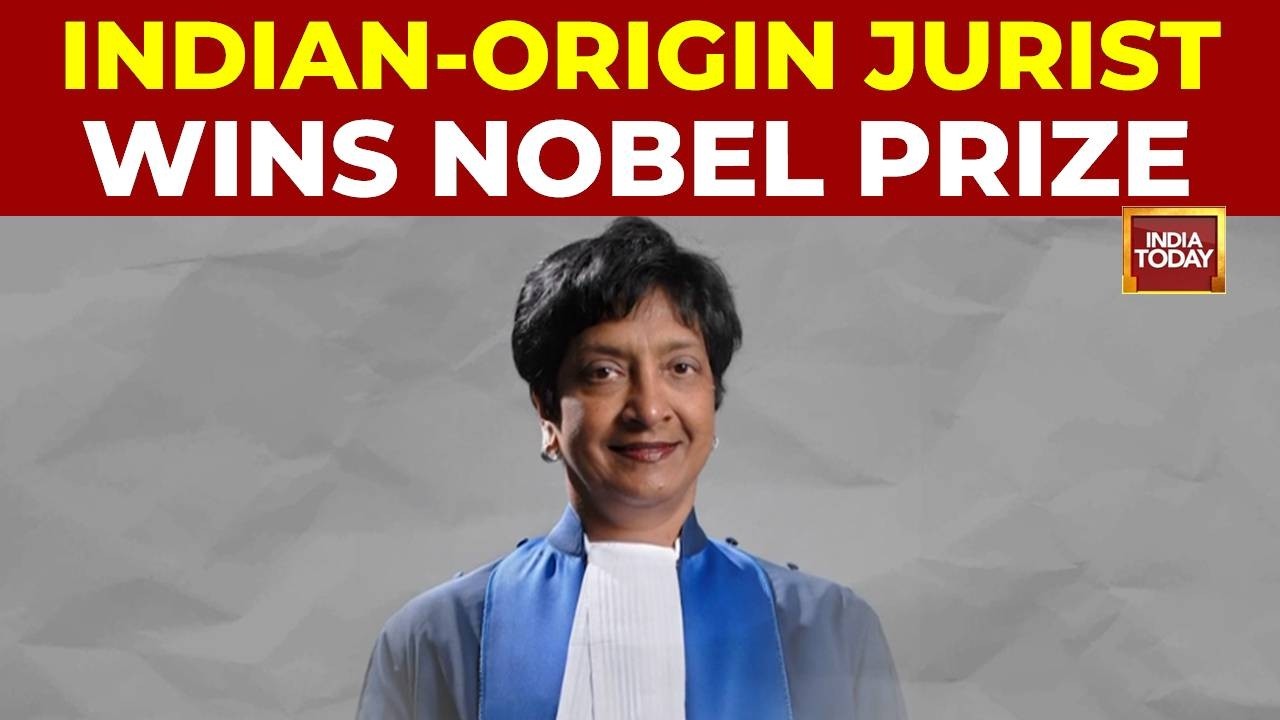
Navi Pillay's Nobel Peace Prize win drew praise from the UN, South Africa and rights groups. The honour reignited debate over international law as Israel condemned the award.

Image used for representational purposes only
Oslo,Oct 9, 2026 19:38 IST

South African jurist and former UN human rights chief Navi Pillay's Nobel Peace Prize win on Friday was welcomed by human rights advocates and supporters of international justice, while Israel and its supporters reacted with disappointment. Pillay, 85, is currently serving as an ad hoc judge at the UN's Court of Justice.
The award also brought renewed attention to her work over several decades, including investigations into crimes in Rwanda, Israel and the occupied Palestinian territories, and her role as a lawyer who helped defend Nelson Mandela. The announcement drew strong reactions from the UN, South African leaders, rights groups, academics and Israeli officials.
UN Secretary-General Antonio Guterres said in a statement that, "In its citation, the Nobel Committee reminded the world that peace must be built on lasting principles, not the will of the powerful. Today's prize is a tribute to all those working to uphold and defend international law, the rule of law and human rights, and secure peace, justice and human dignity."
South African President Cyril Ramaphosa said, "Justice Pillay's crowning as winner of the Nobel Prize allows us to celebrate the progressive contributions she has made to strengthen peace, uphold human dignity and bring hope in South Africa and to peoples globally. She has served humanity with principle and the belief that the world can and should be a better place."
UN High Commissioner for Human Rights Volker Turk, one of Pillay's successors in that post, said, "To say it is well-deserved is an understatement. At a time when human rights are under attack on so many fronts, including from those who wield enormous power, this award is particularly poignant. It is an award to all those who, around the world, dedicate their lives to the defence of human rights - often at great risk to their security."
Philippe Bolopion, executive director of Human Rights Watch, said, "She has had a profound influence in South Africa, Rwanda, the Occupied Palestinian Territory, and as leader of the UN's human rights body. At a time when international justice is under threat from rights-rejecting leaders, she has been a stalwart proponent of the international rule of law and impartial human rights work."
Israel's foreign ministry sharply criticised the award. In a statement, it said, "If there were an award for lies, hatred, and blood libels, Navi Pillay wouldn't just be a contender. She'd be a frontrunner." On X, it added that the prize "isn't a recognition of justice. It's the grotesque weaponisation of an award to legitimise anti-Israel hatred and prejudice".
Announcing the award, Norwegian Nobel Committee chair Jorgen Watne Frydnes said Pillay was "born into family of Indian Tamil origin under apartheid in Durban, South Africa" and became a lawyer and legal pioneer who confronted "deep structural discrimination, segregation and exclusion". He said the prize recognised "a person who with exceptional courage and integrity has led the way toward a more comprehensive global legal order".
Iva Vukusic, an assistant professor in international history at Utrecht University, said the award for Pillay was "a symbolic sign that there are people in the world who care about international law".
Omar Awadallah, a deputy foreign minister in the Palestinian Authority, said, "It's a prize for survivors and victims of genocide and apartheid and shows they can survive and defeat illegality."
South Africa's University of KwaZulu-Natal, Pillay's alma mater, said in a statement, "Her achievements remind us that the pursuit of justice and the protection of human dignity are not merely ideals to be upheld, but responsibilities to be advanced through principled leadership and purposeful action."
Pillay's Nobel Peace Prize win drew sharply different responses, with the UN, South African leaders, rights groups and academics praising her work on human rights and international law, while Israel described the honour as deeply flawed.
With PTI Inputs
- Ends