1 hour ago
Navi Pillay has won the 2026 Nobel Peace Prize for her lifelong work in international justice. The award recognises her role in pressing accountability for genocide, war crimes and sexual violence.

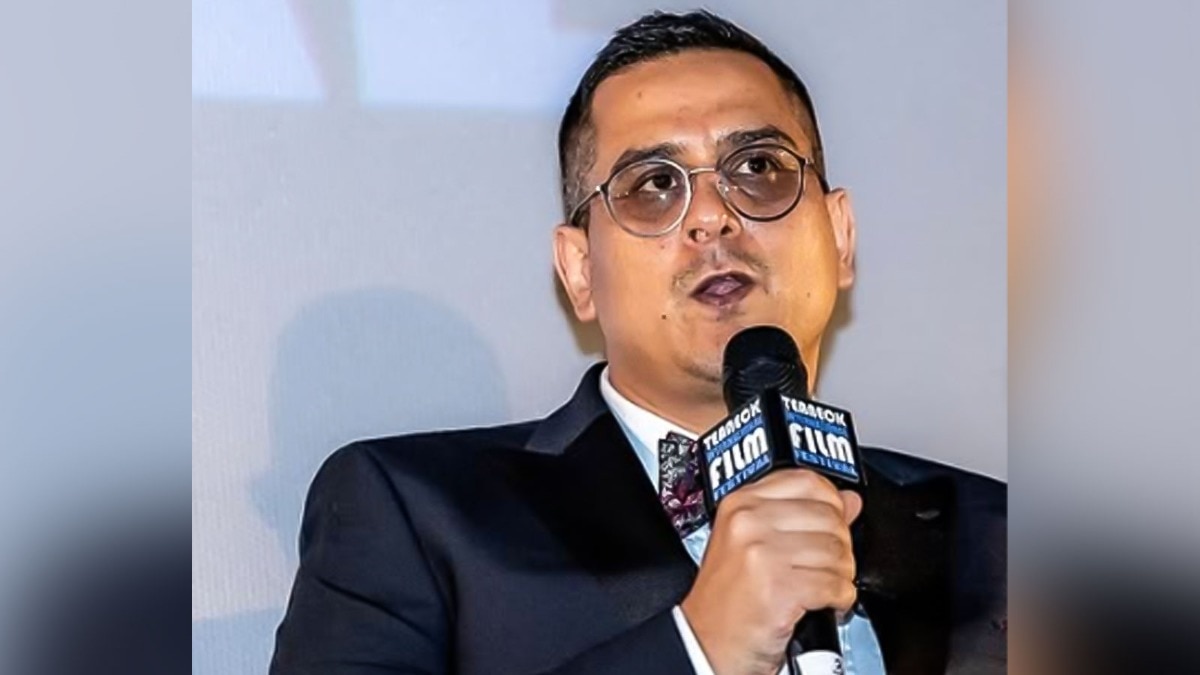
Image used for representational purposes only
Oslo,Oct 9, 2026 17:06 IST

South African jurist of Indian origin Navanethem "Navi" Pillay has won the 2026 Nobel Peace Prize for her work in promoting peace and international law. The Norwegian Nobel Committee said she had helped strengthen the principle that war crimes, crimes against humanity and genocide must be prosecuted, even when those accused hold power.
Pillay, 85, spent her career defending opponents of apartheid, serving as a judge in international criminal tribunals and helping shape international law on genocide and sexual violence. Announcing the award, the committee praised her commitment to universal legal principles and efforts to hold states and national leaders accountable, saying, "Peace requires justice."
As a student at the University of Natal in apartheid-era South Africa, Pillay came across transcripts of the Nuremberg trials, in which Nazi leaders were prosecuted for war crimes. Reading them drew her to the idea of justice through countries coming together to hold individuals accountable for grave crimes. Born in Durban on September 23, 1941, she grew up in a poor family under apartheid, while her father worked as a bus driver and took on other jobs and her mother raised the children. In a UN interview in 2025, she said, "We grew up very poor," and recalled her family's struggles alongside other disadvantaged communities. She has also spoken about how strongly her parents believed in education and insisted that their daughters should have the same opportunities as their sons.
Pillay graduated from the University of Natal with a Bachelor of Arts degree in 1963 and a law degree in 1965. She later earned postgraduate law degrees at Harvard University, including a doctorate in juridical science in 1988. In 1967, she became the first woman to open a law practice in Natal Province, according to the Criminal Court. As a lawyer, she represented opponents of apartheid, highlighted abuses against political detainees, challenged torture and solitary confinement, and helped secure political prisoners' right to legal counsel. Her career developed under a system that sharply limited opportunities for people classified as non-white, and a Harvard Law School profile noted that during her years as a lawyer she had not been allowed to enter a judge's chambers.
After apartheid ended, Pillay became the first coloured woman to serve as an acting judge on South Africa's High Court in 1995. In the same year, the UN General Assembly elected her to the Criminal Tribunal for Rwanda, set up to prosecute those responsible for genocide and other serious crimes committed during the 1994 genocide. She served on the tribunal until 2003 and was its president from 1999 to 2003.
One of the most important cases in which she took part was the trial of Jean-Paul Akayesu, the former mayor of Taba commune in Rwanda. The tribunal convicted him of genocide, crimes against humanity and direct and public incitement to commit genocide. Its 1998 judgment became a landmark in international criminal law by recognising that rape and sexual violence could amount to acts of genocide when committed with the specific intent to destroy a protected group, and could also constitute crimes against humanity. Pillay was one of the three judges who signed the judgment and was credited with helping shape its reasoning. The tribunal also delivered landmark judgments on the responsibility of political and media figures for their roles in inciting genocide.
Pillay became a judge at the Criminal Court in 2003 and served there until 2008. That year, she became the UN High Commissioner for Human Rights, a post she held until 2014. She is also serving as a judge in the Court of Justice case brought by The Gambia against Myanmar, having been selected by The Gambia to sit in proceedings over alleged violations of the Genocide Convention. From reading the Nuremberg trial transcripts as a student to serving on international courts, Pillay's career has centred on the principle that those responsible for grave abuses must answer for their actions, regardless of their position or power.
With PTI Inputs
- Ends