 2 hours ago
The day so far
Iranian foreign minister Abbas Araghchi and Russian Foreign Minister Sergey Lavrov spoke on the phone on Monday to discuss the regional conflict. Lavrov reiterated the need to uphold the ceasefire and stressed the importance of continued diplomatic efforts, while Iran confirmed its readiness to do everything in its power to ensure the uninterrupted passage of Russian ships and cargo through the strait of Hormuz.
Oil prices rose on Monday as tensions rose between the US and Iran, though the market reaction remained more tame than during earlier stages of the war. Brent crude, the global oil benchmark, rose 5.6% to settle at $95.48 per barrel. US stocks edged down, with the S&P 500 closing 0.2% lower on Monday.
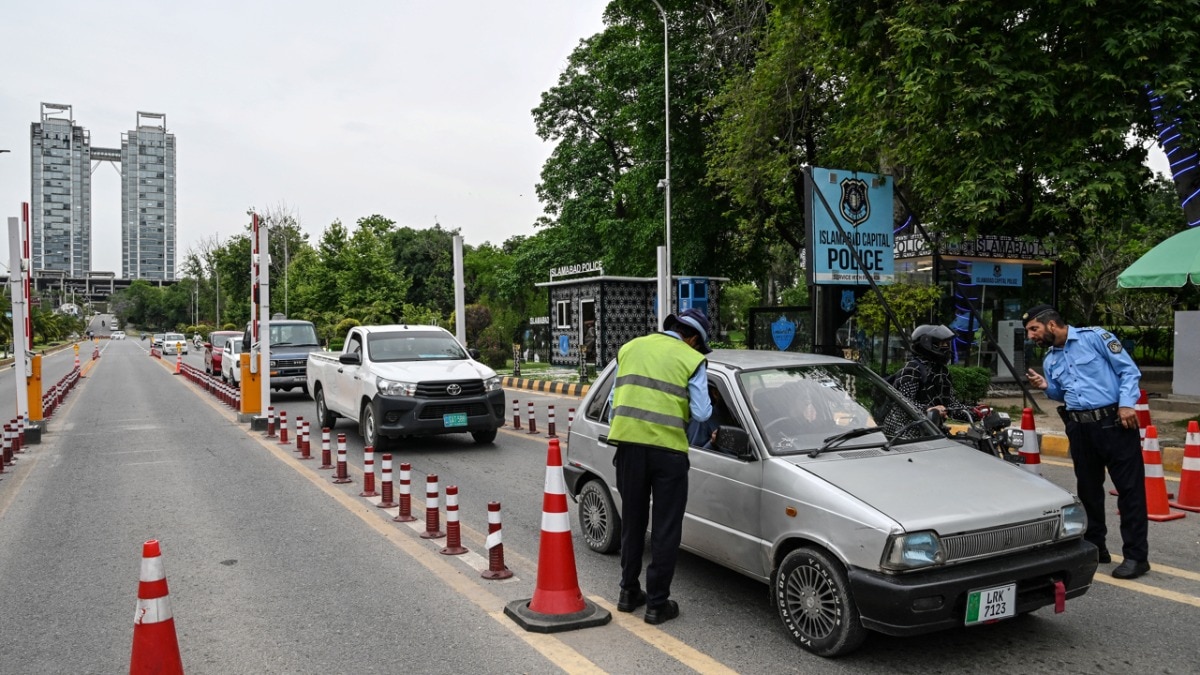
JD Vance is expected to fly to Islamabad at the head of a US diplomatic delegation on Tuesday if Iran agrees to further talks in the Pakistani capital as the deadline for the current ceasefire looms. The US vice-president will travel with Steve Witkoff, Donald Trump’s special envoy, and Jared Kushner, the president’s son-in-law – though Iran’s president warned there remained a “deep historical mistrust” of the US.
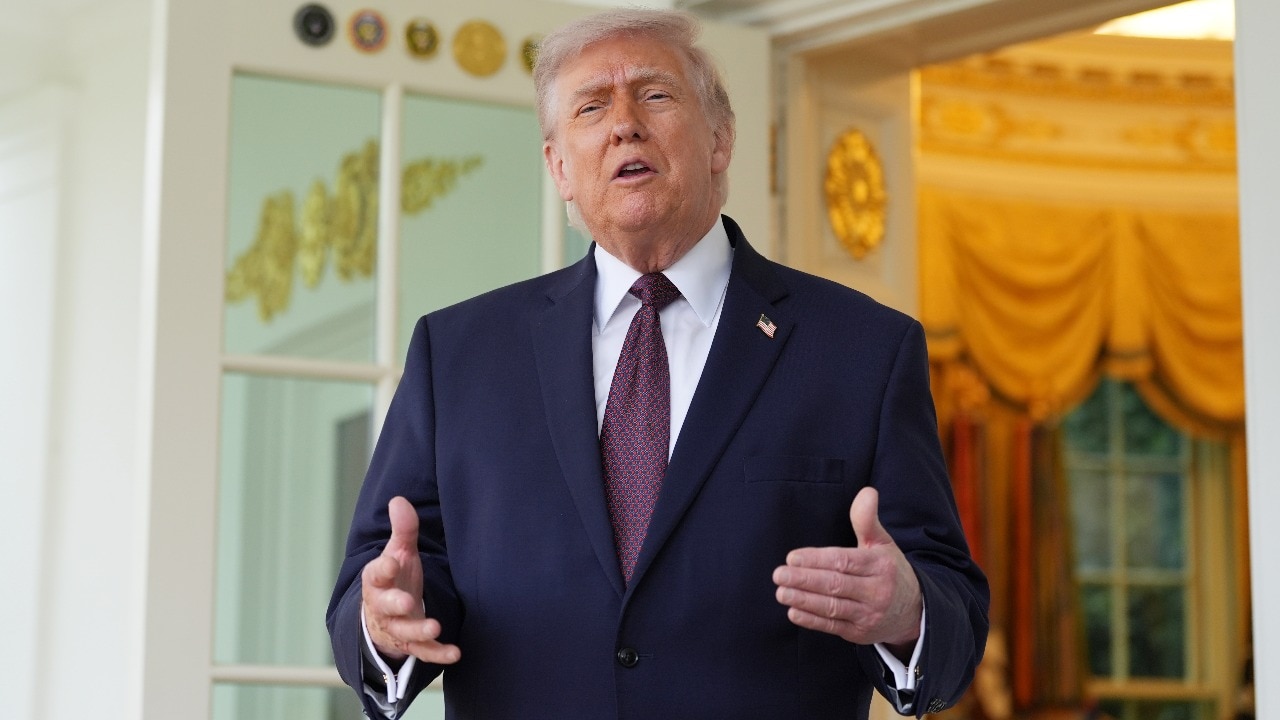
US president Donald Trump has said on a social media post that a deal with Iran will happen “relatively quickly”. He also said on Truth Social that the country would not lift its blockade of Iranian ports until Iran has agreed to a deal and that he believed a nuclear deal the US is currently negotiating with Iran will be better than a 2015 international agreement to curb Tehran’s nuclear program.
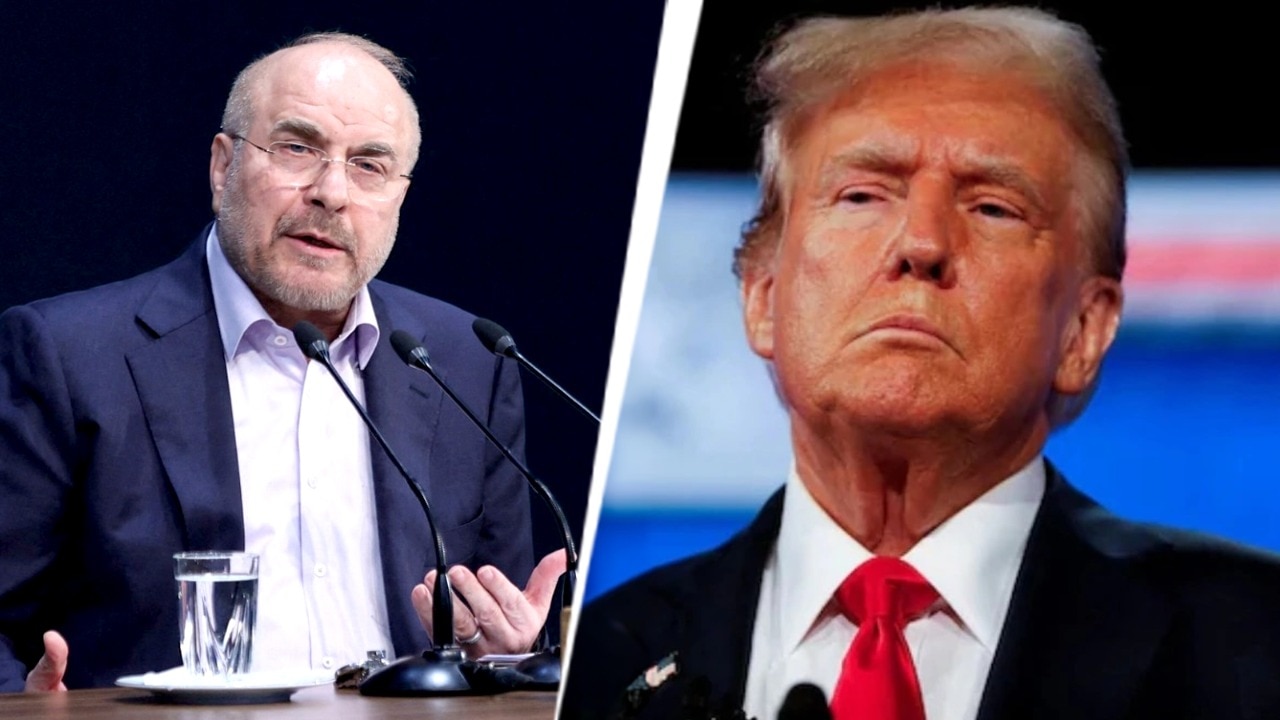
Iranian Parliament speaker Mohammad Bagher Ghalibaf said that Iran will not accept negotiations with the US while under threat. “Trump, by imposing a blockade and violating the ceasefire, seeks, in his view, to turn the negotiating table into a table of surrender or to justify renewed warmongering,” he wrote in a post on X. “We do not accept negotiations under the shadow of threat, and over the past 2 weeks we have prepared to reveal new cards on the battlefield.”
Qatari prime minister, Sheikh Mohammed bin Abdulrahman bin Jassim al-Thani, received a phone call from Oman’s foreign minister, Badr bin Hamad bin Hamood Albusaidi, on Monday, where they discussed cooperation between the two countries and the latest developments in the region. The discussion included talks on “the ceasefire between the US and Iran, and the efforts being exerted to reduce tension and promote regional peace and security,” reads a statement by the Qatari ministry.
Key events Show key events only Please turn on JavaScript to use this feature
UK foreign secretary Yvette Cooper has said “a critical diplomatic moment” is coming as the expiry of the 14-day US-Iran truce looms.
She also reiterated the strait of Hormuz’s closure was “hitting the global economy” amid the international effort to reopen the shipping waterway.
Cooper said in a video message posted on X:
This is a critical diplomatic moment.
As we’re coming to the end of the two week agreed ceasefire on Iran, negotiations are starting, but the Strait of Hormuz is still closed, so international shipping is still restricted. That is hitting the global economy.”
Cooper said that in the past week she had spoken to 12 foreign minters worldwide about the importance of getting the Hormuz strait open again, also talking to France about “the joint work we’re doing on how we would keep shipping safe once the conflict is finished”.
The UK and France chaired a conference of about 40 countries last Friday in Paris on an international plan to secure the strait.
But Trump later said he had rebuffed an offer from Nato to help and told them to stay away unless they wanted to load up ships with oil.
Donald Trump has given mixed messages on the way forward in the war against Iran, saying he’s in no rush to end the conflict while also expressing optimism that fresh talks with Tehran will soon take place in Pakistan.
With the 14-day truce to expire on Wednesday, Trump on Monday flitted in phone interviews and social media posts between measured optimism that a deal could soon be reached and warning that “lots of bombs” will “start going off” if there’s no deal before the ceasefire deadline.
The US president indicated he still expected to dispatch his negotiating team led by JD Vance to Islamabad for a second round of talks, the AP reports, even as Iran insisted it would not take part until Trump dialled back his demands.
Iran’s chief negotiator and parliamentary speaker, Mohammad Bagher Ghalibaf, accused the US of wanting Iran to surrender and added that on the contrary, Iran had “prepared to reveal new cards on the battlefield”.
“We do not accept negotiations under the shadow of threats,” Ghalibaf said in a post on X early on Tuesday.
Trump insisted he felt no pressure to end the war until Iran agreed to his terms, saying on his Truth Social platform:
I am under no pressure whatsoever, although, it will all happen, relatively quickly!”
Trump told Bloomberg News he was “highly unlikely” to renew the ceasefire.
The day so far
Iranian foreign minister Abbas Araghchi and Russian Foreign Minister Sergey Lavrov spoke on the phone on Monday to discuss the regional conflict. Lavrov reiterated the need to uphold the ceasefire and stressed the importance of continued diplomatic efforts, while Iran confirmed its readiness to do everything in its power to ensure the uninterrupted passage of Russian ships and cargo through the strait of Hormuz.
Oil prices rose on Monday as tensions rose between the US and Iran, though the market reaction remained more tame than during earlier stages of the war. Brent crude, the global oil benchmark, rose 5.6% to settle at $95.48 per barrel. US stocks edged down, with the S&P 500 closing 0.2% lower on Monday.
JD Vance is expected to fly to Islamabad at the head of a US diplomatic delegation on Tuesday if Iran agrees to further talks in the Pakistani capital as the deadline for the current ceasefire looms. The US vice-president will travel with Steve Witkoff, Donald Trump’s special envoy, and Jared Kushner, the president’s son-in-law – though Iran’s president warned there remained a “deep historical mistrust” of the US.
US president Donald Trump has said on a social media post that a deal with Iran will happen “relatively quickly”. He also said on Truth Social that the country would not lift its blockade of Iranian ports until Iran has agreed to a deal and that he believed a nuclear deal the US is currently negotiating with Iran will be better than a 2015 international agreement to curb Tehran’s nuclear program.
Iranian Parliament speaker Mohammad Bagher Ghalibaf said that Iran will not accept negotiations with the US while under threat. “Trump, by imposing a blockade and violating the ceasefire, seeks, in his view, to turn the negotiating table into a table of surrender or to justify renewed warmongering,” he wrote in a post on X. “We do not accept negotiations under the shadow of threat, and over the past 2 weeks we have prepared to reveal new cards on the battlefield.”
Qatari prime minister, Sheikh Mohammed bin Abdulrahman bin Jassim al-Thani, received a phone call from Oman’s foreign minister, Badr bin Hamad bin Hamood Albusaidi, on Monday, where they discussed cooperation between the two countries and the latest developments in the region. The discussion included talks on “the ceasefire between the US and Iran, and the efforts being exerted to reduce tension and promote regional peace and security,” reads a statement by the Qatari ministry.
Iranian Parliament speaker Mohammad Bagher Ghalibaf said that Iran will not accept negotiations with the US while “under the shadow of threat.”
“Trump, by imposing a blockade and violating the ceasefire, seeks, in his view, to turn the negotiating table into a table of surrender or to justify renewed warmongering,” he wrote in a post on X. “We do not accept negotiations under the shadow of threat, and over the past 2 weeks we have prepared to reveal new cards on the battlefield.”
Centcom: 27 vessels forced away from US blockade of Hormuz strait
In a post on X earlier today, US Central Command said that 27 vessels have been forced to turn around or return to Iranian ports under the current naval blockade of the strait of Hormuz.
“This blockade of Iranian ports will be enforced and applies to all vessels, regardless of flag,” a voiceover warned in a video posted on Monday, which shows a helicopter patrolling the waterway. “Any vessel with further intent to enter, exit an Iranian port will be subject to the right of visit and search in accordance with international law. If you attempt to run the blockade, we will compel compliance with force, over.”
The US naval blockade of Iranian ports will remain in place until a final deal with Iran is finalized.
Oil prices rise amid tensions between the US and Iran
Oil prices rose on Monday as tensions rose between the US and Iran, though the market reaction remained more tame than during earlier stages of the war.
Brent crude, the global oil benchmark, rose 5.6% to settle at $95.48 per barrel. US stocks edged down, with the S&P 500 closing 0.2% lower on Monday.
The surge comes amid fears that Iran may keep petroleum shipments pent up in the Persian Gulf if it continues to obstruct tankers at the Strait of Hormuz.
The volatility marks a reversal from Friday, when stocks rallied and oil prices dipped after Iran briefly suggested it would reopen the strait to commercial traffic. On Saturday, Iran reversed its decision.

Patrick Wintour
The $2bn (£1.5bn) a week that Donald Trump was spending on his reckless war in Iran could have funded saving more than 87 million lives, the head of the UN’s humanitarian agency, Tom Fletcher, said on Monday.
He also warned the normalisation of violent language, such as threatening to bomb Iran back to the stone ages, was very dangerous since it encourages every “wannabe autocrat” to use similar threats and tactics, including the destruction of civilians and civilian infrastructure.
Speaking at Chatham House in London, Fletcher, a former UK diplomat and adviser on foreign policy to successive prime ministers, also accused British politicians of forming a circular firing squad for more than 10 years which has left the UK in a “defensive crouch”.
The scale of the recent UK aid cuts had been so severe that people giggle at conferences where the UK claims to be thought leaders on the subject, he said, before later adding the judgment might seem harsh.
Fletcher, the undersecretary-general for humanitarian affairs and emergency relief coordinator and head of the Office for the Coordination of Humanitarian Affairs, is wrestling with a humanitarian aid funding crisis he described as cataclysmic, amounting to a 50% cut in his budget.
This is driven not just by the US but also by international cuts to overseas aid driven by a mix of ideology and demands from defence budgets.
Read the full story:
Vance to lead US delegation in Pakistan if Iran agrees to talks
Earlier, we reported on the US vice-president’s upcoming trip to Islamabad. My colleagues Dan Sabbagh and Hannah Ellis-Petersen bring us the latest details:
JD Vance is expected to fly to Islamabad at the head of a US diplomatic delegation on Tuesday if Iran agrees to further talks in the Pakistani capital as the deadline for the current ceasefire looms.
The US vice-president will travel with Steve Witkoff, Donald Trump’s special envoy, and Jared Kushner, the president’s son-in-law – though Iran’s president warned there remained a “deep historical mistrust” of the US.
Masoud Pezeshkian said Tehran was concerned about “unconstructive and contradictory signals from American officials” and concluded they amounted to an effort to seek the country’s surrender. “Iranians do not submit to force,” he said.
However, one senior Iranian official told the Reuters news agency that Tehran is “positively reviewing” its participation, amid reports that its delegation would again be headed by parliamentary speaker Mohammad Bagher Ghalibaf if Vance attends.
Read the full report:
Reuters reports that Iran’s foreign minister Abbas Araqchi told his Pakistani counterpart Ishaq Dar that the US “continued violations of the ceasefire” are a major obstacle to the continuation of the diplomatic process, citing an Iranian foreign ministry statement.
Araqchi told Dar during a phone call that Iran, while taking all aspects of the matter into account, will decide on how to proceed further.
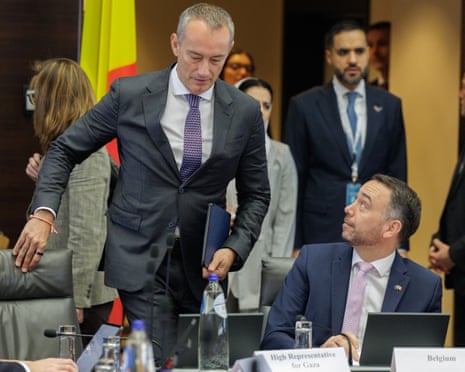
The Board of Peace’s lead envoy for Gaza told Reuters on Monday that he was “fairly optimistic” a plan for disarmament of Hamas and other militant groups in Gaza can be agreed but cautioned that it will still take time.
During an interview in Brussels, Nickolay Mladenov said: “We’ve had some very serious discussions with Hamas over the last few weeks, they’re not easy.
“I’m fairly optimistic that we will be able to come up with an arrangement that works for all sides and, most importantly, works for the people in Gaza.”
He also states that he believes Hamas’ disarmament is a sticking point in talks to implement the plan and cement an October ceasefire that halted two years of full-blown war. Violence has continued in the Palestinian territory, much of which remains in ruins.
Trump: blockade won't be lifted until Iran agrees to deal
In his latest Truth Social post, US president Donald Trump said the country would not lift its blockade of Iranian ports until Iran has agreed to a deal.
“THE BLOCKADE, which we will not take off until there is a ‘DEAL,’ is absolutely destroying Iran,” Trump wrote.
“They are losing $500m Dollars a day, an unsustainable number, even in the short run,” he said.
In a separate post, he criticised the US media – naming the “failing” New York Times, the “disgusting” Wall Street Journal and the “almost defunct” Washington Post. He accused these outlets of sabotaging the US war effort by causing Tehran to be “confused”.
Trump claims again an Iran deal will happen 'relatively quickly'
US president Donald Trump has said on a social media post that a deal with Iran will happen “relatively quickly”.
Writing on Truth Social, he said a deal with Iran will happen “relatively quickly!”.
He also denies that he is under “pressure” to make a deal. “THIS IS NOT TRUE!” he adds.
The Lebanese army has said that construction has been completed on an alternative bridge over the Litani river, after the original, the Tayr Falsiya, was destroyed by Israeli attacks.
As Al Jazeera reports, the bridge spans the Litani River, which Israel had previously set its sights on as the northern end of a desired “buffer zone” in Lebanon.
The Lebanese army has said that the newly constructed bridge is now open to vehicles.
In a post on Truth Social, US President Donald Trump said the deal the US is negotiating with Iran will be “far better” than the 2015 Joint Comprehensive Plan of Action (JCPOA), a deal signed by former President Barack Obama under which international sanctions were lifted in exchange for limitations on Tehran’s nuclear program. Trump withdrew the United States from the deal in 2018.
Trump claimed on Monday the new deal with Iran would “guarantee Peace, Security, and Safety, not only for Israel and the Middle East, but for Europe, America, and everywhere else.”
Qatari prime minister, Sheikh Mohammed bin Abdulrahman bin Jassim al-Thani, received a phone call from Oman’s foreign minister, Badr bin Hamad bin Hamood Albusaidi, on Monday, where they discussed cooperation between the two countries and the latest developments in the region.
The discussion included talks on “the ceasefire between the US and Iran, and the efforts being exerted to reduce tension and promote regional peace and security,” reads a statement by the Qatari ministry.
The officials “underlined the utmost necessity for all parties to respond to the ongoing mediation efforts.”
The day so far
A senior Iranian official has told the Reuters news agency that Tehran is “positively reviewing” its participation in potential peace talks with the US but stressed that no final decision has been made. The Iranian foreign ministry spokesperson, Esmaeil Baghaei, said that the US attack on the Iranian cargo ship this morning, the US naval blockade on Iranian ports and delays in implementing a ceasefire in Lebanon were all “clear violations of the ceasefire”.
A US delegation will head to Pakistan “soon” for a new round of peace negotiations with Iran, a source familiar with the plan told AFP on Monday, as Iran said it had yet to decide whether to attend. After initial talks in Islamabad ended without a deal earlier this month, both sides have accused the other of breaching a temporary truce that is now in its final days.
In a post to Truth Social, Donald Trump has said that Israel never “talked” him into the war with Iran, after reports that the Israeli prime minister, Benjamin Netanyahu, put pressure on him into launching their joint assault on Iran in late February. Justifying his military action, widely seen as being launched illegally, the US president claimed that the “results of Oct. 7th” added to his “lifelong opinion” that Iran can never possess a nuclear weapon.
Reuters is reporting that Israeli and Lebanese representatives will hold talks in Washington on Thursday. Israel will be represented by its ambassador to the US, Yechiel Leiter, the source told the news agency.
Lebanese official media said an Israeli strike hit a town in the country’s south on Monday despite a 10-day ceasefire in force between Israel and Iran-backed militant group Hezbollah. The state-run News Agency said that “an enemy drone targeted the vicinity of the Litani River in the town of Qaqaiyat al-Jisr”, without immediately reporting casualties.
Iran’s president Masoud Pezeshkian attempted to temper down tensions after escalations over the weekend between the US and Iran. “War is not in anyone’s interest, and while resisting threats, every rational and diplomatic path should be used to reduce tensions”, the state-affiliated IRNA reported him saying.
Russian foreign minister Sergei Lavrov held a phone conversation with his Iranian counterpart Abbas Araghchi on Monday, Russia’s foreign ministry said. Lavrov reiterated the need to uphold the ceasefire and stressed the importance of continued diplomatic efforts, while the Iranian side confirmed its readiness to do everything in its power to ensure the uninterrupted passage of Russian ships and cargo through the strait of Hormuz.
French president Emmanuel Macron on Monday called for the United States and Iran to de-escalate amid increased tensions over the weekend over the strait of Hormuz. “Our position remains the same. We need to settle things through diplomacy. Everyone must calm down,” Macron said during a joint press conference with Polish prime minister Donald Tusk.
Israeli strikes killed at least two Palestinians in separate incidents in the Gaza Strip on Monday, health officials said, and fighters from Hamas clashed with gunmen from an Israeli-backed militia, witnesses have told Reuters news agency. Medics said one man was killed in an Israeli airstrike in the Bureij camp in the central area of the territory, while another strike killed one person and wounded others in Gaza City.
Joseph Aoun, the Lebanese president, said he had appointed Simon Karam, a former ambassador to the US, to lead bilateral talks with Israel. “The objective of the negotiation option is to halt hostile actions, end the Israeli occupation of southern areas, and deploy the army up to the internationally recognised southern borders,” a statement from the Lebanese presidency reads.
Iraq has reopened the Rabia border crossing with Syria after more than a decade to accelerate overland fuel oil exports and revive cross-border trade amid disruption to Gulf shipping following the Iran war, Iraqi border officials said on Monday. The crossing, located in Iraq’s northern Nineveh province, will allow fuel oil shipments to be trucked through Syria while also reopening the route to commercial trade traffic that has been halted since the conflict that followed Syria’s civil war, officials said.
Spain’s prime minister, Pedro Sánchez – who has been among the most vocal European critics of Israel’s war in Gaza – has said he will ask the European Union to end its association agreement with Israel on Tuesday. “The time has come for the EU to break its association agreement with Israel,” Sánchez said on Sunday.
Ratcheting up the tension, the US said it had seized an Iranian cargo ship, the M/V Touska, that tried to run its blockade. Iran has vowed to retaliate. Hours after the announcement, the US military released footage of incident, including video of US Marines rappelling onto the vessel.
Oil and gas prices have jumped again as shipping through the strait of Hormuz came to a virtual standstill after Iran closed the waterway over the US blockade and Donald Trump announced an Iranian cargo ship had been seized trying to get past.
Tehran has accused Washington of violating the fragile ceasefire agreement. With uncertainty over a second round of peace talks, fears continue to grow about the scale of the energy shock caused by the war.
Lucy Hough speaks to the Guardian’s energy correspondent Jillian Ambrose…
Lebanese official media said an Israeli strike hit a town in the country’s south on Monday despite a 10-day ceasefire in force between Israel and Iran-backed militant group Hezbollah.
The state-run News Agency said that “an enemy drone targeted the vicinity of the Litani River in the town of Qaqaiyat al-Jisr”, without immediately reporting casualties.
Under the ceasefire, Israel reserves the right to act against “planned, imminent or ongoing attacks”.