56 minutes ago
Mark Carney is building closer ties with Europe as Canada steps back from stalled US trade talks. The push shows Ottawa's attempt to protect sovereignty and reduce exposure to Trump's tariff threats.

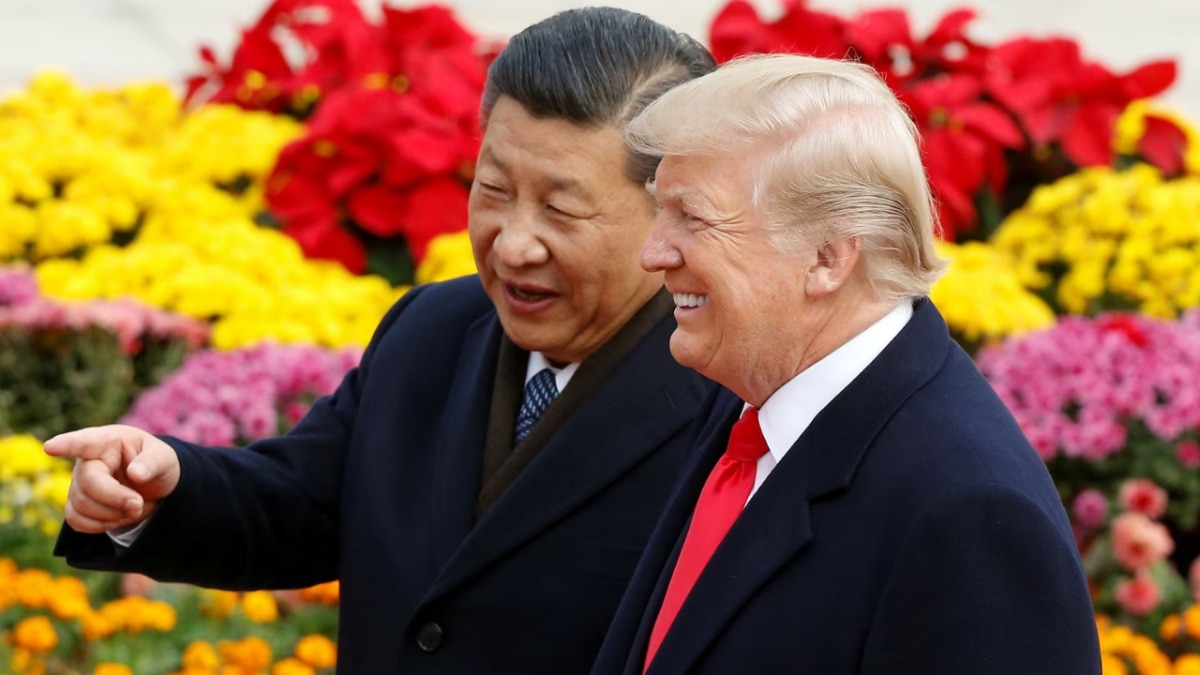
Image used for representational purposes only

Toronto,UPDATED: Sep 21, 2026 09:54 IST
Canadian Prime Minister Mark Carney is pushing to reduce his country's economic dependence on the United States after President Donald Trump imposed tariffs, threatened Canada's sovereignty and openly sought to draw Canadian industrial production south. Rather than return to trade talks or wait for a change in Washington, Carney is trying to build alternatives beyond the US.
Last week, Carney backed the idea of Canada becoming the European Union's first associate member, not as a step towards full membership, but as a way to cut reliance on any one country without giving up control over Canada's own decisions. "There is now a price to be paid for access to the United States market," Carney said on Sunday, pointing to tariffs, US investment commitments and demands for domestic policy changes. He told the European Parliament on Thursday that countries need enough economic strength to stop any one power from dictating their choices.
He repeated that message during a meeting on Sunday with French President Emmanuel Macron in Saint-Pierre-et-Miquelon, the French territory off the coast of Newfoundland. "Canada and Europe will build an alliance for the future that will strengthen our collective resilience so we can live our lives as we choose based on the values that we share," Carney said alongside Macron.
Carney's packed schedule underlined the urgency of that effort. He began last week in Toronto with some of the world's biggest investors, flew to Strasbourg, France, for European Commission President Ursula von der Leyen's State of the European Union address, went to Liverpool, England, to meet Britain's new prime minister, and returned to Strasbourg to address the European Parliament. He then met Macron in Saint-Pierre-et-Miquelon before flying back to Ottawa to meet Norwegian Prime Minister Jonas Gahr Store. On Monday, he is set to open a new session of Parliament before heading to New York for the United Nations General Assembly.
Trump has suggested that Canada's closer ties with the EU could amount to a "hostile act" and threatened "very heavy tariffs" on Europe if he saw the move as unfriendly. Canada could become a test case for other middle powers trying to avoid pressure from larger countries. In a speech at the World Economic Forum in Davos in January, Carney said that "middle powers must act together", warning that "if you're not at the table, you're on the menu". Store echoed that view on Sunday, saying tariffs should not become "a weapon to be used against countries, because we will all end up losers". The next major step in the proposed relationship is a Canada-EU summit in Montreal on October 29 and 30.
For Canada, the shift means unwinding part of the reliance built up over nearly 40 years. The 1989 Canada-US Free Trade Agreement and later NAFTA deepened integration and created cross-border supply chains in autos, energy and manufacturing. Roughly 70 per cent of Canada's exports went to the US, and Europe is nowhere close to replacing that market. Carney walked away from trade negotiations in August rather than accept terms he said Ottawa could not live with. The talks remain suspended, and Carney said on Friday that leaving the table was the right decision. "It was easy business, but it meant we relied too much on one economic partner," Carney said recently. "That time is over."
Dominic Barton, Carney's choice to chair Invest in Canada and a former global head of McKinsey & Co., said diversification does not mean turning away from the United States. "We can't complacently count on it," Barton said. "It's not about, let's not do stuff with the U.S. It's let's crank the non-U.S. Let's be way more ambitious on that side." Barton, a former Canadian ambassador to China, said Canada has been too inward-looking. "We are not very global," he said, calling Trump's pressure a "jolt" that Canada should use to build more global companies. Carney wants to double non-US trade over the next decade and hopes to secure a free-trade deal with India by the end of the year. He said Canada's tariff-free access to 1.5 billion consumers could double within six months.
Carney is also trying to turn growing doubts about the US as a predictable place to invest into an advantage for Canada. His message to global investors is that while Trump's America uses tariffs and uncertainty as leverage, Canada offers stability, the rule of law and reliability. "The most sought after commodity today is trust," Finance Minister Francois-Philippe Champagne said. "The world has changed and America has changed. And I think the world has taken notice." Barton said Trump may ultimately have done Canada a favour by forcing it to confront its dependence. "Maybe in 20 years, we'll thank Trump for shaking us out of our complacency," Barton said. "Let's use the moment."
Even so, the plan has limits. EU associate membership does not yet exist, and Europe cannot quickly replace a US market that buys nearly three-quarters of Canadian exports. Still, Carney is not alone in arguing that Canada must rely less on the United States. Former Conservative prime minister Stephen Harper said the government "had no choice but to take this path". Harper said that conclusion was especially difficult for him as "one who has long been and known to be a great admirer of America" and someone who saw Canada's close relationship with the US as "among this country's most precious assets". But he said the current US administration now sees the two countries' economic integration as incompatible with Canada maintaining its sovereignty. "Thus, to maintain that sovereignty, we must pursue diminished reliance on the United States," Harper said. "I do find this all very sad, just as equally necessary."
Carney's latest diplomatic push reflects a wider view in Canada that the country must build more options beyond the US while managing the limits of that transition. With trade talks suspended, Europe still far from matching the American market, and new partnerships being explored, Ottawa is trying to reshape its economic strategy around greater resilience and less dependence on a single partner.
With PTI Inputs
- Ends
Published By:
India Today Web Desk
Published On:
Sep 21, 2026 09:54 IST