1 day ago
Last Updated:January 07, 2026, 17:02 IST
Nicolás Maduro’s capture has not broken the power structure around him. Senior ministers who face US indictments and multi-million-dollar bounties remain in control in Caracas.

Venezuela's Defence Minister Vladimir Padrino Lopez, Interior Minister Diosdado Cabello, Interim President Delcy Rodriguez, Nicolas Maduro Guerra, son of Nicolas Maduro, and Assembly President Jorge Rodriguez, walk together at the Assembly, in Caracas, Venezuela, January 5. (REUTERS)
The United States’ dramatic capture of Venezuelan President Nicolás Maduro has removed the country’s most recognisable political figure, but not the governing machinery surrounding him.
As Maduro and his wife Cilia Flores, both arraigned in New York on federal drug trafficking and narco-terrorism charges, await legal proceedings, the men and women who formed the backbone of his administration remain in place in Caracas. Some of them are indicted in the US, sanctioned by Washington, or carry multi-million-dollar bounties.
The military operation, praised by US President Donald Trump as “stunning and powerful," did not dismantle the power structure Maduro oversaw. Instead, it highlighted the durability of a small civilian–military circle that has run the Venezuelan state for more than a decade.
While the US, many Venezuelans and several governments believe the 2024 presidential election was won by opposition leader and Nobel Peace Prize winner Maria Corina Machado, her political influence appears limited. Trump has said she “doesn’t have the support within or the respect within the country. She’s a very nice woman, but she doesn’t have the respect."
The former legislator described US military action in Venezuela over the weekend as “a major step towards restoring prosperity and rule of law and democracy in Venezuela". Despite her overtures, the US president has publicly dismissed Machado as a credible successor to Maduro.
Within hours of the US raid, Maduro’s closest allies appeared together on state television. Acting President Delcy Rodríguez stood alongside her brother and Assembly chief Jorge Rodríguez, Interior Minister Diosdado Cabello and Defence Minister Vladimir Padrino López. Their joint appearance signalled that the same group that shared power with Maduro remains intact.
In the case of Delcy Rodríguez, the transition into the acting presidency effectively amounted to a promotion at a moment when the US operation had removed her long-time mentor from office.
This is the group now guiding Venezuela, and the group Washington chose not to extract during the Caracas operation.
A Civilian-Military Cabal Still Running The State
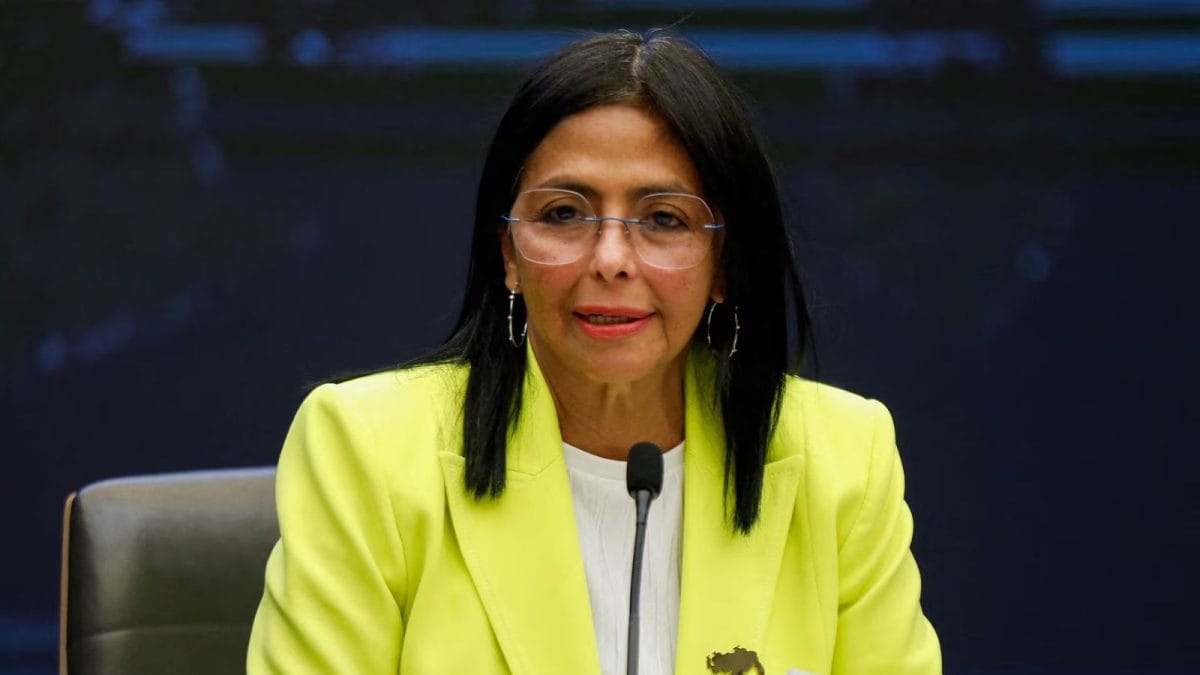
Venezuela continues to be run by the same small circle that shared power with Maduro and presented a united front on state television after his capture. Delcy Rodríguez, now acting president, and Jorge Rodríguez, president of the Assembly, form the civilian core.
Cabello and Padrino represent the military side, directing armed forces, internal security and the intelligence bodies that underpin the ruling structure.
For years, this arrangement has rested on a broad network of loyalists embedded across security organs. The United Nations has found that both SEBIN, the civilian intelligence agency, and DGCIM, the military intelligence service, committed crimes against humanity as part of a state plan to crush dissent. Former detainees, including ex-security personnel, described electric shocks, simulated drownings and sexual abuse in DGCIM facilities.
One former DGCIM agent, who was arrested and accused of treason in 2020 after having contact with military dissidents, said, “They want you to feel like you are a cockroach in a cage of elephants, that they are bigger."
This system’s survival does not hinge on Maduro alone. The Rodríguez siblings, Cabello and Padrino all retained their positions after the raid, confirming that the architecture of power remains undisturbed.
Delcy Rodríguez: Long-Time Maduro Confidante
Delcy Rodríguez, 56, has long been seen as one of Maduro’s closest confidantes and a key figure in sustaining his rule. Under Venezuela’s constitution, she automatically became acting president following Maduro’s arrest, a transition the country’s top court confirmed.
Trump said she had spoken with US Secretary of State Marco Rubio, which briefly fuelled speculation of potential engagement. But Rodríguez swiftly appeared on state television to assert that Maduro remained “the only president," signalling her commitment to continuity.
She has been sanctioned by the US Treasury for her role in undermining democratic processes, though she is not among those indicted on drug trafficking charges.
Her position now makes her the most senior civilian authority left in Caracas, though her authority appears linked to the unity of the group around her.
Jorge Rodríguez: Political Operator
Jorge Rodríguez, Delcy’s brother and president of the Assembly, is central to the government’s political coordination. After Maduro’s capture, he told lawmakers that his main task was to “bring back Nicolás Maduro Moros, my brother, my president." He has been sanctioned by the United States for his role in undermining democratic institutions, but he is not indicted in drug cases. His leadership ensures the legislature remains aligned with the military and security establishment at a time of uncertainty.
Diosdado Cabello: Indicted Strongman With A $25 Million Bounty
Interior Minister Diosdado Cabello is widely regarded as one of the most powerful figures in the Venezuelan state. His career includes terms as vice president and as president of the national parliament, and he has spent years in command of Venezuelan intelligence services. He now oversees police, prisons and significant parts of the security apparatus, with influence extending into both civilian and military counterintelligence.
Cabello was indicted in the United States in 2020 for allegedly helping traffic more than five tonnes of cocaine. Prosecutors in the Southern District of New York charged him with federal drugs and weapons offences, identifying him as a senior figure in the Cartel de los Soles — the organisation US prosecutors accuse Maduro of leading and using to move cocaine into the United States. The indictment was filed in the same SDNY district that handled Maduro’s arraignment. Cabello faces a US bounty of $25 million.
His influence is reinforced by his public posture. In recent weeks, he has appeared on state television wearing a flak jacket and helmet, ordering DGCIM agents to “go and get the terrorists" and warning that “whoever strays, we will know."
He repeated similar warnings during a state television appearance on Saturday, standing amid heavily armed guards. Cabello has also been closely associated with colectivos, groups of motorcycle-riding armed civilians aligned with the government.
Venezuelan military strategist José Garcia described him as “the most ideological, violent and unpredictable element of the Venezuelan regime."
Vladimir Padrino López: Defence Minister And Long Indicted Military Chief
Defence Minister Vladimir Padrino López has overseen Venezuela’s armed forces for more than a decade. He faces a $15 million US bounty and was indicted in 2020 in Washington DC, for allegedly allowing the safe passage of drug flights in exchange for protection fees.
Venezuela’s military is unusually top-heavy, with as many as 2,000 generals and admirals, more than double the number in the United States. Senior and retired officers control food distribution, raw materials and the state oil company PDVSA, and dozens sit on the boards of private firms. Commanders close to Cabello and Padrino are positioned along border regions and industrial areas that also lie on key smuggling routes.
After Maduro’s capture, Padrino demanded the “immediate return" of the president and First Lady. “This is an act of aggression against the legitimate president of Venezuela and the First Lady," he said, adding, “We draw attention to everything that is happening to Venezuela against its sovereignty."
Nicolás “Nicolasito" Maduro Guerra: Political Heir And Indicted Lawmaker
Maduro’s son, Nicolás Ernesto Maduro Guerra, known as “Nicolasito" or “Little Nicolás", and sometimes referred to as “The Prince", is deputy president of the Assembly. He was charged in 2020 alongside his father, his mother and senior officials for allegedly partnering with traffickers and narco-terrorist groups to dispatch cocaine to the United States through Caribbean and Central American routes. His legislative role and proximity to the ruling core secure his position within the establishment.
Why The US Did Not Detain Cabello And Padrino
Secretary of State Marco Rubio told reporters that US forces were instructed to take only their “top priority" target. He said it “was not feasible" to capture Cabello and Padrino along with Maduro and Cilia Flores, noting that seizing multiple figures from fortified government compounds would have required US forces to remain on the ground for extended periods. “We got the top priority," he said.
Rubio said the mission would have taken “more time — even days" if multiple ministers were targeted and that “they’re already complaining about this one operation. Imagine the howls… if we actually had to go and stay there for days to capture four other people."
Rubio also said that extracting Maduro and the First Lady from their stronghold was itself “a tough ask," underscoring the operational limits of the mission.
Why Maduro’s Arrest Does Not Collapse The System
Between 20 and 50 officers would likely need to be removed to dismantle the regime’s foundations. Following Maduro’s arrest, several former officials and sitting generals reached out to US authorities, offering intelligence in exchange for safe passage and legal immunity. Individuals close to Cabello, however, say he is not interested in negotiating.
The continued alignment of the Rodríguez siblings, Cabello and Padrino signals that the governing system remains intact. The removal of Maduro has not broken their cohesion; if anything, their joint television appearance was intended to project stability.
First Published:
January 07, 2026, 17:02 IST
News explainers Maduro Captured, His Inner Circle Still Rules: Why US Left The 'Wanted' Ministers Behind
Disclaimer: Comments reflect users’ views, not News18’s. Please keep discussions respectful and constructive. Abusive, defamatory, or illegal comments will be removed. News18 may disable any comment at its discretion. By posting, you agree to our Terms of Use and Privacy Policy.
Read More