1 month ago
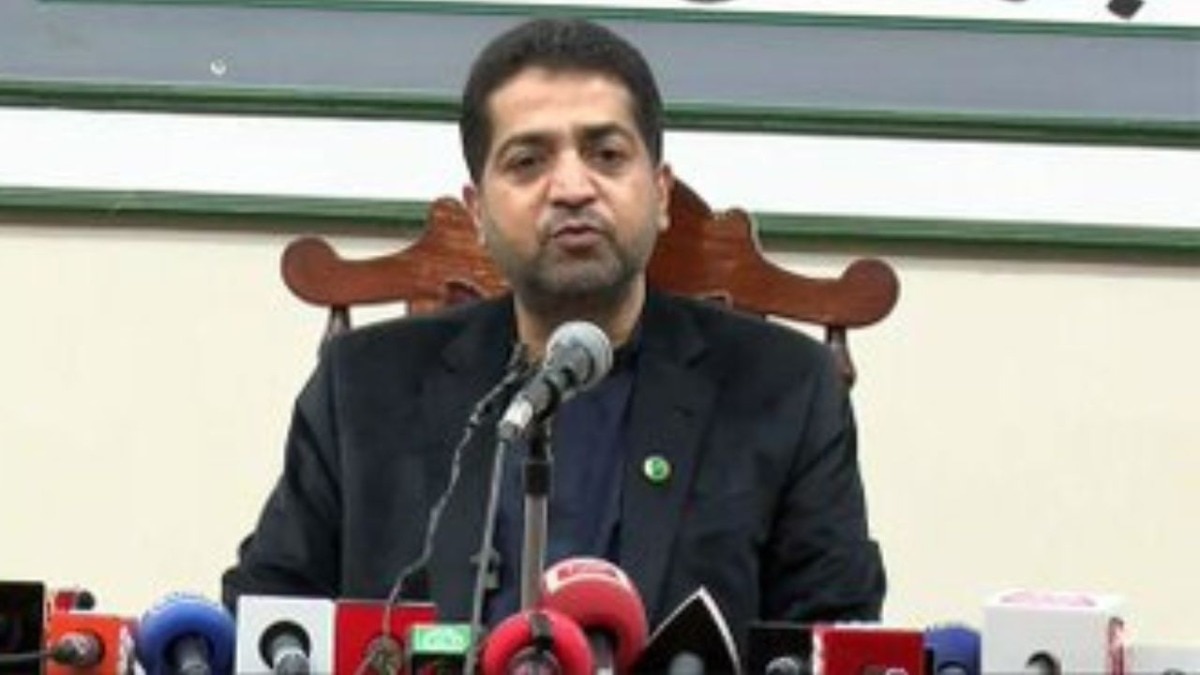
The peace deal between the United States and Iran should have included provisions restricting Iran's ballistic missile programme, one of Israel's key demands and a continuing security concern, Israel's Ambassador to India, Reuven Azar, said when asked whether the agreement had effectively "thrown Israel under the bus."
Speaking exclusively to India Today, Azar rejected suggestions that Israel had suffered a strategic defeat but acknowledged significant differences between Washington and Jerusalem over the diplomatic path being pursued with Tehran.
"The challenge for us, I agree with you, is that these fourteen points do not include things that are very important for us. For example, the ballistic missiles. The ballistic missile issue and the support for the proxies. For us, this is something that is missing," the Israeli envoy said.
He was responding to a specific question about the possibility of Iran restarting its missile programme after American forces withdraw within 30 days under the agreement. The question also referred to US President Donald Trump's remark that it would be unfair for Tehran not to retain some missile capability.
Ambassador Azar said Israel would "continue coordinating with the United States to try to make them rethink about that and to cooperate with us to make sure that these threats are addressed."
The envoy warned that if these concerns were not addressed, the agreement could become a "recipe for confrontation in the future," adding that "Israel will not hesitate to defend itself by itself."
"As long as this regime in Tehran has the intention of annihilating other countries, including Israel, this issue will have to be addressed, and if it's not addressed, then Israel will have to defend itself. It's not addressed in these fourteen-point MoU," the official categorically said.
However, Azar sought to distinguish between the military and diplomatic outcomes. "Israel and the United States have had an amazing military victory," he said, arguing that the military campaign had removed existential threats to Israel and inflicted severe damage on Iran's military capabilities. "The damage to Iran in military terms is worth more than a trillion dollars."
He acknowledged that Washington's diplomatic approach was being driven by other priorities, including oil. "When it comes to diplomacy, we are at the point in which the United States, for its own considerations, had to make a kind of diversion that has to do with immediate interests, like, for example, the energy markets," he said.
The envoy also admitted there were clear differences between the US and Israel regarding the diplomatic process. "Right now, diplomatically, we have gaps," he said, while maintaining that both countries continued to share the broader objective of preventing Iran from threatening regional states.
"There are differences now. There are very clear differences that we have the challenge to try to sort them out," he said. "They derive from different interests at this moment in time."
While rejecting claims that the agreement amounted to a complete American surrender, Azar repeatedly stressed that Israel reserved the right to act independently if diplomacy failed to address what it sees as fundamental security threats.
The US and Iran have electronically signed a breakthrough 14-point memorandum of understanding (MoU), effectively halting a volatile conflict that had severely disrupted global energy markets.
Under the agreement, the US has agreed to lift its naval blockade on Iranian ports, issue immediate sanctions waivers for Iranian crude oil exports, and release billions of dollars in frozen Iranian assets.
The most immediate and consequential outcome of the deal is the full reopening of the Strait of Hormuz to commercial shipping without additional transit fees. Shipping traffic is expected to return to pre-conflict levels within 30 days.
The agreement also formalises an immediate and permanent ceasefire across multiple regional fronts, including provisions linked to a truce involving Hezbollah in Lebanon.
However, while the signing has paused active hostilities, it leaves the highly contentious nuclear issue unresolved. The two sides have set a strict 60-day negotiation window to determine the future of Iran's highly enriched uranium stockpile, including verification mechanisms and possible down-blending arrangements.
The long-term sustainability of the agreement remains uncertain, with critics arguing that several provisions tilt heavily in Tehran's favour and leave key security concerns, particularly Iran's missile programme and regional proxy networks, unresolved.
- Ends
Published On:
Jun 18, 2026 20:55 IST