1 month ago
Israeli strikes hit southern Lebanon hours after reports of a ceasefire, killing at least seven people. The renewed fighting has jeopardised fragile diplomacy linking an Israel-Hezbollah truce to wider US-Iran talks.

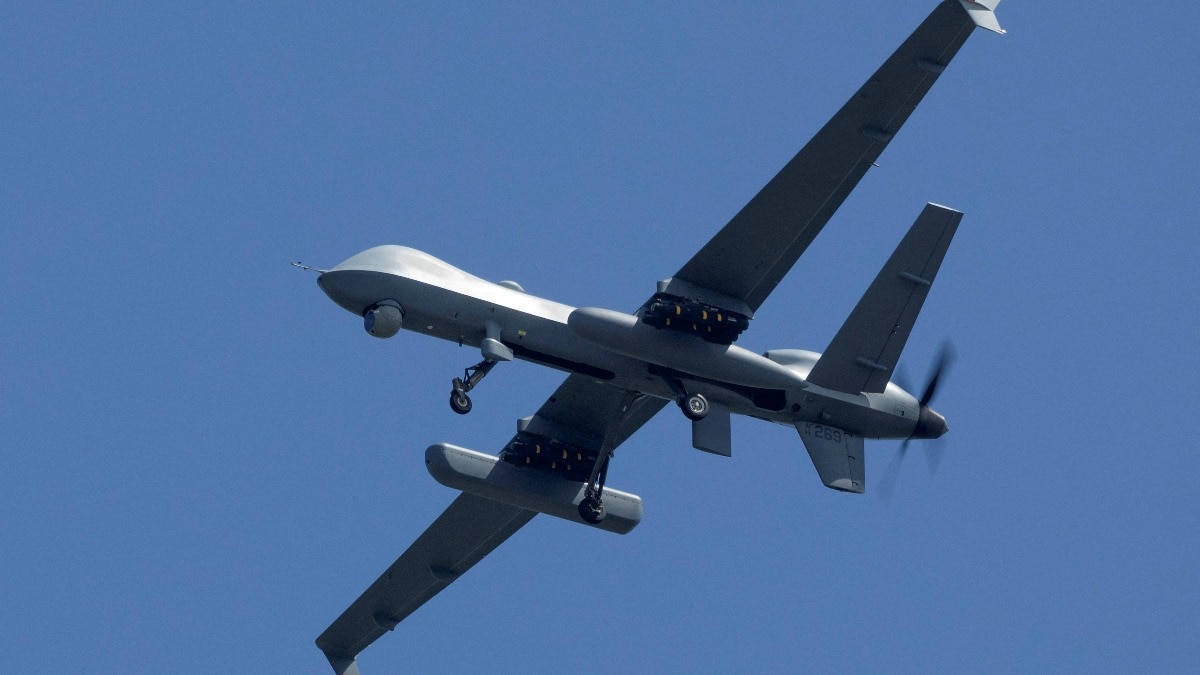
Stock photo used for illustration

Tyre,UPDATED: Jun 20, 2026 15:14 IST
Israeli strikes on southern Lebanon on Saturday killed at least seven people, including two children, hours after reports emerged of a ceasefire agreement. The continued fighting has put fresh strain on an interim agreement between the United States and Iran aimed at ending the war in the Middle East.
Lebanon's News Agency said the strikes hit the southern town of Nabatiyeh and nearby villages, and added that at least seven people were still trapped under the rubble. Mediators were trying to stop the fighting between Israel and the militant group Hezbollah after a heavy exchange on Friday killed at least 47 people in Lebanon and four Israeli soldiers.
An Israeli military official said Hezbollah fired more than 50 projectiles at Israeli forces in southern Lebanon overnight, leading the military to begin targeting the group there. The official spoke on condition of anonymity under military rules. On Friday, Israel's ambassador to Washington, Yechiel Leiter, said on X that Israel "remains firmly committed to an immediate ceasefire" if Hezbollah honours the agreement and ceases hostilities.
Hezbollah has said in public statements that it will observe a ceasefire if Israel does, but it has not said a ceasefire is actually in place. A Hezbollah official, who also spoke on condition of anonymity because he was not authorised to comment publicly, said on Friday that Qatar, the US and Iran were working to broker an Israel-Hezbollah ceasefire, but did not confirm that a deal had been reached.
The conflict between Hezbollah and Israel began just days after the US and Israel launched strikes on Iran on February 28, with Hezbollah firing rockets and drones at civilian communities in northern Israel and Israel taking control of large parts of southern Lebanon. The interim US-Iran agreement signed this week has already reopened the Strait of Hormuz, which Iran had shut during the war, and includes plans to restart talks on Iran's nuclear programme. Neither Israel nor Hezbollah is a signatory to the deal, which calls for military operations in Lebanon to stop and for the country's sovereignty to be respected. With fighting continuing, the agreement is under pressure, and planned US-Iran talks in Switzerland have been delayed without a new date.
Israeli Prime Minister Benjamin Netanyahu has said Israeli forces will remain in southern Lebanon until any threat to Israel is removed. Hezbollah has said it will not stop its attacks unless Israel commits to leaving Lebanon, a condition Iran has also said is part of the deal. In southern Lebanon on Saturday, smoke rose over the area and Israeli jets flew low over the coastal city of Tyre. A strike on Barish killed four members of the same family, the parents and two children. In Arab Salim, a body was recovered from a destroyed house, while drone strikes in Doueir and Kfar Rumman killed a man on a motorcycle and a Lebanese soldier. Netanyahu's office did not immediately comment on the ceasefire efforts, but on Friday he posted on X that, on his orders, the Israeli army had "struck powerfully" 150 Hezbollah targets and killed dozens of militants. Military spokesman Brig Gen Effie Defrin said Israeli forces were operating in a "forward defence zone" and would continue to do so.
Iranian officials did not travel to Switzerland as planned, saying the fighting in Lebanon must stop before talks can go ahead, and US Vice President JD Vance also postponed his trip. On Saturday, Iranian Foreign Ministry spokesman Esmail Baghaei told the semi-official ISNA news agency that Pakistan's interior minister would visit Iran as part of continuing negotiations. He also said consultations through mediators were under way on the next phase of talks for a final US-Iran agreement, and that because the interim deal had been signed digitally earlier this week, the Switzerland talks were not urgent and a meeting was being planned in the coming days. The Switzerland talks were expected to focus on Iran's nuclear programme, which Tehran says is for peaceful purposes, although the Atomic Energy Agency says Iran has a large stockpile of uranium enriched to levels just short of weapons grade. The interim deal gives negotiators 60 days, with a possible extension, to reach a nuclear agreement and promises incentives including the lifting of international sanctions and a USD 300 billion fund for post-war reconstruction. It has already led to some concessions from the US, including lifting its blockade of Iranian ports, allowing Iran to sell oil freely and calling for Iranian assets to be unfrozen, though the timeline remains unclear. For now, however, the fighting in southern Lebanon continues to cast doubt over both ceasefire efforts and the wider diplomatic push.
With PTI Inputs
- Ends
Published By:
India Today Web Desk
Published On:
Jun 20, 2026 15:14 IST