1 hour ago
What began as a routine divorce in London turned into a 23-year legal war after solicitor Bhadresh Gohil was convicted in a massive money-laundering case linked to a former Nigerian governor. The revelations helped Varsha Gohil reopen the settlement and eventually secure an Rs 85 crore payout.
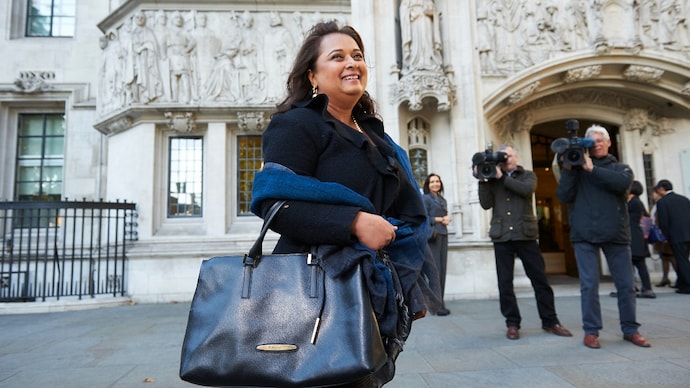
Initially awarded £270,000 back in 2002, Vasha Gohil re-opened her divorce settlement case in 2015 after becoming aware of her husband's hidden fortunes. (Image: Getty Images)
What began as a seemingly routine divorce in the early 2000s in London spiralled into a two-decade-long case, courtroom drama, and millions of pounds of settlement for Varsha Gohil. Now, 23 years later, the Indian-origin woman has emerged with one of the largest divorce settlements in recent British legal history.
Varsha Gohil won a £6.6 million (~ Rs 85 crore) settlement on Tuesday against her former husband, Bhadresh Gohil.
Varsha (61) filed for divorce in May 2002, citing adultery and unreasonable behaviour, according to a report by news agency PTI, citing the UK-based newspaper, The Times. At the time, the couple had been married for years and had three children together.
The divorce was initially settled relatively quickly, and Varsha accepted a financial package worth around £270,000 (Rs 3.47 crore) and retained the family Peugeot car. But the matter was far from settled.
VARSHA GOHIL'S HUSBAND LAUNDERED MILLIONS FOR NIGERIAN GOVERNOR'S ASSOCIATES
After the initial settlement, Varsha remained suspicious that her husband might not have disclosed the full extent of his wealth, despite the legal requirement for spouses to provide complete and accurate information about their finances during divorce proceedings.
For several years, those suspicions remained unproven. But the situation changed dramatically in the late 2000s when Bhadresh Gohil became embroiled in a major international corruption and money-laundering investigation.
Bhadresh Gohil, who had acted as a solicitor for associates of former Nigerian governor James Ibori, was accused of helping launder millions of pounds through client accounts and offshore entities, according to the UK-based paper Daily Mail. Following a lengthy criminal investigation, he was convicted of multiple offences, including money laundering, forgery and conspiracy to defraud.
In 2011, he was sentenced to 10 years in prison.
The criminal proceedings revealed the existence of vast assets that had not featured in the original divorce settlement. British authorities subsequently moved to freeze assets worth nearly £28 million (Rs 360 crore), that prosecutors alleged were connected to criminal activity and concealed through a network of companies spread across several jurisdictions.
The revelations strengthened Varsha Gohil's belief that her former husband had concealed wealth during their divorce. In 2007, she had already begun efforts to challenge the original settlement, but the criminal investigation provided fresh evidence that allowed her case to gain momentum.
The dispute eventually reached the UK's Supreme Court. In a 2015 ruling, the court allowed Varsha Gohil to reopen her divorce settlement, finding that a spouse who fails to provide full and frank financial disclosure should not be allowed to benefit from that deception. The judgment was a significant development in British family law and opened the door for a reassessment of the financial settlement.
UK PROSECUTORS ARGUED BHADRESH GOHIL'S ASSETS PART OF CRIMINAL PROCEEDINGS
The ruling, however, did not end the litigation.
For years afterwards, multiple legal battles continued over the ownership and nature of the frozen assets. The UK's Crown Prosecution Service (CPS) argued that the entire £28 million represented the proceeds of crime and should therefore be reserved for criminal confiscation proceedings rather than divided as part of a divorce settlement.
Varsha Gohil, meanwhile, maintained that at least some of the wealth had been accumulated through legitimate businesses during the marriage and therefore formed part of the matrimonial assets to which she was entitled.
When the dispute finally came before the High Court, three competing positions emerged. Bhadresh Gohil argued that the assets were not his. The CPS argued that the assets were entirely criminal proceeds. Varsha Gohil contended that the wealth belonged to her former husband and that a significant portion had legitimate origins.
In a judgment delivered by Justice Williams, the court rejected key elements of both the husband's and the CPS's arguments.
According to PTI, the judge concluded that some of the assets were indeed legitimate and formed part of the couple's marital wealth. He determined that the pool of identifiable, untainted assets amounted to approximately £6.66 million and awarded that sum to Varsha Gohil.
"The husband's conduct is at the highest end of the scale in terms of dishonesty and its consequences," Justice Williams was reported as saying.
The judge also criticised Bhadresh Gohil's attempts to portray himself as a victim, describing him as "thoroughly and pervasively dishonest," according to the Daily Mail.
Reflecting on the extraordinary length and complexity of the proceedings, Justice Williams remarked that the name "Gohil will linger long in the memories of lawyers and judges across a range of jurisdictions" because of the "tortuous route" the litigation had taken.
The final chapter of the case came last month when the UK Court of Appeal ruled out any further appeals, allowing the High Court's judgment to take effect, PTI reported.
For Varsha Gohil, the ruling marks the end of a legal battle that stretched across nearly a quarter of a century, survived criminal prosecutions, confiscation proceedings and multiple appeals, and ultimately resulted in one of the most significant divorce judgments in recent British legal history.
- Ends
Published By:
Shounak Sanyal
Published On:
Jun 4, 2026 15:44 IST