1 hour ago
Mitch McConnell statement suggests Bill Pulte unqualified for DNI role
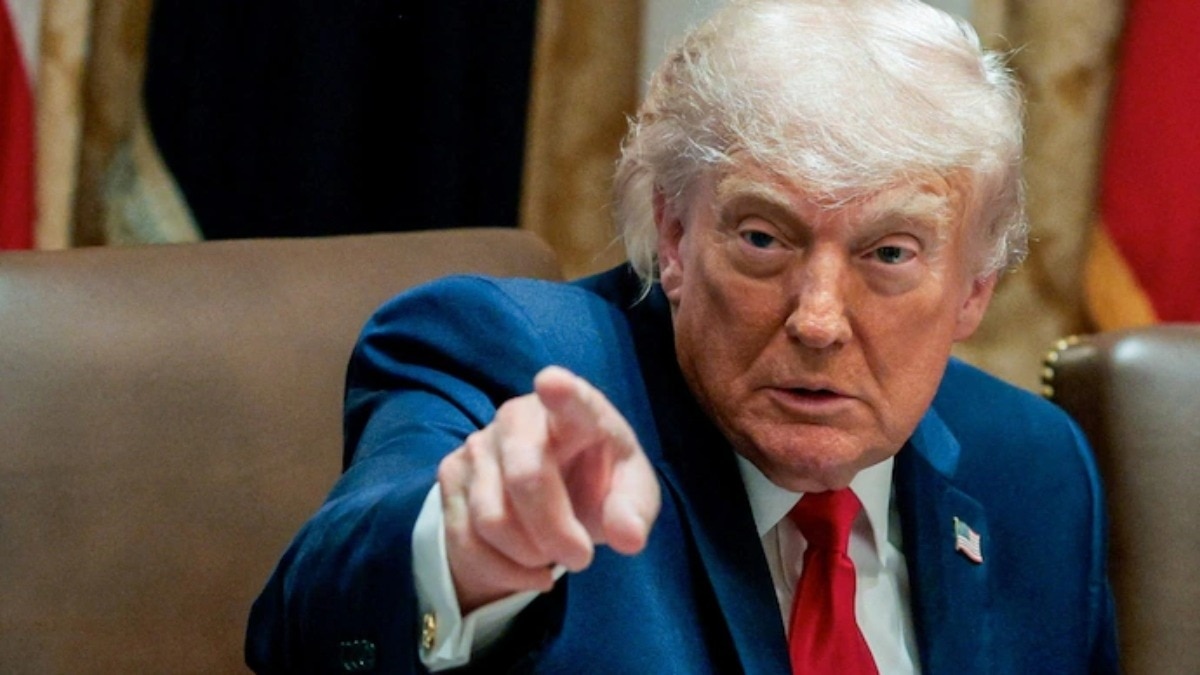
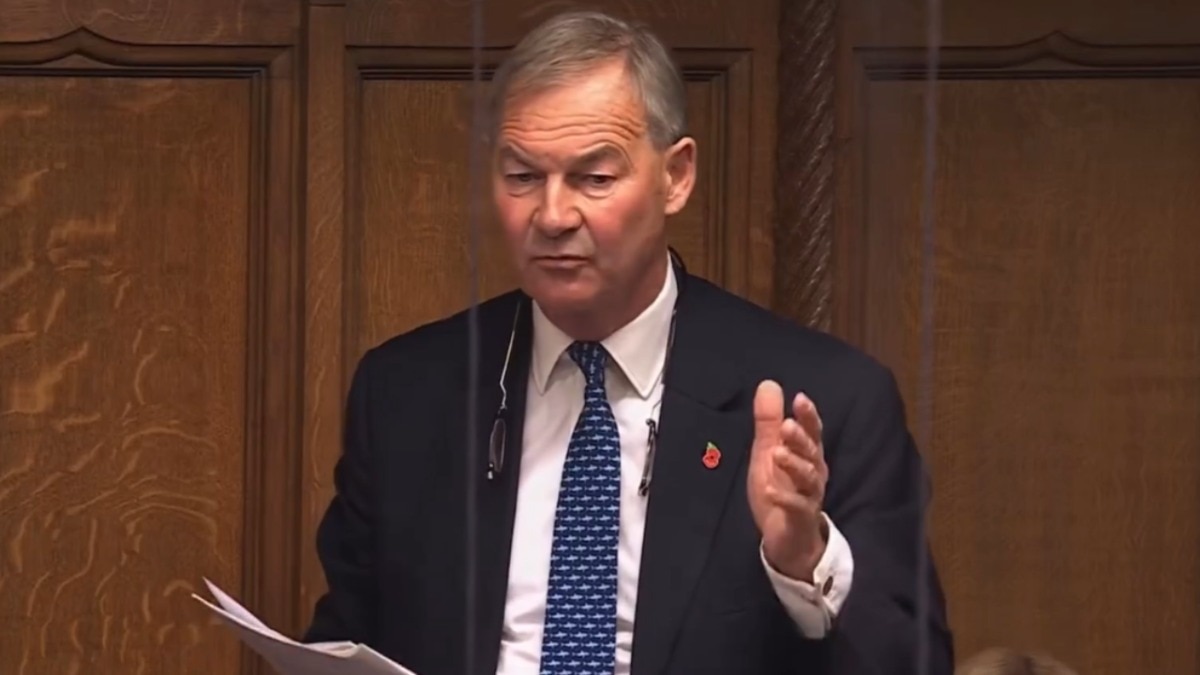
The Republican senator Mitch McConnell put out a scathing statement today suggesting that Donald Trump’s pick for acting director of national intelligence, Bill Pulte, is not qualified to serve in the role.
“Very few Senate-confirmable positions come with statutory eligibility requirements,” McConnell said. “There are good reasons why the director of national intelligence is one of them.”
Though he did not name Pulte in his statement, McConnell made clear that he would not vote for him to serve as DNI in a permanent capacity.
“Anyone performing this role of such immense public trust must have the extensive national security experience required by statute, and no nominee who falls short of this requirement will earn my vote,” he said.
McConnell was the only Republican to join with Democrats to vote against the confirmation of former DNI Tulsi Gabbard to the role, citing her “alarming lapses of judgment”.
“When a nominee’s record proves them unworthy of the highest public trust, and when their command of relevant policy falls short of the requirements of their office, the Senate should withhold its consent,” he said at the time.
Key events

Sam Levine
The supreme court’s decision allowing Alabama to use a redrawn congressional map that eliminates one of the state’s two majority-Black districts in this year’s midterm elections “cuts off most escape routes from Callais and sends a clear signal that plaintiffs should just lose all claims involving race and redistricting”, said Nicholas Stephanopoulos, a law professor at Harvard who studies elections.
“The district court meticulously explained why it found discriminatory intent and why the revised Section 2 framework was still satisfied. The Court reversed all that in a cursory paragraph, which faulted the district court for not applying a presumption of good faith even though it clearly did, and which gullibly accepted Alabama’s purported redistricting goals even though they were just post hoc concoctions,” Stephanopoulos said.
He added: “I think it’s now pretty obvious that, in all but the most exceptional circumstances, like legislators saying they’re drawing lines to harm minority voters, the supreme court will not tolerate any federal judicial regulation of race and redistricting.”
Travis Crum, an election law professor at Washington University in St. Louis, said the court had now offered states “a blueprint for identifying certain priorities – incumbent protection or a particular partisan makeup of the congressional delegation – that make it virtually impossible for Section 2 plaintiffs” to win cases.
“There might still be Section 2 litigation at the local level – where many races are non-partisan – or in states that ban partisan gerrymandering. But statewide Section 2 claims are basically non-starters across the South after Callais,” he said.
Richard Hasen, an election law scholar at the University of California Los Angeles said the decision “not only reinforces the virtually impossible standard plaintiffs must face now to bring a Section 2 claim, they’ve practically closed the door on constitutional vote dilution claims as well. The Court did so by using a nearly irrebuttable presumption that states are acting in good faith, which a state can meet by coming up with only pretextual reasons for drawing the map as it did.”
Supreme court approves Alabama map that erases majority-Black district
Sam Levine
If there was a glimmer of a possibility that the Voting Rights Act survived a body blow of a decision from the US supreme court in Louisiana v Callais in April, the court’s conservative justices extinguished it yesterday evening.
In an unsigned order issued on the court’s emergency “shadow docket” - the court’s six conservative justices said allowed Alabama to use a congressional map that gets rid of one of the state’s two majority-Black congressional districts. That map the state will use is one that a three-judge panel ruled was drawn with an intent to discriminate against Black voters.
Even after the supreme court made it nearly impossible to bring Voting Rights Act claims in Callais, there seemed a slim chance that it would uphold Alabama’s map. In Alabama, a lower court had found that the map was drawn with an intent to discriminate, something that wasn’t an issue in the Louisiana case.
But in its Tuesday order, the supreme court said that didn’t matter.
“Under Callais, the District Court was required to deny relief unless the plaintiffs’ alternative map performed ‘just as well’ with respect to all of the State’s constitutionally permissible districting criteria,” the court’s majority wrote. “Yet, the District Court found a violation even though the plaintiffs’ alternative map would not perform just as well as to the State’s constitutionally permissible criteria of keeping together the GulfCoast community of interest and avoiding the pairing of incumbents.”
Donald Trump has also said in a post on Truth Social that he will travel to a G7 leaders’ summit in France later this month.
The president said in the post he would travel after the UFC fight at the White House on 14 June.
The day so far
Treasury secretary Scott Bessent refused to say whether Donald Trump, his family and his businesses would still get immunity from IRS audits after the administration yesterday abandoned plans for a $1.8bn fund that would have benefited the president’s allies. Bessent declined to answer when pressed repeatedly by lawmakers, citing the unresolved legal dispute, after acting attorney general Todd Blanche indicated yesterday that the provision remained unchanged.
Republican senator Mitch McConnell put out a scathing statement suggesting that Trump’s pick for acting director of national intelligence, Bill Pulte, is not qualified to serve in the role. “Anyone performing this role of such immense public trust must have the extensive national security experience required by statute, and no nominee who falls short of this requirement will earn my vote,” McConnell said. More on Pulte’s appointment here.
Secretary of state Mario Rubio told the House foreign affairs committee that Trump will be attending the Nato meeting of heads of state in Turkey next month. “I think the next meeting of Nato and Turkey in July is probably the most important meeting in Nato’s history, because there are some things here that need to be cleared up and fixed,” Rubio said.
Rubio also admitted that the Trump administration “understood the risk factors” when it launched war on Iran, including that Tehran would retaliate against US allies in the region and close the strait of Hormuz, driving up costs globally. “Everyone knew what Iran would do in response … but they can’t have a nuclear weapon,” the secretary of state said.
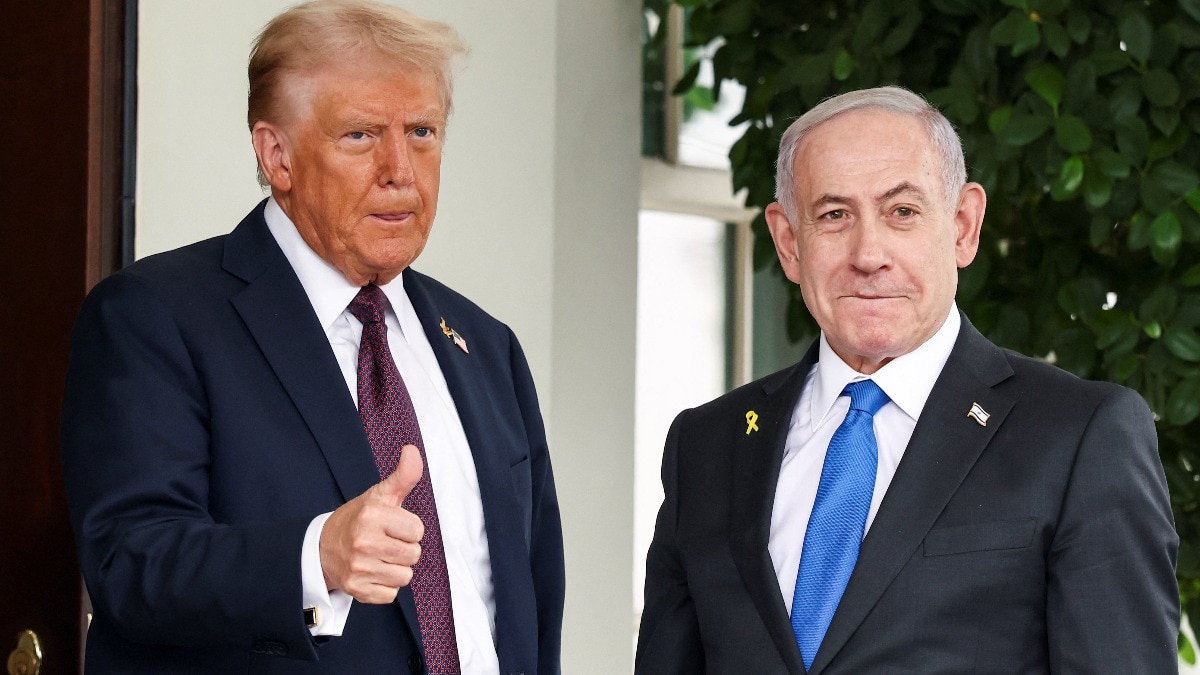
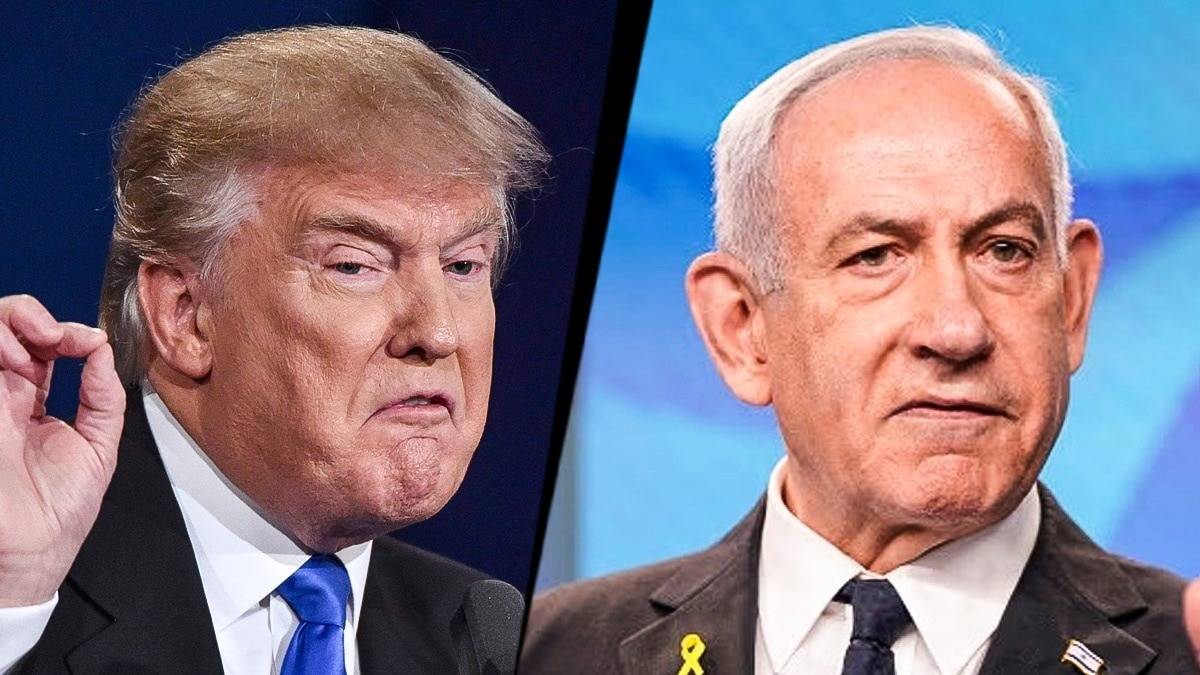
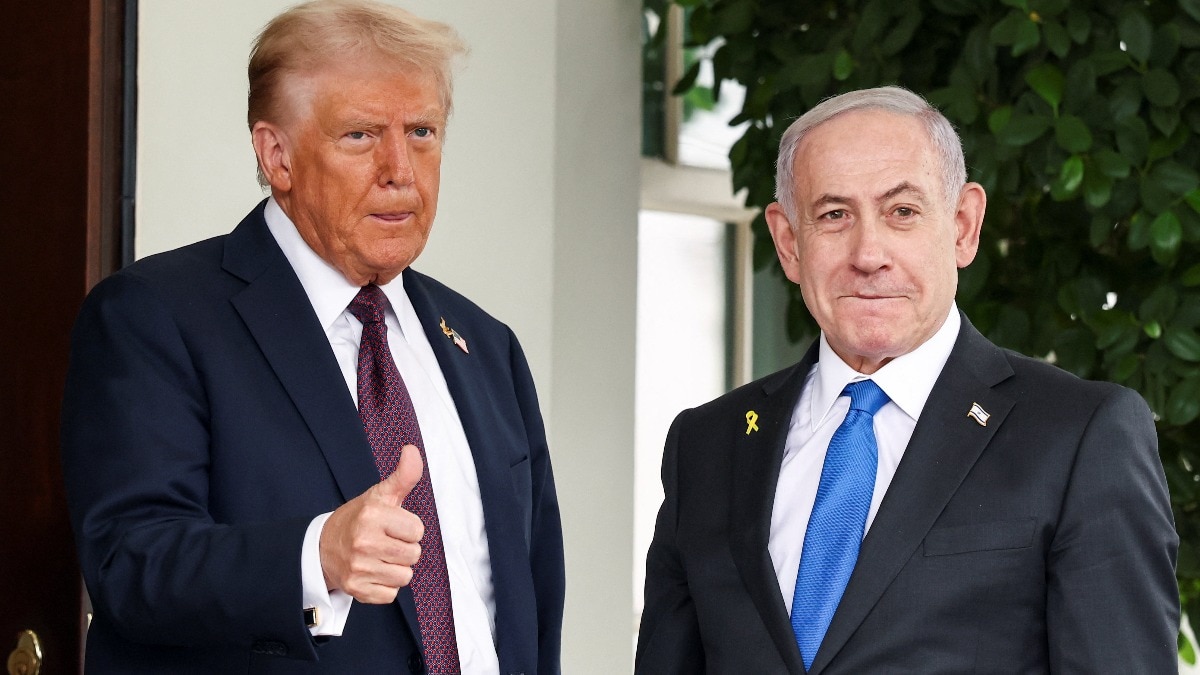
Donald Trump confirmed Axios’s report that he shouted and cursed at Israeli prime minister Benjamin Netanyahu over Israel’s threats to resume airstrikes on Beirut’s southern suburbs earlier this week. “I was a little bit perturbed at his constantly fighting with Lebanon, you know, at some point I said, ‘Bibi, we gotta stop this, we gotta stop it,’” he told the New York Post’s Pod Force One podcast.
Trump also told the podcast that vice-president JD Vance and US secretary of state Marco Rubio running together in 2028 would be “unbeatable”. “I would think that JD and Marco as a team would be very hard to beat,” Trump said. He has continued to fuel the succession talk even as both Vance and Rubio downplay their 2028 ambitions.
Trump threatened tariffs of between 10% and 12.5% on 60 trading partners including the UK, the EU and Australia over alleged forced labour failures, in the latest attempt to revive his signature trade policy. The US trade representative, Jamieson Greer, said: “The failure of our most important trading partners to address the importation of goods made with forced labor is unacceptable. This creates a dynamic where American workers are forced to compete globally on an unlevel playing field. We will no longer tolerate this disparity.” Here’s our story.
And finally, Senate Republicans officially dropped language providing up to $1bn for security upgrades to Donald Trump’s proposed White House ballroom from the updated text for their immigration enforcement bill released today. They unveiled the revised bill shortly before the first procedural vote on a motion to proceed with the measure.
Donald Trump is planning to attend game 3 of the Knicks-Spurs series, the first NBA finals game in New York in 27 years, on 8 June at Madison Square Garden, sources have told the New York Post, with the caveat that “there’s always the chance plans change”.
MSG performed security walk-throughs in preparation for the president’s potential visit, according to the Post’s sources.
Mitch McConnell statement suggests Bill Pulte unqualified for DNI role
The Republican senator Mitch McConnell put out a scathing statement today suggesting that Donald Trump’s pick for acting director of national intelligence, Bill Pulte, is not qualified to serve in the role.
“Very few Senate-confirmable positions come with statutory eligibility requirements,” McConnell said. “There are good reasons why the director of national intelligence is one of them.”
Though he did not name Pulte in his statement, McConnell made clear that he would not vote for him to serve as DNI in a permanent capacity.
“Anyone performing this role of such immense public trust must have the extensive national security experience required by statute, and no nominee who falls short of this requirement will earn my vote,” he said.
McConnell was the only Republican to join with Democrats to vote against the confirmation of former DNI Tulsi Gabbard to the role, citing her “alarming lapses of judgment”.
“When a nominee’s record proves them unworthy of the highest public trust, and when their command of relevant policy falls short of the requirements of their office, the Senate should withhold its consent,” he said at the time.
Senate Republicans formally drop Trump's $1bn ballroom funding from immigration bill
Senate Republicans have officially dropped language providing up to $1bn for security upgrades to Donald Trump’s proposed White House ballroom from the updated text for their immigration enforcement bill released today.
GOP senators had already decided before the Memorial Day recess that they would not pass the $70bn legislation to restore funding to ICE and border patrol ahead of the 1 June deadline set by the US president amid concerns about the $1bn proposal for security measures and controversial plans to create a $1.8bn “anti-weaponization” fund (though the administration abandoned the latter yesterday).
Some Republican senators were concerned about the optics of funding the ballroom with taxpayer dollars amid a cost-of-living crisis in the lead-up to November’s midterm elections.
Republicans unveiled the revised bill shortly before the first procedural vote on a motion to proceed with the measure at about 2.30pm ET.
Bessent dodges questions on Trump’s tax audit immunity
At his Senate finance committee hearing earlier today, the US treasury secretary, Scott Bessent, dodged a slew of questions about Donald Trump’s contentious $1.8bn “anti-weaponization” fund – which is as of yesterday dead in the water – and repeatedly deferred to the justice department on the president’s IRS settlement.
“I’m unable to comment because of litigation,” he told the Democratic senator Sheldon Whitehouse. “Treasury is represented by the Department of Justice in all matters. They act as our attorneys, so I would suggest that you direct your questions to acting attorney general [Todd] Blanche.”
Bessent declined to comment on whether the provision that provides Trump and his family with immunity from IRS audits is still in place. Blanche said yesterday that it was.
The Democratic senator Catherine Cortez also pressed Bessent on whether other taxpayers whose returns were leaked alongside Trump’s would receive “the same immunity as President Trump and his family received”, but Bessent deflected once again.
“Treasury does not give any of that,” Bessent said. “We are represented by the justice department.”
Pressed again, he said only: “We will follow the instructions and the settlement.”
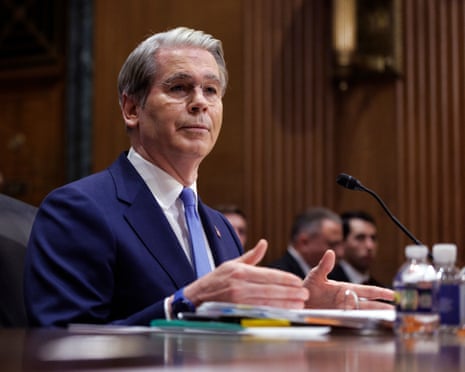
Rubio: Trump will attend Nato meeting in July
Mario Rubio, the US secretary of state, told the House foreign affairs committee today that Donald Trump will be attending the Nato meeting of heads of state in Turkey next month.
“The president himself will be attending,” Rubio said.
Trump has long criticized Nato but has escalated his rhetoric over the war in Iran. In April, he called the 77-year-old alliance a “paper tiger” and suggesting the US may consider leaving after Nato member countries ignored his call for military assistance to help reopen the strait of Hormuz.
“I think the next meeting of Nato and Turkey in July is probably the most important meeting in Nato’s history, because there are some things here that need to be cleared up and fixed,” Rubio said on Wednesday.
For anyone who needs a reminder on section 702 of the Foreign Intelligence Surveillance Act – due to expire next week – here’s an explainer:
Trump’s intelligence chief pick puts Fisa surveillance program renewal in doubt
Joseph Gedeon
Donald Trump’s appointment of a close political ally with no intelligence experience to lead the nation’s spy agencies has thrown last-ditch efforts to renew a critical surveillance program into doubt.
Bill Pulte, currently head of the Federal Housing Finance Agency (FHFA), major Republican donor and heir to a home construction fortune, was tapped by Trump to serve as acting director of national intelligence days after Tulsi Gabbard departed the role.
Senior Democrats immediately said the move could doom a fragile bipartisan agreement to renew section 702 of the Foreign Intelligence Surveillance Act, which is due to expire next week.
Section 702 permits US intelligence agencies to collect communications of foreign targets operating outside the country without a warrant. Congress is working toward a deadline of 12 June.
More here:
Rubio refuses to say who won the 2020 election
Jacobs then asked Rubio who won the 2020 presidential election.
Rubio declined to answer, insisting that he was “not here to answer” questions about that because “this is a foreign affairs committee”.
“I don’t answer the question because as secretary of state, I do not participate in domestic political issues,” he said.
Jacobs replied that the question wasn’t about a political issue but about democracy.