1 hour ago
From winning the H-1B lottery on his first attempt to working at Microsoft, Hemant Shetty lived the life countless Indian professionals dream of. However, Shetty returned to India. The restrictions on entrepreneurship and uncertainties linked to the H-1B visa norms made him choose India over the US.
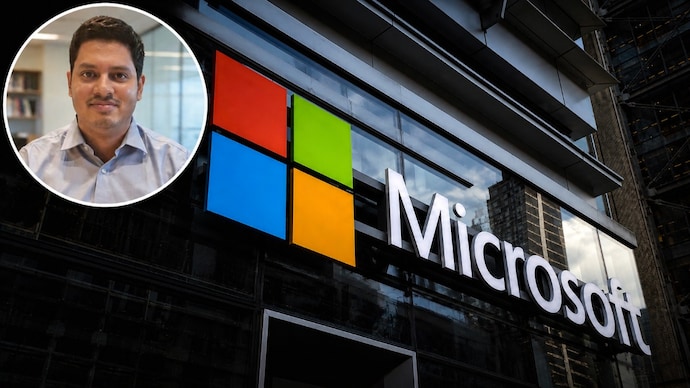
After moving to the US in 2015 to pursue a master's degree, Hemant Shetty secured an H-1B visa on his first attempt and eventually landed a job at Microsoft. (Image: Linkedin/Hemanth Shetty)

New Delhi,UPDATED: Jun 11, 2026 17:39 IST
For years, the H-1B visa has represented a coveted pathway to the American Dream for skilled professionals, especially those from India. For Hemant Shetty, however, what began as a promising journey eventually felt more constraining than liberating. After nearly 11 years in the US, the Indian tech professional, who secured an H-1B visa on his first attempt and later worked as an engineer at Microsoft in Seattle—has returned to India to launch his own startup.
In an interview with The American Bazaar, a news outlet focused on the Indian-American community and US immigration matters, Shetty cited a combination of visa uncertainty, family responsibilities, and entrepreneurial drive as the key factors behind his decision.
Shetty first moved to the US in 2015 to pursue a master's degree in computer science. His career trajectory started strongly: he won the H-1B lottery on his first attempt, began working in the healthcare sector in Boston, and eventually joined Microsoft, one of the world’s most prestigious tech companies.
Despite professional success, Shetty and his wife always regarded their time in the US as temporary. The notoriously long Green Card backlog for Indian applicants in the EB-2 category made permanent residency feel particularly unattainable, Shetty told American Bazaar.
US VISA UNCERTAINTY ACCELERATED HEMANT SHETTY'S RETURN TO INDIA
One of the decisive factors in Shetty's choice to leave the US was the increasing unpredictability of the H-1B visa system. Recent disruptions to visa interview scheduling and international travel proved to be a turning point.
"The recent H-1B upheaval and cancellation of interview slots has meant that travel to and from the US is no longer straightforward for visa holders," Shetty told The American Bazaar.
The issue became deeply personal when a long-planned trip to India was disrupted. "I was supposed to visit India in January 2026. I had booked a slot months in advance. But then my appointment was rescheduled to 2027," he said.
Shetty was referring to a series of changes introduced under the second Trump administration's immigration policies, including the termination of third-country visa renewals and expanded social media screening requirements for visa applicants.
The measures contributed to significant backlogs at US consulates in India, leading to visa interview appointments being pushed back by months. The delays left many Indian professionals who had travelled home for visa processing stranded away from their jobs and families , while several US employers reportedly advised H-1B workers to postpone trips abroad to avoid complications with re-entry.
For Shetty, whose father had recently faced health challenges, the inability to travel home reliably became unacceptable."Keeping my parents' health in mind, this kind of uncertainty is no longer the price I am willing to pay," he explained.
The experience solidified his decision to return to India after more than a decade in the US, where he now intends to build his startup unencumbered by visa limitations.
H-1B VISA CREATED ENTREPRENEURIAL BARRIERS, GENERATED STRESS
Beyond travel concerns, Shetty said the H-1B visa itself created structural limitations for people who want to build businesses. The visa ties workers to employer sponsorship, making independent entrepreneurship difficult. "I wanted to pursue my own business ventures, which I could not do due to the constraints the H-1B visa comes with," he told America Bazar.
He described this as an "entrepreneurial itch" that became impossible to ignore over time. Even with a high-paying role in the US tech industry, he felt constrained by a system that did not easily allow immigrants to take risks and create companies.
Shetty also spoke about the psychological pressure many visa holders quietly endure. During periods of layoffs in the tech industry, H-1B workers often have only 60 days to find a new employer or leave the country.
"Visa stress is real. The 60-day clock in times of industry-wide layoffs is a pain. No professional should have to uproot their entire life in two months," he told American Bazaar.
He added that new rules, higher fees, and increased scrutiny had changed the reality of life on an H-1B visa, stating, "Travelling has become a high-risk gamble."
Despite leaving behind a prestigious job at Microsoft, Shetty says he returned to India with optimism and a clear goal: building a startup of his own. He believes many professionals face similar dilemmas but hesitate to speak openly about them.
"Maybe my experiences may help someone take that step they have been thinking about," he told America Bazaar.
Hemant Shetty's story reflects a growing question facing many Indian professionals abroad: whether the stability and prestige of the US tech ecosystem still outweigh the personal, emotional, and entrepreneurial costs tied to the H-1B visa system.
- Ends
Published On:
Jun 11, 2026 17:39 IST