1 month ago
At a time when tensions are running high due to the Middle East conflict, Pakistan has moved quickly to insert itself into the diplomatic conversation, offering to host talks and acting as a mediator between Washington and Tehran.
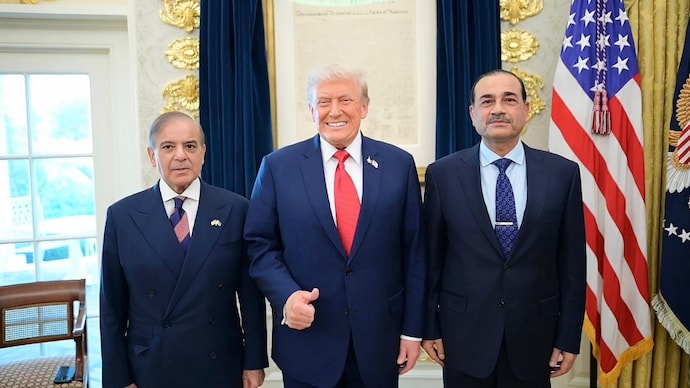
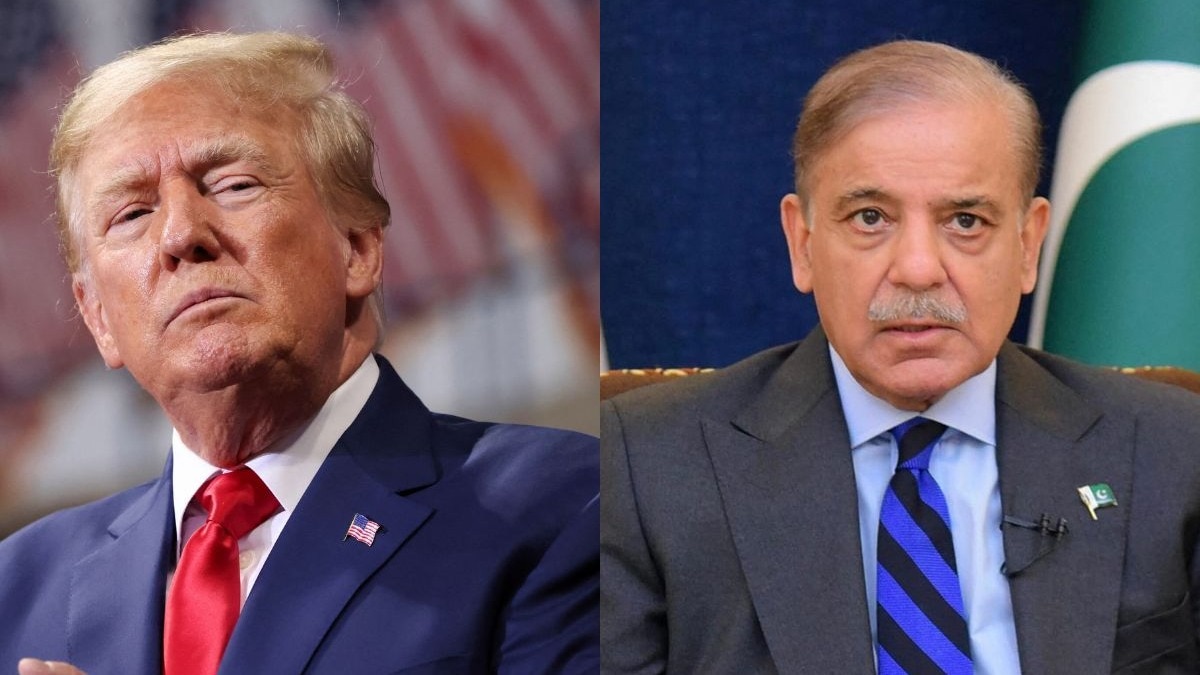
Pakistan PM Shehbaz Sharif (extreme left) and Army chief Asim Munir (extreme right) with US President Donald Trump in White House. (File Photo)

UPDATED: Mar 29, 2026 18:11 IST
Pakistan has a history of playing both sides when it suits its interests -- and this time it appears no different. Once accused by Washington of duplicity and sheltering terrorists, Islamabad is now attempting a sharp image makeover, projecting itself as a "peace broker" in the escalating US-Iran crisis. At a time when tensions are running high due to the Middle East conflict, Pakistan has moved quickly to insert itself into the diplomatic conversation, offering to host talks and acting as a mediator between Washington and Tehran.
Pakistan’s re-emergence in US strategic thinking marks a notable turnaround. During his first term, US President Donald Trump had openly criticised Pakistan, accusing it of offering "lies and deceit" despite decades of US funding and military assistance. That perception appears to have shifted, at least partially, as Islamabad found ways to align itself with Washington’s immediate priorities, according to the Wall Street Journal.
US special envoy Steve Witkoff said that Pakistan played a role in conveying a 15-point US peace proposal to Iran. Deputy Prime Minister Ishaq Dar confirmed that the message was delivered through a Pakistani-facilitated back channel. At the same time, Trump amplified Islamabad’s offer to host negotiations, giving the proposal wider visibility.
Experts say the change reflects a deliberate effort by Pakistan’s leadership to rebuild trust. Husain Haqqani, a former Pakistani ambassador to the US, described the situation bluntly. "From Pakistan’s point of view, it’s a win-win. Whether there is a deal or there isn’t. What Pakistan has accomplished is that the impression and image of isolation has been replaced by it being centre stage," he told WSJ.
HOW PAKISTAN WORKED ITS WAY INTO TRUMP’S INNER CIRCLE
A big part of this sudden diplomatic shift seems to come down to how Pakistan has worked its way into Donald Trump’s inner circle. According to the WSJ, the country’s army chief, Asim Munir, has played a crucial role here, personally engaging with people close to Trump and building connections that go beyond traditional diplomacy.
These ties have not just been political but also business-driven. One example is a deal involving a firm linked to Steve Witkoff’s family and the Pakistani government, centred around stablecoins, a type of cryptocurrency. The outreach did not stop at paperwork -- it extended to carefully managed high-level meetings in Islamabad, where figures connected to Trump were welcomed with full state-style attention, signalling just how seriously Pakistan is pursuing this new equation.
Trump himself has spoken favourably about Munir, calling him a "tough man" and a "serious fighter." Such public remarks indicate a level of personal rapport that Pakistan appears to have cultivated carefully as part of its broader diplomatic strategy.
Political observers say Islamabad also made symbolic gestures that resonated with Trump. Among them was nominating him for the Nobel Peace Prize, citing his role in easing tensions between India and Pakistan -- a claim disputed by New Delhi.
PAK’S BALANCING ACT BETWEEN IRAN AND SAUDI ARABIA
Pakistan’s positioning as a mediator is not without complications. The country shares a border with Iran and maintains working ties with Tehran, which has reportedly allowed limited Pakistani shipping through the Strait of Hormuz despite restrictions. At the same time, Islamabad has strengthened defence cooperation with Saudi Arabia, including a mutual security arrangement.
There are also domestic pressures. Following the killing of Iran’s Supreme Leader, Ayatollah Ali Khamenei, by US and Israeli forces, protests erupted in Pakistan, reflecting public sentiment in a country with a significant Shia population.
While Iran has rejected the US proposal and offered its own five-point plan, Pakistan continues to push for dialogue. Islamabad is preparing to host a meeting of mediating countries, including Saudi Arabia, Turkey and Egypt, in what could serve as groundwork for future negotiations.
Even if direct talks between Washington and Tehran remain uncertain, Pakistan seems to have already gained what it was aiming for. By stepping into a sensitive and high-stakes situation, Islamabad has managed to project itself as a relevant player again and re-open doors in Washington that had long been shut.
- Ends
Published By:
Satyam Singh
Published On:
Mar 29, 2026 18:10 IST
Tune In