53 minutes ago
Houthi rebels captured Yemen's Red Sea coast and Mokha in a 48-hour offensive aided by alleged Iranian advisers. The rout has exposed divisions in pro-government forces and raised fresh risks to Saudi oil shipments.

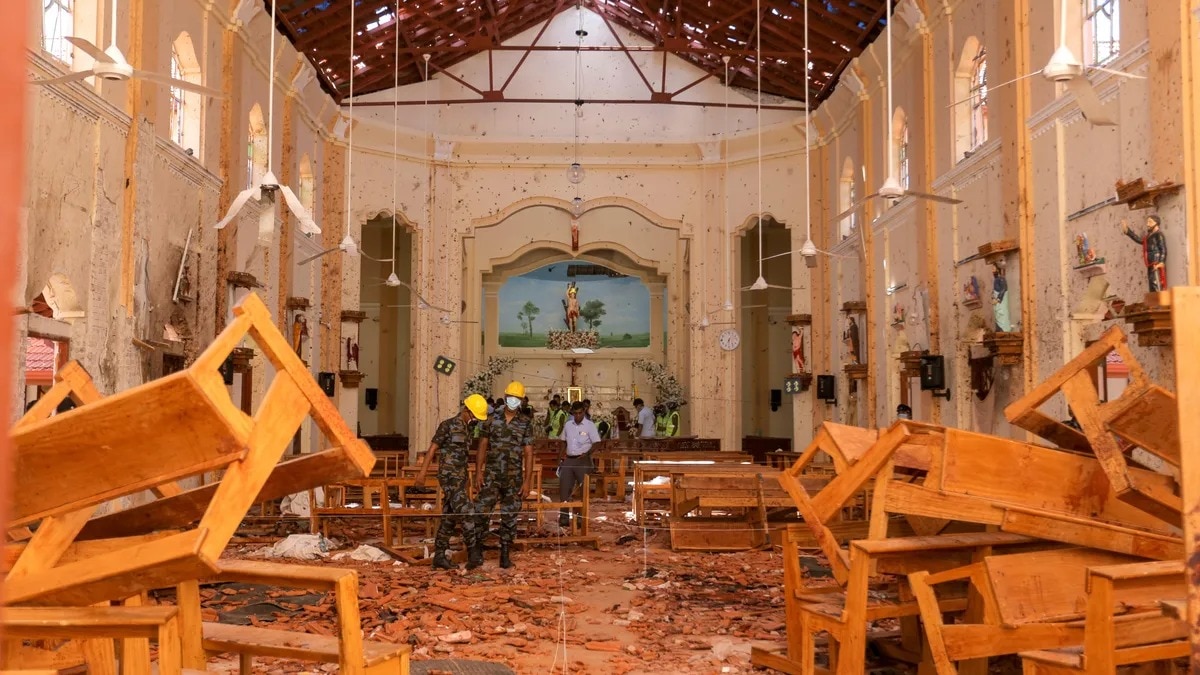
Stock photo used for illustration

Cairo,UPDATED: Sep 23, 2026 14:08 IST
Houthi rebels seized Yemen's Red Sea coast from pro-government forces in less than 48 hours, in a major setback for the United States and Washington's regional allies. People familiar with the offensive told The Associated Press that advisers from Iran's Revolutionary Guard were in the field and helped direct the battle, marking what they described as Iran's most direct intervention in support of the Houthis since Yemen's civil war began in 2014.
The advance has widened the Houthis' role in the wider conflict involving the US and increased pressure on Saudi Arabia. The rebels' biggest territorial gain in years, along with the closure of a key Saudi pipeline, has improved their ability to threaten Saudi oil exports, pushed up global fuel prices and given Iran greater leverage. The AP said it spoke to 10 officials and soldiers, including a senior Houthi official, two regional officials, a top Yemeni military commander and a member of Yemen's ruling presidential council, all of whom spoke on condition of anonymity to discuss internal decision-making.
The Houthis' 115-kilometre assault exposed deep divisions among forces aligned with Yemen's Saudi-backed, internationally recognised government. According to the account, the rebels penetrated the internal communications of the Resistance, one of the main anti-Houthi forces, allowing them to track movements and deepen confusion. As pro-government forces retreated, Resistance leader Lt. Gen. Tariq Saleh fled to Saudi Arabia. Residents left Mokha overnight, and the Houthis entered the key port city unopposed on September 10. They also captured nearby strategic islands, further improving their ability to target Saudi oil shipments in the Red Sea.
The Houthis had not launched a major coastal campaign since 2017, when government forces pushed them out of the area. After a truce took hold in 2022, the group turned to attacks on Red Sea shipping linked to the war in Gaza, continuing until a heavy US bombing campaign in 2025. After the US and Israel struck Iran in February, the Houthis mostly stayed on the sidelines. Security analyst Mzahem Alsaloum said that last year Iran increased training and logistical support for the Houthis on more advanced missiles, drones and uncrewed attack boats. In July, the Houthis resumed attacks on Saudi Arabia after accusing it of striking the airport in Sanaa, in what appeared to be an attempt to stop a flight from Tehran. Alsaloum and the senior Houthi official said that flight, which later landed, brought Revolutionary Guard advisers who joined other Guard and Hezbollah advisers already in Yemen.
In early August, the Houthis resumed attacks on government forces, focusing on Taiz and firing missiles and drones at Mokha. The senior Houthi official said Iranian advisers had earlier focused on strategic planning and had not been in the field, but in the latest escalation they were "present at all levels", including planning tactical manoeuvres and working with front-line commanders. The two regional officials also said Iran gave direct support that helped the rapid advance. Alsaloum said the advisers also analysed communications and satellite intelligence, capabilities the Houthis lacked. Iran's UN mission did not respond to requests for comment.
The Resistance, with about 30,000 fighters, was the strongest pro-government force on the coast, but it had not seen major combat since 2017. Its spokesman, Maj. Gen. Sadiq Dwaid, said the Houthis bombarded its positions for a month with 130 ballistic missiles and 145 suicide drones. He said his forces were spread across 170 kilometres, from Mokha into the mountains, against what he estimated were 75,000 Houthi fighters. In early September, the Giants Brigade stepped in and briefly helped push back the rebels, but one government official said it had not coordinated with the Resistance, angering field commanders. The two forces had a long-running rivalry linked to the earlier struggle between Saudi Arabia and the United Arab Emirates for control of the anti-Houthi camp, a contest that ended with the UAE's abrupt withdrawal from Yemen in January. There was no "unified command", the senior military official said, adding: "This was a priceless opportunity for the Houthis."
On September 9, the Houthis pushed south towards Mokha through a narrow mountain valley while heavily bombarding their opponents. One government official said that after breaching communications, the Houthis listened in and exploited divisions, and Resistance leaders lost contact with several field commanders. By afternoon, the Houthis had taken the mountain road and a nearby military base, cutting supply lines to Mokha. At about 6 pm, orders were issued for Resistance units to retreat to the port city. Two Resistance fighters said that when thousands of fighters arrived, troops already in Mokha assumed a major Houthi assault was coming and began to flee. Mokha resident Issa Gubwani said he saw fighters in military vehicles and pick-up trucks streaming out of the city. "They left us to face our fate," he said. Tens of thousands of residents also fled. The Houthi official said that when the rebels entered early on September 10, "the city was empty."
A senior government military official said Yemeni forces were shocked that Saudi warplanes did not strike the Houthis during their advance on Mokha. The Saudi government media office did not respond to a request for comment. Two government officials said the Houthis captured weapons and military equipment including armoured vehicles, rockets, artillery shells and ammunition, much of it from the UAE and Saudi Arabia, and later displayed some of it in a televised parade. The Resistance said it lost 500 fighters, though that could not be independently confirmed, while the Houthis have not announced their losses. As government forces try to regroup and militia supporters trade blame and accusations of treason online, the Houthis are fortifying their newly captured territory. Summing up the setback, Brig. Gen. Walid Ziyad of the Resistance wrote on social media: "Losing the West Coast is not the end of the battle; rather, it marks the beginning of a fiercer battle."
With PTI Inputs
- Ends
Published By:
India Today Web Desk
Published On:
Sep 23, 2026 14:08 IST