1 hour ago
Iran-backed Houthis have seized Yemen's Mocha and are advancing towards the Bab el-Mandeb Strait, raising the prospect of a second maritime chokepoint being disrupted after Hormuz. The development could further squeeze Saudi Arabia, which has relied more heavily on Red Sea routes, while adding pressure on global energy supplies and shipping.
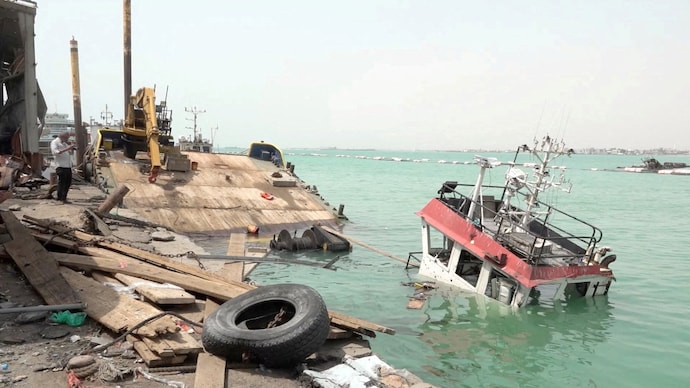
Damage in the aftermath of Houthi strikes on the Red Sea port city of Mocha, Yemen. (Reuters)

New Delhi,UPDATED: Sep 11, 2026 00:14 IST
A new piece has moved across West Asia’s geopolitical chessboard, taking away yet another crucial square from US President Donald Trump and one of his strongest allies in the region, Saudi Arabia. As Iran and the US remain locked in a prolonged standoff over the Strait of Hormuz, Tehran-backed Houthi forces have seized Yemen’s Mocha from government forces and are advancing towards the Bab el-Mandeb Strait.
The move puts another critical maritime chokepoint in play. Bab el-Mandeb, just 80 km from Mocha, is a key sea route connecting Asia with Europe and carries around 12% of global oil and other goods. With roughly 25% of the world’s seaborne oil trade also passing through the Strait of Hormuz, any sustained disruption at both waterways could put a huge share of global energy flows under pressure. Fighting has already been reported around islands and port cities surrounding Bab el-Mandeb.
The stakes are particularly high for Saudi Arabia. With the Strait of Hormuz on its eastern coast disrupted, Riyadh has increasingly relied on the Red Sea route to move oil exports towards the west. A threat to Bab el-Mandeb would therefore put the kingdom’s alternative maritime route under pressure as well, while South Asia and Europe could face a sharper squeeze as the Hormuz impasse drags on.
The Houthis have seized control of Yemen’s port city of Mocha and advanced towards strategic islands, raising fears that they could gain greater leverage over Bab el-Mandeb. The Houthi-run humanitarian operations coordination centre said Red Sea navigation remained safe for all shipping companies except Saudi vessels.
Yemeni government military sources said the Houthis had reached the Hanish islands after taking Mocha. Government forces and their allies were also relocating south along the Red Sea coast towards Dhubab, which lies close to the Bab el-Mandeb Strait.
Control of Dhubab and the nearby island of Perim would be strategically important for gaining influence over the strait, the sources said.
WHY SAUDI ARABIA IS IN SQUEEZE
The potential threat to Bab el-Mandeb is particularly significant for Saudi Arabia because the kingdom has relied more heavily on the Red Sea shipping route after the Iran conflict effectively closed the Strait of Hormuz.
The Houthis have also specifically targeted Saudi Arabia. The group declared a naval blockade against Saudi Arabia in July and has stepped up attacks in the kingdom’s south this month.
Saudi civil defence authorities issued emergency alerts in the southwestern city of Khamis Mushait for the fourth time in 24 hours on Thursday as Houthi attacks continued.
Houthi spokesperson Mohammed Abdulsalam said the group’s operations were defensive and would stop once attacks on Yemen ended.
WHY BAB EL-MANDEB MATTERS
Bab el-Mandeb, meaning the Gate of Tears, lies between Yemen and the African coast of Djibouti and Eritrea. It links the Red Sea with the Gulf of Aden and is one of the world’s most important maritime routes.
The waterway is used to transport crude oil and fuel from the Gulf towards the Mediterranean, including through the Suez Canal and the Suez-Mediterranean pipeline. It is also an important route for commodities travelling towards Asia.
A Houthi stranglehold over the waterway could therefore disrupt another major transit corridor at a time when shipping through the Strait of Hormuz has already been severely affected.
If the Houthis are able to exert sustained control over the route, it could give Iran-aligned forces significant leverage over regional shipping and potentially push oil prices higher.
PAKISTAN WARNS IRAN OVER HOUTHI ATTACKS
Pakistan has also conveyed a warning to Iran to rein in its Yemeni Houthi allies, according to Saudi, Pakistani and Iranian sources.
A senior Iranian official confirmed that Pakistan delivered the message to Tehran on Tuesday. Iran’s response was that “Iran does not control the Houthis”.
The developments come as Iran and the United States have carried out their biggest declared wave of tit-for-tat attacks on shipping in the Gulf region this week since the war began in February.
TRUMP EXPECTS IRAN WAR TO END AFTER US MIDTERMS
The escalation in the Red Sea comes as US President Donald Trump said he expected the war with Iran to end after the November midterm elections.
Trump said Tehran was trying to influence the elections and claimed that Iran was becoming increasingly desperate.
The conflict has already contributed to higher fuel prices and disrupted shipping through the Strait of Hormuz. Preliminary ship-tracking data showed that only seven vessels crossed the strait on Wednesday, around half the 10-day average.
With the Houthis now advancing towards Bab el-Mandeb, Saudi Arabia faces the prospect of disruption around two critical maritime routes, Hormuz and the Red Sea, at a time when the regional conflict is already putting pressure on energy supplies and global shipping.
- Ends
Published By:
Sayan Ganguly
Published On:
Sep 11, 2026 00:14 IST