 1 day ago
European leaders issue joint statement defending Denmark and Greenland
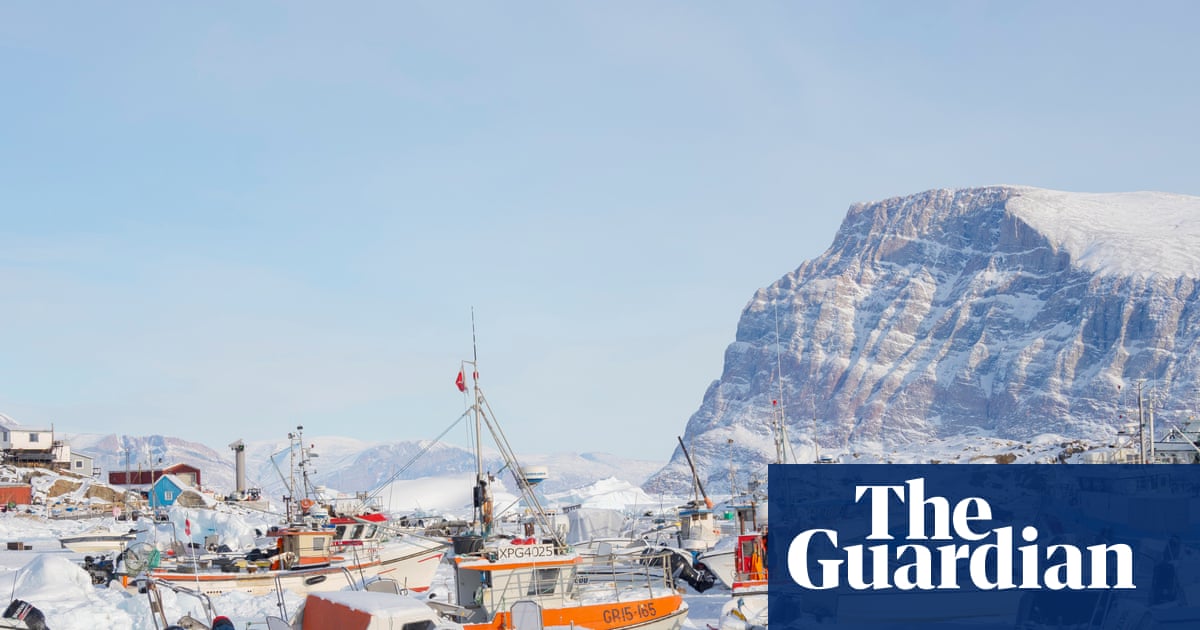
The leaders of France, Germany, Italy, Poland, Spain, Britain, and Denmark have just issued a joint statement on Greenland saying the Arctic territory belongs to Denmark.
“It is for Denmark and Greenland, and them only, to decide on matters concerning Denmark and Greenland.”
The statement does not directly refer to the US but emphasises the importance of adhering to international law and UN Charter principles of respecting sovereign territory and borders.
Key events Show key events only Please turn on JavaScript to use this feature
Zelenskyy also wrote on X about 15 minutes ago that he’d had a meeting with French president Macron where they had discussed further supplies of defence weapons.
“Diplomacy and real assistance must go hand in hand. Russia does not stop its strikes against our country, and right now we need to bolster air defense to protect our people, our communities, and critical infrastructure.
“Every delivery of air defense missiles saves lives and boosts the chances for diplomacy. That is why every meeting must yield concrete results – new decisions regarding air defense, new assistance packages, and new capabilities to protect the skies.
“During our meeting with President Macron, this was exactly what we discussed – Ukraine’s real capabilities to counter Russian terror, our defense, and the support that can strengthen our positions in diplomacy.”
Zelenskyy earlier shared video of him stepping off a Ukraine-flagged plane upon arrival in France.
He wrote on Telegram that there would be “important negotiations” with allied leaders of the “Coalition of the Willing” today, with the Nato secretary-general and the US delegation.
He called them “negotiations that should give more protection and strength to Ukraine.
“We count on the support of partners and steps that can guarantee real security for our people.”
Denmark’s Prime Minister Mette Frederiksen was quick to push back on Monday against Trump’s renewed call to takeover Greenland, a semi-autonomous territory of the Danish kingdom.
She said an attack by the US on a Nato ally would mean the end of the military alliance and “post-second world war security”. It would, she warned, mark the end of “everything”.
In her statement today released jointly with European leaders, it stressed: “Greenland belongs to its people. It is for Denmark and Greenland, and them only, to decide on matters concerning Denmark and Greenland.”
The Danish foreign policy committee has called an extraordinary meeting of the Danish parliament on Tuesday night to discuss the Danish kingdom’s relationship with the US that will be attended by the foreign minister, Lars Løkke Rasmussen, and the defence minister, Troels Lund Poulsen.
Miller ramped up Trump's Greenland threat
Back to the Greenland issue and while we’ve had that statement from European leaders this morning, vigorously defending Denmark, I’ll also flag what Stephen Miller, the US president’s deputy chief of staff for policy said a few hours ago.
He told CNN that military intervention would not be needed in order for the US to gain control over Greenland because of its small population – which he incorrectly stated as 30,000 when it is roughly 57,000.
He also suggested that Denmark does not have a right to the Arctic territory, which is a former Danish colony and remains part of the Danish kingdom. Copenhagen continues to control Greenland’s foreign and security policy.
Asked whether military action against Greenland was off the table, he said:
“The real question is what right does Denmark have to assert control over Greenland? What is the basis of their territorial claim? What is their basis of having Greenland as a colony of Denmark?”
He added: “The US is the power of Nato. For the US to secure the Arctic region to protect and defend Nato and Nato interests, obviously Greenland should be part of the US. And so that’s a conversation that we’re going to have as a country. That’s a process we’re going to have as a community of nations.”
There was, he said, “no need to even think or talk about” a military operation in Greenland, adding: “Nobody is going to fight the US militarily over the future of Greenland. That doesn’t make any sense.”
Just wanted to remind readers of the key outcomes parties are working on at the Paris summit today.
We’ve just had a smidge of detail on commitments allies would provide to Ukraine were Russia to attack again.
But allies are also working on securing:
Methods to monitor a ceasefire.
Any deployments of a multinational force to protect Ukraine.
Continued support and investment for Ukraine’s military (given they will be the first line of defence against any more Russian aggression).
Long-term plans for defence co-operation with Europe and Nato.
Europe would commit to binding guarantees to protect Ukraine, draft statement shows
European allies would commit to “politically and legally binding” guarantees to protect Ukraine “in the case of a future armed attack by Russia in order to restore peace”, a draft Coalition of Willing statement reads, according to Reuters.
“These commitments may include the use of military capabilities, intelligence and logistical support, diplomatic initiatives, adoption of additional sanctions,” said the draft.
The statement is being put forward at the summit today at the Elysee Palace and still needs sign-off.
The statement says such a “system of politically and legally binding guarantees” will be “activated once a ceasefire enters into force”.
You would assume that such pledges would be legally binding but explicitly spelling it out is no doubt a relief to Ukraine. The detail of what those guarantees actually consist of is still unclear beyond the vague categories above.
Analysts had noted that it was hoped if European leaders could firm up their commitments to Ukraine at today’s meeting, that would encourage the US to consolidate their pledges to Ukraine on security support.
Zelenskyy arrives for EU-US talks on peace

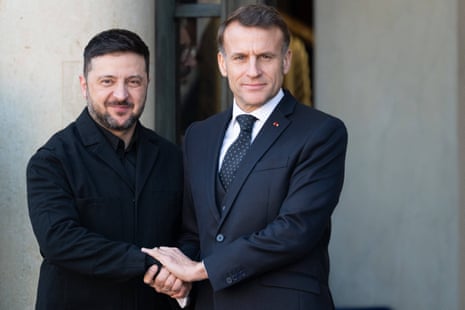
Ukraine’s president, Volodymyr Zelenskyy, has also just arrived at the Élysée Palace for talks with European leaders and US officials. He was warmly greeted by Macron.
Earlier we saw some lines from a draft statement from the “coalition of the willing”, I’ll go through them soon.
So we’ve just had that statement from the leaders of France, Germany, Italy, Poland, Spain, Britain, and Denmark on the issue of Greenland, following Trump’s explicit coveting of the Danish territory in the Arctic.
It’s a fairly robust message saying Greenland belongs to its people, and only Denmark and Greenland can make decisions on its future.
Europe says Arctic security should be achieved 'collectively with Nato allies including US'
They note that Arctic security “remains a key priority for Europe” and for Nato.
Security in the Arctic must be achieved collectively, in conjunction with Nato allies including the United States.”
European allies 'are stepping up' in the Arctic
Their statement also says they “will not stop defending” the UN Charter principles, “including sovereignty, territorial integrity and the inviolability of borders”.
Nato has made clear that the Arctic region is a priority and European allies are stepping up.”
They say they’ve their presence, activities and investments, “to keep the Arctic safe and to deter adversaries. They stress that “the Kingdom of Denmark - including Greenland - is part of Nato.”
European leaders issue joint statement defending Denmark and Greenland
The leaders of France, Germany, Italy, Poland, Spain, Britain, and Denmark have just issued a joint statement on Greenland saying the Arctic territory belongs to Denmark.
“It is for Denmark and Greenland, and them only, to decide on matters concerning Denmark and Greenland.”
The statement does not directly refer to the US but emphasises the importance of adhering to international law and UN Charter principles of respecting sovereign territory and borders.
What guarantees have been discussed so far
Before Venezuela, Witkoff last week had indicated progress in talks on measures to protect Ukraine against future Russian aggression.
On 31 December, he had tweeted that the “productive” discussions with national security advisers of Ukraine, UK, France and Germany had focused on “strengthening security guarantees and developing effective deconfliction mechanisms to help end the war and ensure it does not restart.”
France, which with the UK has led the months-long efforts for a ceasefire, has given some detail of such a security plan.
Macron has said that the Ukrainian military would be the first line of defence against any Russian fighting starting again, and it would be backed by the coalition’s training, weapons and other support.
He has also suggested that European forces might be deployed away from Ukraine’s front lines to help deter future Russian aggression.
Last week, Zelenskyy also revealed that the US had agreed to security guarantees of up to 15 years – although what those guarantees would look like in the shape of troop or resource deployment was unknown.
Zelenskyy this past weekend also said that potential European troop deployments still face hurdles and “not everyone is ready” to commit forces.
Before the US’s flagrant operation removing the Venezuelan leader, French president Macron had expressed optimism about today’s “coalition of willing” nations.
On 31 December, Macron said Western allies would “make concrete commitments” at the summit “to protect Ukraine and ensure a just and lasting peace.”
Prospects for peace now have been upended, with US focus now squarely on Venezuela and Trump’s Greenland takeover suggestion stoking alarm in Europe.
What Trump has said on Greenland
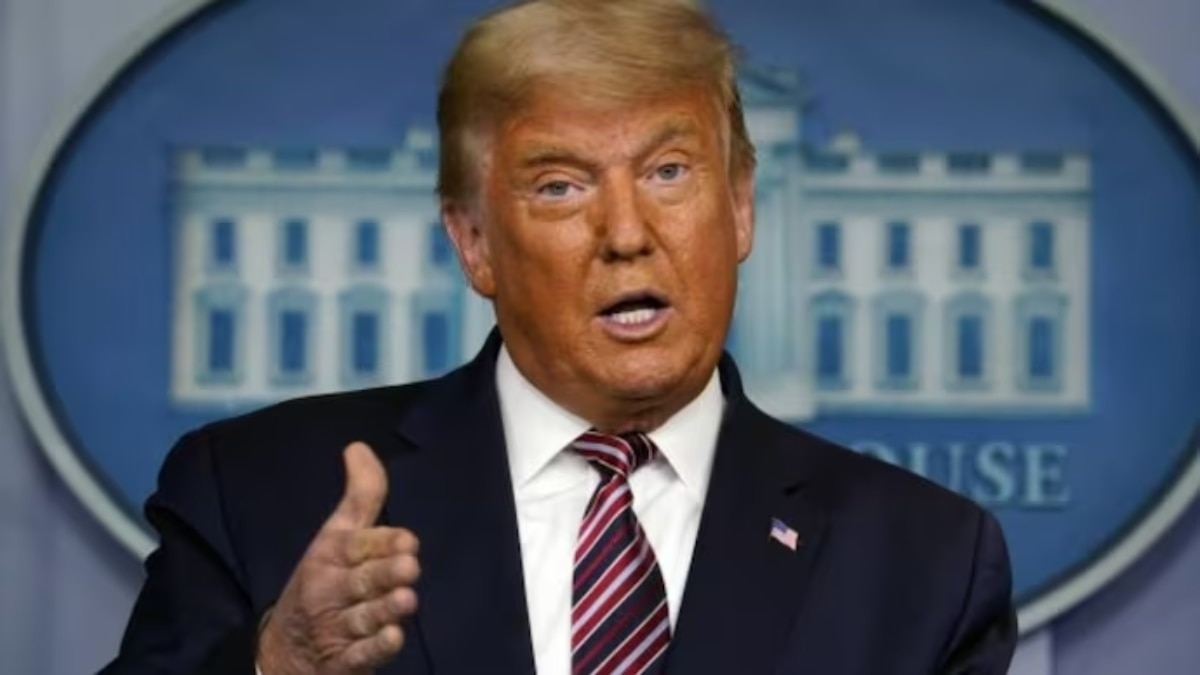
The US president was openly speculating about the Danish territory on the weekend, after his Venezuela operation.
“It’s so strategic right now. Greenland is covered with Russian and Chinese ships all over the place,” he told reporters on Sunday.
“We need Greenland from the standpoint of national security, and Denmark is not going to be able to do it.”
Danish PM Mette Frederiksen said in rebuttal that Trump has “no right to annex” the territory and that Denmark already provides its Nato ally significant access to Greenland through existing security agreements.
Poland says Denmark can rely on European solidarity regarding Greenland
Denmark can count on the solidarity of all of Europe on Greenland, says Polish PM Donald Tusk, after Trump asserted this week again that he wanted to take over the Arctic island.
Tusk echoed Denmark’s comments yesterday that any US attack on the Danish territory would be catastrophic for the Nato coalition.
“No member should attack or threaten another member of the North Atlantic Treaty. Otherwise, NATO would lose its meaning if conflict or mutual conflicts occurred within the alliance,” Tusk said.
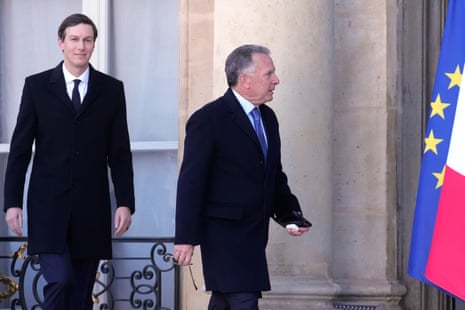
The various key players are arriving at the talks – including Witkoff and Kushner.
The US delegation today was supposed to be led by Secretary of State Marco Rubio, however he won’t be attending any more because of the military operation in Venezuela.
The Ukrainian president, Volodymyr Zelensky, is attending the “coalition of the willing” meeting today in Paris co-chaired by the French president, Emmanuel Macron, and the UK prime minister, Keir Starmer.
The Canadian PM, Mark Carney, arrived earlier this morning for bilateral talks with Macron. The German chancellor, Friedrich Merz, and the Danish PM, Mette Frederiksen, will also be there.
Zelensky is expected to arrive around 11.10am for a meeting with Macron, before meeting the US delegation, which includes the special envoy Steve Witkoff, and Donald Trump’s son-in-law, Jared Kushner.
On Sunday, Zelenskyy had addressed his nation saying “meetings in Europe … must become yet another contribution to our defence and to hastening the end of the war.
“Ukraine will be prepared for both possible paths ahead – diplomacy, which we are pursuing, or continued active defense if the pressure from our partners on Russia proves insufficient. Ukraine seeks peace.”
The main meeting will take place just after 2pm, with a press conference expected around 5.45pm.
Details of long-term security guarantees for Ukraine are expected to be the focus of discussion, as well as the prospect of future Ukrainian membership of the EU. Given the US aggression in Venezuela, we can also expect comments from European leaders responding to Trump’s various territorial threats.
Morning opening: Ukraine on the agenda at a perilous moment

Frances Mao
Good morning and welcome to our live blog of a critical day in meetings between European world leaders and US officials.
The leaders of the UK, France, Germany, Denmark and Canada are all in Paris today for a meet that was scheduled last week to aid Ukraine, in the wake of Zelenskyy’s end-of-year talks with the US president, Donald Trump, to negotiate peace.
However, that was all planned before the US’s attack on Venezuela and abduction of its leader, which has upended the geopolitical calculus to say the least. Not only has it emboldened actions from states like Russia, the leaders of Nato democracies are now contending with Trump’s very active threat of grabbing territory like Denmark’s Greenland.
Despite the US’s clear violation of international law, most European leaders have also deferred from outright condemnation due to the stakes at play.
They are at a perilous position with Ukraine – in meeting with the Americans today they were trying to get the Trump administration to underwrite any security guarantees. But Trump is flouting the rules-based order – and the threat now from the US is even closer to hand for Denmark and Canada.
Denmark says a US attack on Greenland would be end of security order

Miranda Bryant
An attack by the United States on a Nato ally would mean the end of both the military alliance and “post-second world war security”, Denmark’s leader has warned, after Donald Trump threatened again to take over Greenland.
Fresh from his military operation in Venezuela, the US president said on Sunday the US needed Greenland “very badly” – renewing fears of a US invasion of the largely autonomous island, which is a former Danish colony and remains part of the Danish kingdom. Greenland’s foreign and security policy continues to be controlled by Copenhagen.
Mette Frederiksen, the Danish prime minister, warned on Monday that any US attack on a Nato ally would be the end of “everything”.
“If the United States decides to militarily attack another Nato country, then everything would stop – that includes Nato and therefore post-second world war security,” Frederiksen told Danish television network TV2.