1 month ago
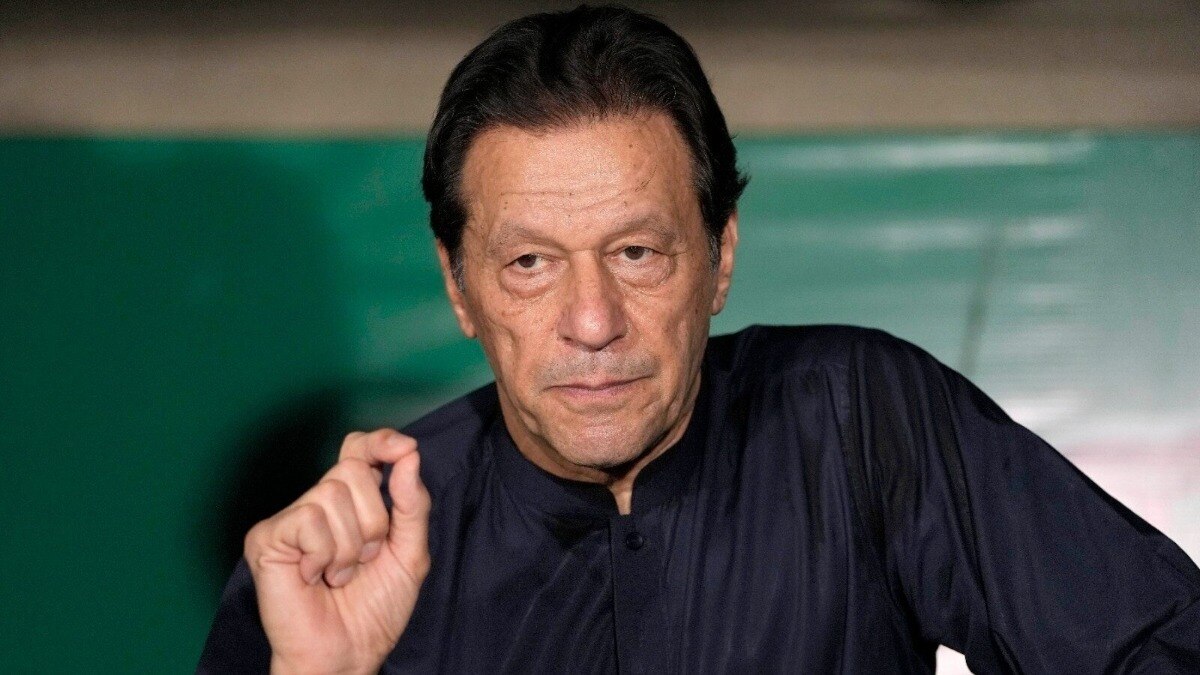
It's the kind of statistic that turns heads on both sides of the Rhine and the Ganges: the average Indian in Germany now takes home a higher salary than the average German. As Ambassador Philipp Ackermann bids farewell to New Delhi after four transformative years — before heading to his next high-stakes posting in Beijing — he opens up on how India's skilled workforce has become indispensable to Germany's economy, from nursing homes to IT floors. In this candid exit interview with India Today's Geeta Mohan, Ackermann unpacks the EU-India FTA, a new submarine-driven defence partnership, Gen Z's "fearless" politics, and why, despite the noise, he believes India's democracy has never been more alive.
Q: This is his last interview in New Delhi. So let's begin with your experience there — how has your experience been over here, the challenges you faced, and the good memories you have?
A: I want to start by saying it is certainly one of the most interesting postings — it is not one of the toughest postings. My experience over the last four years was so wonderful and so great in many ways that I would recommend India as one of the most enchanting postings you can have as a diplomat.
I had four wonderful years — not only because our relations, Germany and India, Europe and India, have flourished in these four years in an unexpected way, but also personally it was a wonderful time here. I have met so many interesting, inspiring and fascinating people. I have traveled so much in India — it is one of the most fascinating countries I know. And as you rightly say, my tenure will come to an end, but not my love for India. I will keep that in my heart, and I will go through the rest of my career and my life with this love for India in my heart.
Q: We'll still debate the challenges and why it's difficult in a few moments. But when it comes to Germany-India relations, in your period here as ambassador, how has it moved forward? What are the areas that are still niggling and that the two countries need to work on?
A: I think generally speaking there is always room for improvement, but with hindsight, what we achieved in the last four years is quite remarkable. I'd like to start with migration — we have set up channels with the Indian central and state governments that make migration to Germany by Indian skilled labor possible, fair, and legal, and I'm very proud of that. We now have a very solid base of Indian skilled labor in Germany, which is urgently needed, and I'm very happy the Indian authorities help us provide this migration flow.
We have a new partnership in defense — you've heard of the submarines — we have now accelerated all procedures when it comes to India and defense provision and procurement. There is a renewed interest between the armed forces of India and Germany, which is a good development.
In our common and unique partnership for green and sustainable development, we've reached a level of mutual cooperation, inspiration, and respect that is quite remarkable, with many concrete projects good for both sides, on equal footing.
Business, which is basically the lifeline of relations between countries, is good — we have a trade volume of fifty billion dollars with India, goods and services combined, and it is a balanced trade volume.
Q: But it can be better?
A: It can be more, but what I would say is that fifty percent comes from India and fifty percent goes into India, and that's a very sane and healthy relationship. We can do more, for sure, and through one milestone we've reached in the last four years — the FTA between the European Union and India — we will see more in the years to come.
Q: Manufacturing — how much potential does India have when it comes to manufacturing, and has it not been able to exploit that for various reasons?
A: I think one big impediment so far was tariffs, QCOs, and non-tariff impediments here and there. But with the FTA, I think we'll see renewed interest from Europe, from Germany, to set up manufacturing in India.
The carmakers, German carmakers, see a growing market in India, with the growing middle class. I would not be surprised if in a couple of years they double their numbers here selling cars. I had a wonderful discussion with the new head of BharatBenz, the Mercedes-Benz company here that produces lorries and buses, and they are on a very positive way. They have a huge production site in Chennai where they produce thirty thousand vehicles a year. They can go up to seventy thousand, and it's completely carbon neutral — that's the manufacturing India needs, that we need, that the world needs. So I think we have a lot, a lot, a lot of stories to tell here.
Q: You had four chancellor's visits here in four years — every visit translated into some forward movement and momentum for the relationship. But when it comes to the mobility agreement, which you've been discussing a lot — and of course you've been misquoted when it comes to numbers, which is a funny story, and you corrected it on record on India Today — how positive are you on the mobility itself? Because the most important aspect of this mobility is skilled labor. We talk about skilling. How does India have to weigh that thought?
A: I'm very optimistic about this migration because all my experience over the last four years shows there is an extremely globally-thinking Indian public. There are nurses, caregivers, but even apprentices who want to go to Germany and take this risk, because it is a risk — you come to a completely different cultural environment, a different language, a different climate, different people-to-people connect — and I must admire these people. They know exactly what they want; they have a clear vision of what they are heading to and what they want to achieve.
I went to this fantastic new Hindu temple in Berlin lately — the one with the tallest gopuram in Europe, in Berlin now. I talked to the people there. It was crowded with kids, students, middle-aged people, and everybody had a good job, everybody felt at home in Berlin, and I was very reassured to see what the success stories are.
There are always negative aspects of migration — you will not find one migration that is completely golden or fantastic. We in the embassy always advise people to look exactly at which university, for example, they would like to choose when they go to study in Germany. We have sixty thousand students in Germany now, and some of the universities, some of the institutions, are not really the best ones in our view, and they are too expensive, so people rely on agents that are not trustworthy. So that's a bit of a problem.
But generally speaking, all in all, our experience is wonderful, and you should not forget that the average Indian — we have about 3.2 lakh Indians in Germany — the average Indian has a higher salary in Germany than the average German. That's a success story.
Q: You brought out a very important point — because I've been speaking about this with your officials and diplomats as well — and that has to do with universities. When Indian students apply to any German university, they think it is one of the best, or they do not know the market. How does one tell whether they're going into a good university or not, and whether that holds any future for them in Germany?
A: Exactly, it's a very good question. What we tell students when they ask us this is that there is a website of the German Academic Exchange Service (DAAD), based in Delhi — having its biggest office outside Germany in Delhi — that really shows you all the qualities of the university. So instead of relying on an agent who has a vested interest because he gets money from these institutions, you should check on these websites which university is the best for you. You can even approach the DAAD and try to get help from them.
The problem is that Indians have this inclination to go with agencies, while Germans would always pick their universities individually by themselves. There are good agencies here, no doubt, but there are also very difficult ones.
My advice to Indian students is: don't trust your agent — double-check and go to the DAAD website in Delhi and check where the university you wish to join is ranked in that field.
Q: As a diplomat, how do you deal with the issue of migration versus illegal immigration? The issue of immigration itself has become a political talking point and debate in most countries, including Germany, at a time when most governments are shifting toward the far right. How does a diplomat explain immigration?
A: The German government has made a very clear decision and a clear legal provision. We want fair, legal, focused, and structured migration of skilled labor to Germany in areas where we don't have enough Germans or Europeans to do the job. One of these areas is nursing and caregiving. It is IT engineering, but also apprenticeships in crafts — plumbers, roofers, bakers — where we have a very special system. Illegal migration, we want to reduce as much as we can.
Germany has taken a lot of refugees — we have more than a million Syrian refugees, we have far more than a million Ukrainian refugees in Germany. People feel not very comfortable with this big influx of refugee communities, and the German government has now taken measures to reduce illegal migration as much as we can, and we see the numbers going down considerably now.
But you have to explain to the public that on the one hand, if you live in a retirement home or go to a hospital, you need caregivers because we don't have enough — it's very simple, and the experiences are also very good; people like Indian nurses and are very happy to be taken care of by Indian caregivers.
But on the other hand, we want to reduce illegal migration, and that's a bit of a political challenge — convincing people about these two layers of migration. The government has taken it upon itself to explain that to people as much as it can.
Q: Is it hard to distinguish now between illegal immigration and refugees? Because there is a point where one could explain refugees — that's no longer the case.
A: We had these huge waves of refugees very easily explained from Syria and Ukraine, where the war was going on. But when I talk about illegal migration, people come to Germany with the best intentions — they want a better life, a better job. We are open to legal migration; we are not open to illegal migration. So if you want a job in Germany, prepare yourself, ask for a visa at the German embassy in your country, and then you can try.
But what is unacceptable is going illegally through the border and then asking for asylum for some reasons in order to stay — that we have to reduce. I think that's the will of the people, but it has nothing to do with legal, fair, and focused migration in areas where we need people.
Q: We'll move on to other subjects, but before we go to the region and global issues, one last thing — you spoke about the EU FTA. It's a big one, India and the European Union. It opens doors for so many aspects of ties. Where do you think the two sides will have problems, even when it comes to trade, or particularly defense, where transfer of technology is still far from complete?
A: It is a tailor-made, very comprehensive trade agreement. The European Union hasn't closed such a deal so far — we have really accepted a lot of Indian ideas in this FTA, and India has also accepted a lot of European ideas. So it was a compromise at the end, and that's where our cultures somehow come from — we are democratic compromise cultures.
I think we see a very sound and good agreement. Of course, there are some areas not covered by the agreement — one is agriculture, for example, or most of agriculture — that will continue to be outside the FTA, along with the current situation when it comes to agriculture.
But I think we should wait until it is implemented and see how it works out. An FTA is always a living document — you might extend it, you might reduce it, in the years to come you might see where it needs adjustment, and both sides have agreed to do that.
Q: On the defense front- technology transfer - we know there's a very important submarine deal — but where from here when it comes to technology, when it comes to real integration?
A: What we have shown — and this is now a national issue, not a European issue — is that Germany is ready to work closer, to intensify work with India when it comes to defense. I would not exclude that at some stage in the coming years we have also a common project that we develop, both of us.
We see what our French colleagues have done with India, and we see, with a certain respect, how they have proceeded in their defense partnership.
Technology transfer is something you have to think about very carefully — it needs a level of trust and also a level of control, both important. But generally speaking, if these requirements are fulfilled, we are ready for technology transfer also.
Q: You have served in India in one of the most colorful times when it comes to our vibrant democracy. What's your reading on how you see India as a democracy?
A: I think it is a very vibrant democracy, and it's extremely lively in many ways. We have seen what happened over the last couple of days — we have seen Jantar Mantar, we have seen the government talking to the CJP, we have seen prominent ministers of the government taking up a conversation with them, we have seen the government coming to a common understanding. We'll see how that goes further.
But I would always tell my friends: you look at what happened over the weekend and you see how lively Indian democracy and Indian civil society is. You see also the media — I find the media very comprehensive when they talk about it, a lot of media coverage of what happened over the weekend, so that's also very reassuring. And one element I find striking is how social media takes it up and how social media reacts to that.
I've seen many state elections, I've seen one Lok Sabha election here. I think we are in a very vibrant and lively democracy of its own kind — it's not like a German or Dutch or American democracy. It's a democracy that has developed from independence onward in a way that is, I think, very sound. Even the discussion inside India about whether this democracy is still vibrant and lively is itself a sign that it is a democracy in a way — otherwise you wouldn't say that. So I'm very confident, actually. Whether it's a different kind of democracy, that's a different story.
Q: But I have one thing to say about this generation — it's absolutely fearless, whether it's Germany, India, Nepal, Bangladesh, America. We are seeing a very fearless generation, aren't we?
A: Yeah. I mean, people are much less confident when it comes to the future than my generation was. We see all these influences — geopolitical impacts, climate impacts, labor market impacts — and this is something that is not easy to cope with. I understand the discontent that Gen Z has and shows now, and I think it's very important to take that seriously and engage with them and try to find solutions for them.
Q: You're looking at conflict between Ukraine and Russia that continues. We're looking at conflict between Iran and America and Israel now. But we're also looking at these conflicts intertwining, the theater expanding and conflicts merging — Ukraine attacking Iranian vessels, Iran threatening retaliation, the Russians attacking vessels with Indian seafarers and killing them, costing Indian seafarers their lives in the Strait of Hormuz. It's a serious one, where Europe right now should be looking at how this theater is expanding — not just when it comes to oil and gas, which we're really suffering the pinch of, but also when it comes to the theater expansion.
A: There is no doubt we live in very difficult geopolitical circumstances. You have seen that the course of the Russian war in Ukraine has changed — all of a sudden the war has been brought to Russia. People don't have fuel anymore, the big warehouse structure and delivery services are interrupted by Russian drones. So basically the war has expanded into Russia, and I think people in Russia now realize there is something going on which is very bad.
I haven't seen any sign of the Russian regime or the Russian president easing up on his very far-going demands. I don't think we'll see a quick end of this conflict, but I'm very convinced that European governments and the transatlantic relationship will stand by Ukraine, the attacked and invaded country, a fourth or fifth of whose territory has been illegally occupied by Russia.
Thousands of people are dying every day; Russians are losing soldiers in a crazy way. I wish a solution would come very quickly — even a truce, a ceasefire solution would be great — but frankly, I don't see it coming. When you listen to the president of Russia, he has no intention of changing his opinion, and we'll see how that goes.
On Iran, we see ups and downs — sometimes you see war effects, bombing, sometimes you see negotiations, so it's very difficult to get a clear picture of what is going on. We hope this will come to a fruitful compromise, an end to all the actions we see in the area.
For India and East Asia, but also for the rest of the world, the opening of the Strait of Hormuz is pivotal — it's so important, and we can't continue to live with this uncertainty of one day it's open, one day it's not. It's a terrible situation and we need to come to an end.
Europe is talking to the American side — under the French initiative, we have thought about how to secure, to a certain extent, passages through the Strait of Hormuz after the war has come to an end. We'll see how that goes. I have a bit more confidence there will be some compromise coming up there. In Russia and Ukraine, the Russian government is really not willing to concede so far.
Q: India's position has been very different when it comes to Russia, and India did invite a lot of criticism in the beginning of the war. That shift in position — in terms of how Europe looks at India and India's position — has been gradual, steady, and Germany, including many other European countries, now understand where India comes from. Does that understanding necessarily translate into a working relationship between the two countries, or is this an area that is always impressed upon India whenever the two sides meet, on how concerning it is?
A: Look, the war of aggression of Russia in Ukraine is going on for almost four and a half years now — it's longer than World War I and longer than Russian participation in World War II. It's incredible how time-consuming this war is.
I think we have all evolved in our positioning on this war. I think we understand India better, but I am very sure India doesn't like this war. They have old, long-standing relations with Russia which they are not ready to give up, and I understand that to a certain extent. But the war is disturbing everybody who has relations with Russia, because it's something destructive, something with an impact on geopolitics, and India is a country with a very clear ambition to develop in a very short time, and it has shown it is able to do so. But these are international factors that lead to a slowdown of that development, although India is completely innocent, has nothing to do with it.
So I would rather say India is not happy with this war and would rather like this war to stop today rather than tomorrow. But India has a different attitude towards Russia than Europe has, also because it's not on India's doorstep the way it is on ours, and we accept that — we see the reason for it.
Nobody wants the collapse of Russia — it's a very important country. After the war is over, we have to establish some normal relationship with Russia, and India has done that, and there is a certain understanding, I would say.
Q: But the one country, Ambassador, whose doorstep no war ever touches is America, and the decisions made by America have led to where countries are today. In your appreciation, do you think starting a war with Iran has cost the world a lot more? And more countries, particularly European nations- most of the European countries- are heading to China, not because they suddenly found this newfound love for China, but out of necessity, given how important China is in today's geopolitics.
A: Look, what we have said very clearly is that we would like this war to end very quickly. We are not part of this war, and we have doubts about it too, but we feel there is a chance it comes to an end quickly. I would like to differentiate between the Russian war in Ukraine and American wars — the Americans have never invaded a country in order to grab land.
What we see with Russia is that they want to expand their territory, obviously, and we don't know why, because it's a very small population in a very big country — why do they need more land? Nobody understands that. That's not the case with America.
But I want to say, importantly, that China, for us, all Europeans, is very important economically. It has been one of the most successful stories for European foreign investment, and this story has come to a halt, to an end in a way. So we need China to engage with us to look at how we can solve problems that arise.
We have seen China developing in quite a breathtaking way — with great respect, we see China as one of the leading countries of the world; world affairs happen in China too. But we also have arguments with China here and there, and we need to engage them bilaterally in order to solve the problems we have. And that's basically the main reason we reached out to China in the last months and years.
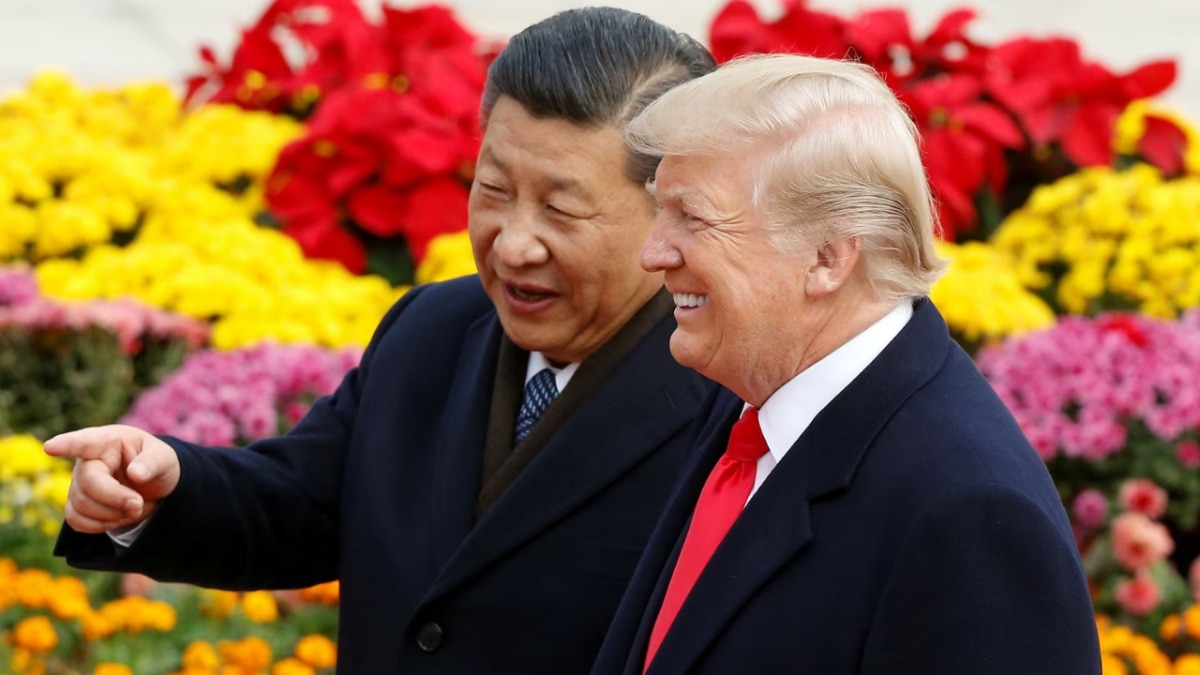
Q: For anyone who has served in India and considers it interesting, not very challenging — the next very important, and challenging, posting is Beijing. Ambassador Ackermann is headed to Beijing as Germany's new ambassador to China. What do you look forward to, and what is the mission going to be?
A: I'm looking forward to going to your next-door neighbor civilization. I want to explore China and its history, I want to see the beauties of China, its arts and culture, I want to see how China has developed. I mentioned it — I think it is a fantastic story, second to none.
I have the greatest respect for all the development China has undergone over the last couple of years. It's a leading nation in many ways and has learned and developed so many impressive things that I'm really curious and very excited to get to know and explore them.
I would say it is maybe more challenging than India, because as I mentioned, we have differences of views in some areas, and these differences have to be solved somehow, through visits from Germany but also through steady and continuous work in Beijing.
I have a very big team, a very good and well-experienced team, many Chinese speakers — I'm unfortunately not one of them — and I'm really excited to go to a place where you feel the world happens, in a way.
Now, that makes me one of a very, very small club of ambassadors who serve in both billion-plus countries — India and China. I know only two others who have done that.
For my career and professional experience, it's wonderful to come from India to China. It's your neighboring country, and you also have problems with China — it's not an easy relationship — but I think the dimension of serving in a country of that population, and this heterogeneous India, coming to China, helps a lot to understand the dimension.
Q: Do you think the center of geopolitics is shifting eastwards, more? Maybe the Middle East still has ties, but Beijing certainly is very significant.
A: I don't believe in the G2 — I think this fear people have in Europe, but also in India, is exaggerated. But what is for sure is that the center of the world is not exclusively in Washington anymore.
So it's basically spreading a bit, and Beijing, no doubt, is a center. But I think the European Union is a center also, and I think India will also be a center of this world.
Q: NATO certainly is not [a center]?
A: I think NATO is much better than you think. The press reports are always a bit — I don't want to say sensational — but NATO has proven to be quite okay, actually. Not only that, you have even two new members in NATO — I would never have thought that in my lifetime, neutral Sweden and neutral Finland would join NATO, but Putin is responsible for that.
I see that NATO, also when it comes to Ukraine, has been very steadfast. So don't believe too much the sensational reporting. I would like to quote President Trump, who, when he left the Ankara summit, said he felt there was a lot of love in the room. That's, I think, a good litmus test of how things were going in NATO.
Q: Okay, my final word would not be about India per se, but you just said you're not a Chinese speaker, but you certainly are a Hindi speaker. I hope so. Yes — for our audience, anything that you'd like to say?
A: Bharat, ek desh bahut sundar hai. Mujhe Bharat ko bahut pasand lagta hai (Trans: India is a beautiful country. I love India very much)
- Ends
Published By:
indiatodayglobal
Published On:
Jul 29, 2026 21:33 IST