1 month ago
Cybercriminals are exploiting the global interest surrounding FIFA 2026 through fake websites, fraudulent ticket sales, and dubious investment schemes designed to lure fans.
FIFA World Cup 2026 logo (File Photo)

New Delhi,UPDATED: Jun 16, 2026 19:25 IST
As excitement builds for the FIFA World Cup 2026, millions of football fans around the world are hoping to see their favourite teams live in stadiums across the United States, Canada, and Mexico. But alongside the preparations by organisers, scammers appear to be gearing up for the tournament as well.
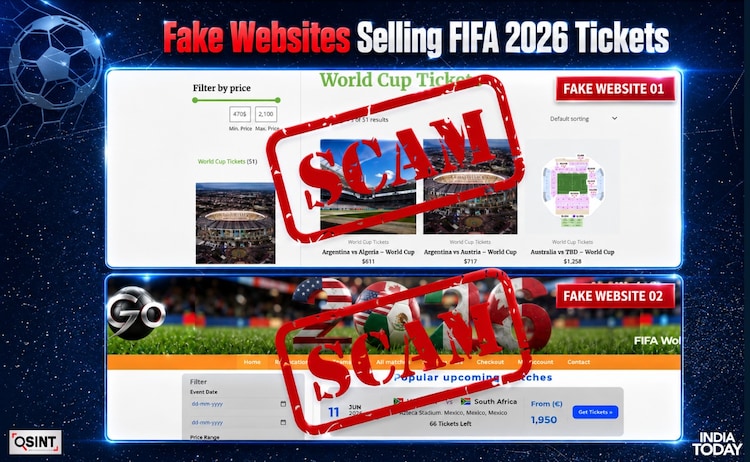
Cybercriminals are exploiting the global interest surrounding FIFA 2026 through fake websites, fraudulent ticket sales, and dubious investment schemes designed to lure fans. India Today's OSINT(Open Source Intelligence) team found that more than 2,800 FIFA World Cup-themed domains have been registered over the past year. Analysis conducted using website intelligence platform URLScan revealed that over 1,600 of these domains contain the term "fifaworldcup" in their web addresses. Additionally, approximately 500 domains use "fifa2026," while more than 700 include "worldcup2026" in their domain names.
None of the domains reviewed appeared to be official FIFA-owned. While some may have been registered for legitimate purposes, several raised red flags, including a****worldcup[.]com and fi***nv****ntsltd[.]buzz.
Such domains could potentially be used to mislead fans and capitalise on interest surrounding FIFA 2026. This tactic is commonly used by threat actors to make websites appear legitimate and trustworthy. By using tournament-related keywords in domain names, scammers create a fake authenticity that may deceive users searching for tickets.
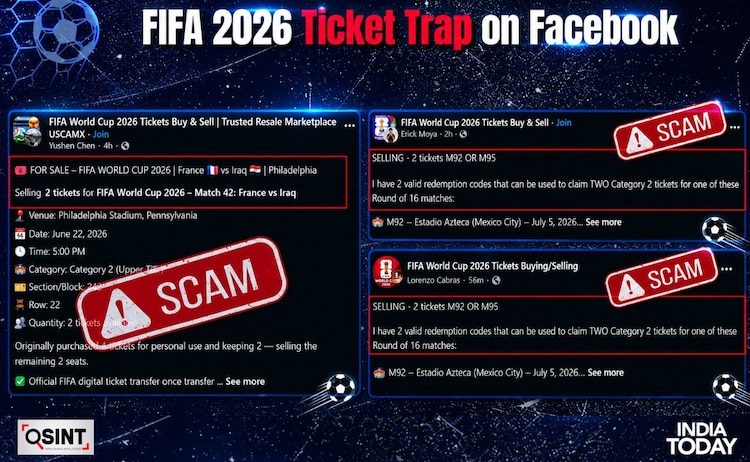
These tickets are not being sold through fake websites alone. Social media platforms are also being widely used to target potential buyers. Across X and Facebook, numerous accounts are advertising World Cup tickets, many of which appear anonymous and lack any verifiable identity or credibility.
India Today identified at least four active Facebook groups dedicated to FIFA World Cup 2026 ticket buying and selling. Combined, these groups have amassed more than 150,000 members, highlighting the scale of demand and the opportunity for scammers to reach potential victims.
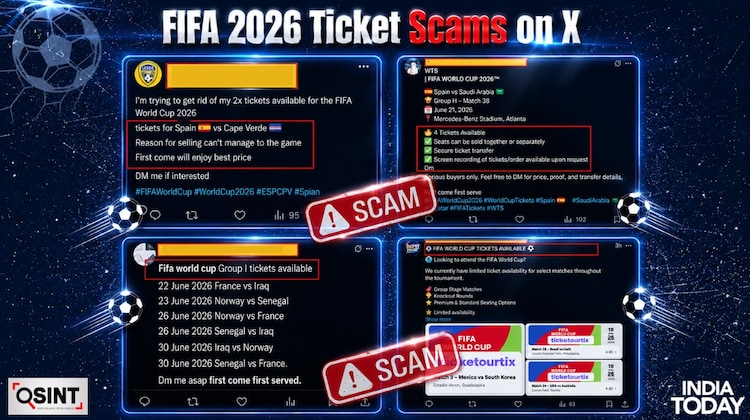
Ticket scams are not the only threat targeting football fans.
Some investment programs also claim to offer financial opportunities linked to the FIFA World Cup 2026. These schemes advertise investment packages ranging from as little as $10 to as much as $5 million, while promising unrealistic daily returns of between 30% and 80%.
More concerning is the fact that some of these promotions are being distributed through paid advertisements running on Meta platforms such as Facebook . By leveraging advertising networks, fraudsters can significantly expand their reach and target a broader audience interested in the tournament.
Cybersecurity firms tracking FIFA 2026-related threats have also identified a wider range of scams targeting fans. According to a ThreatMon report, Chinese-language content appeared in nearly 39% of the analysed malicious-domain dataset, particularly across domains linked to gambling promotions, live-streaming lures, and tournament-related fraud.
Ahead of the tournament, the U.S. Federal Bureau of Investigation (FBI) warned that cybercriminals are conducting spoofing attacks that mimic official FIFA websites.
In an advisory, the FBI stated: "Cyber threat actors are conducting spoofing attacks against the Fdration e de Football Association (FIFA) website in advance of the 2026 FIFA World Cup. A spoofed website is designed to pose as a legitimate website, with branding, product listings, etc., and malicious actors use them to further illegal activity like personal information theft and facilitating monetary scams."
FIFA has also cautioned fans against purchasing tickets from unofficial sources. On its website, the organization warns: "Tickets sold on unofficial resale websites, social media, or through third-party vendors may be fake. These fraudulent tickets can look legitimate but may be rejected at the stadium gate, leaving you without entry on match day."
FIFA further advises fans to purchase tickets exclusively through its official channels.
- Ends
Published By:
bidisha saha
Published On:
Jun 16, 2026 19:25 IST