1 hour ago
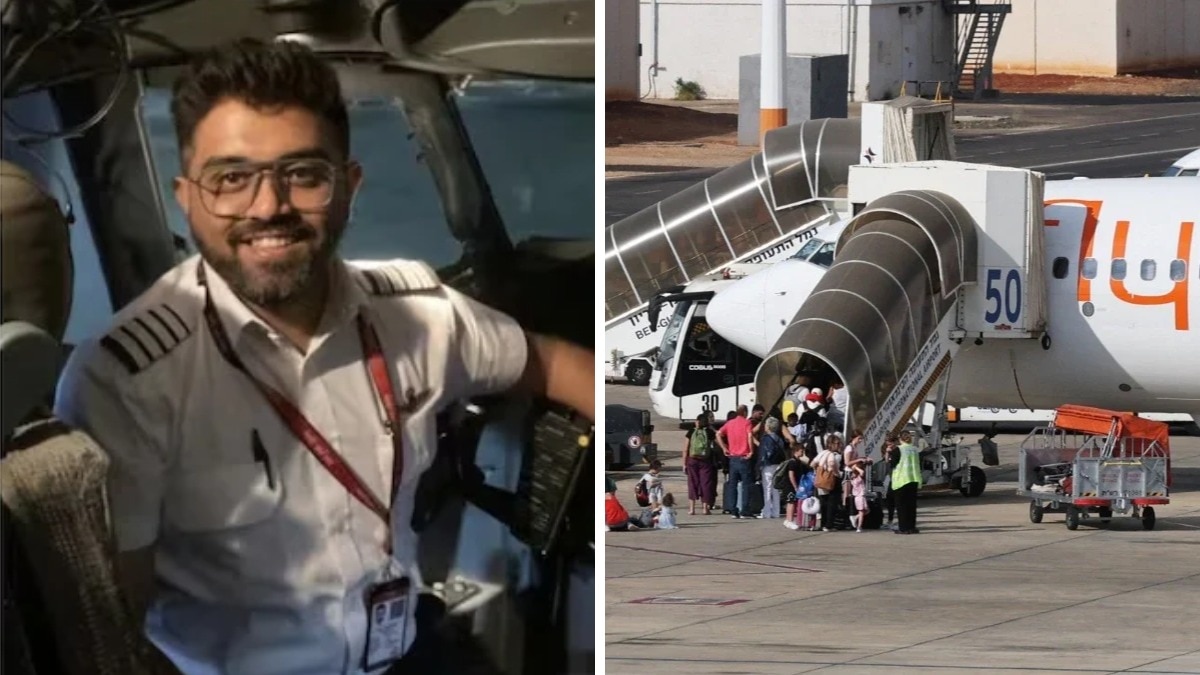
A pilot on a Dubai-Tel Aviv flight allegedly stabbed a colleague and tried to crash the jet before being overpowered. The emergency landing in Saudi Arabia has renewed scrutiny of insider threats in commercial aviation.

Image used for representational purposes only
Newyork,Oct 1, 2026 13:34 IST

A pilot on a flight from Dubai to Tel Aviv stabbed the other pilot on Wednesday and apparently tried to crash the aircraft before passengers and crew overpowered him. The Boeing 737 made an emergency landing in Saudi Arabia, where the pilot was detained. Before that, the plane's abrupt descent led Israel to scramble warplanes amid fears of a possible hijacking.
The incident has again drawn attention to past hijackings and attempted hijackings in which pilots or crew members were suspected to have been involved. These include cases in which flights were diverted, crashed or were allegedly brought down deliberately.
On October 22, 2023, an off-duty Alaska Airlines pilot tried to cut the engines of a Horizon Air jet travelling from Everett, Washington, to San Francisco while riding in an extra seat in the cockpit. The plane was diverted and landed in Portland with more than 80 people on board. Joseph Emerson later told police he was despondent over a friend's recent death, had taken psychedelic mushrooms and had not slept in days.
On March 21, 2022, a China Eastern Airlines flight from Kunming in south-west China to Guangzhou, near Hong Kong, crashed into a mountain, killing all 132 people on board. Chinese authorities have not yet released their final investigation report, but data released earlier this year by American investigators suggested the jet's engines were deliberately shut off and that there was a struggle in the cockpit before the plane nose-dived.
On March 24, 2015, the co-pilot of a Germanwings flight from Barcelona in Spain to Duesseldorf in Germany locked the captain out of the cockpit and deliberately crashed the plane into the French Alps, killing all 150 people on board. Andreas Lubitz had struggled with depression and suffered from sleeplessness and fear of losing his vision.
On February 17, 2014, the co-pilot of an Ethiopian Airlines flight from Addis Ababa in Ethiopia to Milan in Italy hijacked the jet and diverted it to Geneva in Switzerland. Hailemedhin Abera Tegegn surrendered to local police and sought political asylum. None of the 193 passengers was harmed.
On November 29, 2013, the pilot of a Mozambique Airlines plane travelling from Mozambique to Angola deliberately brought down the aircraft in a national park in Namibia, killing all 33 people on board. Authorities said Herminio dos Santos Fernandes locked the cockpit door and set the plane on a crash course while the co-pilot was in the bathroom.
On October 31, 1999, an EgyptAir flight from Los Angeles to Cairo plunged into the Atlantic Ocean off Nantucket, Massachusetts, killing all 217 passengers and crew on board. American investigators concluded that the co-pilot, Gameel Al-Batouti, set the plane on course to crash while the captain was in the bathroom, then shut off the engines as the captain returned and tried to regain control. Egyptian authorities disputed those findings and said mechanical failure was to blame.
On December 19, 1997, a SilkAir flight from Jakarta to Singapore crashed near Palembang in Indonesia, killing all 104 people on board. Indonesian investigators concluded that "unlawful interference" probably caused the crash of the new-model Boeing jet in good weather. Their report said the pilot, Tsu Way Ming, "was in the process of, or intending to, leave the cockpit" before the cockpit voice recorder cut out. Authorities also said he was facing financial problems and had been disciplined by the company several times, including a demotion.
On August 21, 1994, a pilot crashed a Royal Air Maroc flight from Agadir to Casablanca into the Atlas Mountains 10 minutes after take-off, killing all 44 people on board. Investigators said Younes Khayati switched off the autopilot and sent the plane into the ground as the co-pilot tried to stop him. The Associated Press had reported at the time that it was "the deliberate wish of the pilot to end his life", though a pilots' union disputed the findings.
On April 7, 1994, an off-duty FedEx flight engineer tried to hijack a company cargo plane travelling from Memphis, Tennessee, to San Jose, California, while riding as a jump-seat passenger. Auburn Calloway attacked the flight crew with a hammer and a spear gun. The crew subdued him and landed the plane safely, although those who confronted him suffered extensive injuries. Investigators said Calloway had intended to crash the aircraft after facing possible disciplinary action.
On February 9, 1982, a Japan Airlines flight from Fukuoka to Tokyo crashed into Tokyo Bay as it was landing, killing 24 of the 174 people on board. Investigators said there was a fight in the cockpit as the pilot, Seiji Katagiri, put the engines into reverse thrust. They later found that Katagiri, who survived, had been cleared to fly despite a history of mental illness, including paranoid schizophrenia.
The latest incident on the Dubai-Tel Aviv flight has joined a list of cases in which pilots or crew members were accused of trying to seize control of aircraft, divert flights or cause crashes, sometimes with deadly consequences.
With PTI Inputs
- Ends