1 hour ago
Canada will impose retaliatory tariffs on US imports from September 8 after Washington introduced 50 per cent duties on about $20 billion worth of Canadian goods, escalating tensions between the two long-time allies and trading partners.
Prime Minister Mark Carney said Ottawa would match the US tariffs “dollar for dollar” to protect Canadian workers, farmers, families and businesses.
The US tariffs took effect shortly after midnight on Saturday following the collapse of bilateral trade negotiations late on Friday. The duties are expected to directly affect about 5 per cent of Canada’s annual goods exports to the United States, according to reports.
“We cannot accept what they have offered, and we will not give what they have asked,” Carney said at a news conference in Ottawa.
CANADA TO RETALIATE FROM SEPTEMBER 8
Canada’s counter-tariffs will target American goods in sectors including steel, dairy, electronics, household appliances, agricultural machinery, and pulp and paper.
The package will also include products already subject to what Ottawa considers unjustified US tariffs under Sections 232 and 338 of American trade law. Canada is expected to release the complete list of targeted products in the coming days.
“Canada will match the US’s new tariffs dollar for dollar in order to protect Canadian workers, farmers, families and businesses,” Carney said.
The Prime Minister acknowledged the risks associated with retaliation but said his government believed the response was in Canada’s national interest. The move has raised the possibility of a wider trade war between the neighbours.
THREE DAYS OF TALKS END WITHOUT DEAL
The Trump administration’s decision followed three days of negotiations in Washington between Canadian Minister responsible for US Trade Dominic LeBlanc and US Trade Representative Jamieson Greer.
The two sides failed to reach an agreement despite more than a year of negotiations. Carney suspended the talks and directed the Canadian negotiating team to return to Ottawa.
“They have worked hard, in good faith, to defend the interests of Canadians throughout these negotiations up until the very last minute,” Carney said. He accused Washington of changing its proposed terms at the final stage of the talks.
“Last-minute changes in the US proposed terms were unfair, uneconomic and called into question the reliability of any deal,” he said.
In a post on X, Carney said Canada had remained “pragmatic, patient and persistent”, but would not accept an agreement at any price.
US TARIFFS HIT $20 BILLION IN CANADIAN GOODS
The US tariffs cover wine, dairy products, cement, clothing, furniture, fishing rods and sporting equipment such as hockey sticks.
The measures largely avoid finished automobiles but affect several manufacturing products and inputs, according to reports. They come on top of existing US duties on Canadian steel, lumber and automobiles.
Although the latest tariffs directly affect only about 5 per cent of Canada’s goods exports to the United States, their impact could extend to investment decisions, manufacturing supply chains and negotiations over the future of the US-Mexico-Canada Agreement.
The tariffs apply regardless of whether Canadian goods qualify for preferential treatment under the USMCA. Such exemptions had protected much of Canadian industry from earlier US duties imposed over the past 18 months.
The removal of that protection undermines one of the central benefits of the continental free-trade agreement and could influence how the United States, Canada and Mexico approach its future review.
CANADA’S ECONOMIC EXPOSURE TO US
The escalating dispute has exposed Canada’s continued dependence on the United States despite its efforts to expand trade with other countries.
More than 70 per cent of Canadian goods exports go to the US, according to the Canadian government’s State of Trade 2026 report. Other estimates put the share as high as 77 per cent. By comparison, just over half of Canada’s services exports are destined for the American market.
The stakes extend beyond merchandise trade. Trade in goods and services accounts for about two-thirds of Canada’s GDP, while exports support nearly one in five Canadian jobs, the government report said.
This dependence limits Ottawa’s ability to retaliate without increasing costs for Canadian businesses and consumers. The US economy is also about 10 times larger, giving Washington greater capacity to absorb a prolonged confrontation.
Royal Bank of Canada economists estimate that the latest US tariffs directly affect about 0.4 per cent of Canada’s GDP and employment because they cover only a limited share of its exports.
The damage could become more severe if the dispute spreads to other sectors, disrupts closely integrated cross-border supply chains or prompts businesses to delay investment.
Canada is already navigating a fragile recovery. Its economy grew by 1.9 per cent in 2025, its slowest expansion since the pandemic. The State of Trade report said US tariffs and continuing policy uncertainty had weighed on exports and trade-exposed industries.
Canada nevertheless retains leverage as the source of roughly two-thirds of US crude oil imports, making its energy supplies crucial to American refineries and consumers.
‘AMERICA HAS CHANGED’
The confrontation reflects a deeper shift in Canada’s political and economic relationship with its largest trading partner.
Carney said Canada had recognised that “America has changed” and that the two countries would not return to their previous relationship.
He had signalled the shift at the World Economic Forum in Davos in January, describing the evolving global order as a “rupture, not a transition”. He urged middle powers such as Canada to strengthen their domestic economies and reduce their vulnerability to economic coercion.
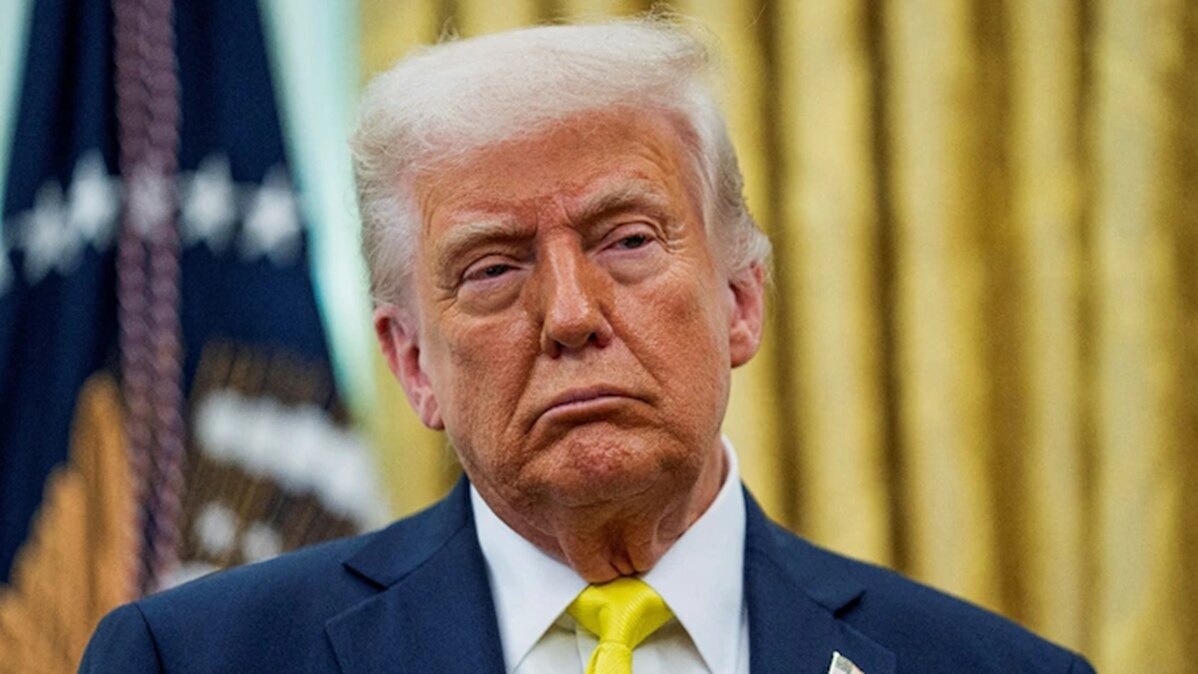
The dispute has gone beyond trade. Trump has repeatedly questioned Canada’s economic viability, spoken about making it the 51st US state and used tariffs to pressure companies into expanding production in the United States.
Daniel Bland, a political science professor at McGill University, said the collapse of the talks reinforced the belief among many Canadians that the Trump administration could no longer be considered a reliable partner.
He described the confrontation as the possible beginning of a full-scale trade war, although he cautioned that the situation could still change rapidly.
CARNEY RECEIVES DOMESTIC BACKING
Carney’s decision to retaliate has received support from several Canadian provincial leaders.
Ontario Premier Doug Ford backed a tariff-for-tariff and dollar-for-dollar response. Saskatchewan Premier Scott Moe said the old status quo in Canada-US relations was no longer possible.
Former Alberta premier Jason Kenney praised Ottawa for refusing to surrender in the face of what he described as continuing economic and political aggression from Washington.
Manitoba Premier Wab Kinew had also urged the federal government to resist US pressure instead of accepting a weaker agreement.
Kinew argued that Trump was politically vulnerable because the cost of living remained a major concern among American voters. He also questioned whether Canada should make permanent concessions in response to tariffs that might not survive Trump’s presidency.
CANADA ACCELERATES TRADE DIVERSIFICATION
The breakdown has added urgency to Prime Minister Mark Carney’s efforts to reduce Canada’s economic dependence on the United States.
Some diversification is already underway. Canadian exports to the US fell 3.7 per cent in 2025, while shipments to other markets rose 11.1 per cent. Non-US destinations consequently accounted for 32.8 per cent of the country’s exports, their highest share in more than four decades.
Carney’s government aims to attract one trillion Canadian dollars, or about $730 billion, in investment by 2030 and double non-US investment over the next decade. Its trade diversification strategy also seeks to double exports outside the US by 2035 while expanding commercial ties with countries like India and China.
Ottawa and Alberta moved ahead in July with plans for a new Pacific Coast oil pipeline, which would give Canadian crude greater access to Asian markets and reduce reliance on American buyers.
Canada had been prepared to accept some US tariffs in return for broader market access and long-term certainty. Even such a deal, however, would have marked a retreat from decades of trade policy centred on removing barriers.
Reduced tariffs would still have left Canada with less favourable access than it enjoyed under the 1989 Canada-US Free Trade Agreement, the North American Free Trade Agreement and its successor, the USMCA.
The immediate concern is whether the confrontation will spread to more sectors. The larger question is whether the economic relationship that shaped Canada for nearly four decades is undergoing a lasting transformation.
(With inputs from agencies)
- Ends
Published By:
Aprameya Rao
Published On:
Aug 22, 2026 23:27 IST