2 hours ago
While missiles criss-cross the Middle East and tensions rise, China is doing something unusual - doing nothing. China has refused to get itself dragged into the Iran conflict. The situation is well encapsulated in the latest cover of The Economist - Never interrupt your enemy when he's making a mistake.
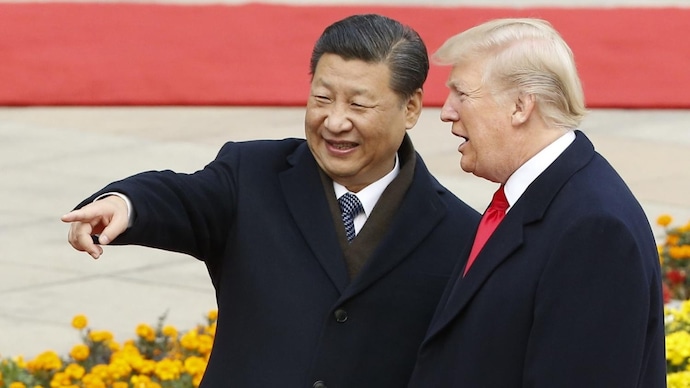
Iran war: Chinese President Xi Jinping and his US counterpart Donald Trump

New Delhi,UPDATED: Apr 7, 2026 15:46 IST
Zero troops deployed. Zero bombs dropped. No loud statement. Buys Iran's sanctioned oil at a deep discount. If there is one country that's refused to get itself dragged into the Iran conflict, it's China. China's playbook, which has been to just sit and watch, has drawn global attention. So much so that it featured in the latest cover of The Economist. The headline, 'Never interrupt your enemy when he's making a mistake', captures the situation perfectly.
Stay with us, and we will explain exactly how. When the US-Israel-Iran war escalated in the Middle East, there were expectations that major powers would be pulled in. However, China stayed out. Its response has been muted. President Xi Jinping hasn't publicly commented on the conflict. He just watched as the US, which thought of bringing about regime change in Iran and thwarting its nuclear ambitions, got involved in an endless war. The result: a massive war bill, trust deficiency with the Gulf, and friction with NATO allies.
THE ECONOMIST COVER ON CHINA
This has been perfectly encapsulated in The Economist cover. The headline is basically a quote widely attributed to French emperor Napoleon Bonaparte. In a military context, it basically means that when your opponent is making a mistake or a costly move, it is wiser to observe than intervene.
The cover image is also symbolic. It features Chinese President Xi Jinping in sharp focus, with a faded image of Donald Trump.
It reflects a growing global perception that Beijing might stand to gain in an unstable world, while Washington remains engaged in the Middle East turmoil. This is not what was on Trump's mind when he started the conflict.
The eccentric US President believes that controlling oil flows brings power on the world stage. His daring operation in Venezuela to capture President Nicholas Maduro and tap the country's vast crude reserves gave ample hints.
Bringing Iran's energy flows under US control was next on his list. Trump could have used it as a bargaining chip with China, the largest buyer of Iranian crude. A meeting between the leaders is scheduled next month in Beijing.
But Iran proved to be more resilient. It has played its ultimate trump card by closing the Strait of Hormuz, the vital waterway through which one-fifth of the world's oil and gas passes. Iran has, thereby, held the global economy hostage.
HOW HAS CHINA DEALT WITH OIL SHOCK?
However, China is already well-positioned to weather the Hormuz closure. Being a key ally of Iran, China has received millions of barrels of Iranian oil through shadow fleets (old vessels that usually have no insurance) in recent weeks. Moreover, diversifying its oil supply from eight countries has also paid dividends.
In reality, Beijing has spent years preparing for such situations. It has largely insulated itself from the oil crisis by building up large reserves, boosting hydrocarbon production and investing in renewable energy.
Behind its growing oil stockpiles are "teapot" refineries. These are small, privately-owned facilities used by China to import cheap Iranian and Russian crude oil to circumvent US sanctions.
These function independently of Chinese state-owned oil companies. Amid the Middle East conflict, these teapot refineries have been keeping the Chinese economy stable.
Moreover, around half of new car sales are EVs in the world's second-largest economy. This has put no pressure on the country's fuel pumps.
WHAT'S BEHIND CHINA'S MUTED RESPONSE?
Thus, by remaining insulated from the chaos, China has positioned itself as a stable alternative. It is playing the long game. The thinking behind it, as experts pointed out, is to let geopolitical tensions create opportunities that China may later use to strengthen its standing.
This stable image is likely why Pakistan, which has emerged as an unlikely mediator between the US and Iran, rushed to China to get the support of its all-weather friend. It gave China an opening to play peacemaker.
However, instead of any chest-thumping statements, China released a five-point plan for a ceasefire and reopening the Strait of Hormuz. Beijing didn't confront Washington or criticise it. It chose to be a pragmatic international player.
Since then, China has stepped up its diplomacy, much to the chagrin of the US. A prolonged war also does not help China. An unstable global economy due to the oil crisis will severely hit China's ability to sell goods around the world.
For now, China's approach is simple - not to get dragged into the war and just wait and watch. Sometimes, the most powerful move during major conflicts like these is choosing not to make any move at all. The economic fallout of the war may benefit it in the longer run.
- Ends
Published By:
Abhishek De
Published On:
Apr 7, 2026 15:46 IST
Tune In