2 hours ago
The massive scale and nature of the operation to rescue two US crew members stranded inside Iran, which involved over 155 aircraft, has raised an armada of theories. Moreover, little clarity on why the US destroyed its own aircraft has only added to the intrigue. Trump's narrative of the sequence of events has left several unanswered questions.
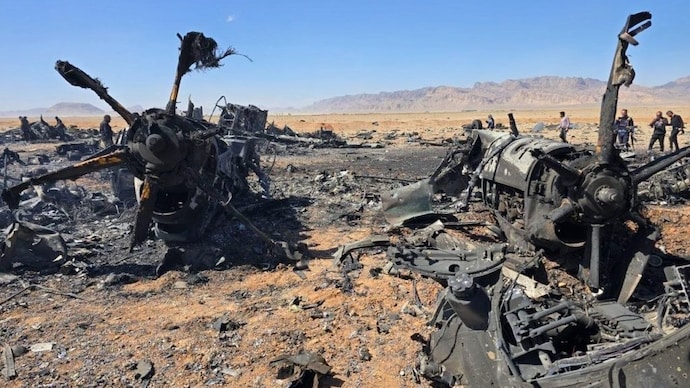
The US rescue force abandoned two MC-130Js
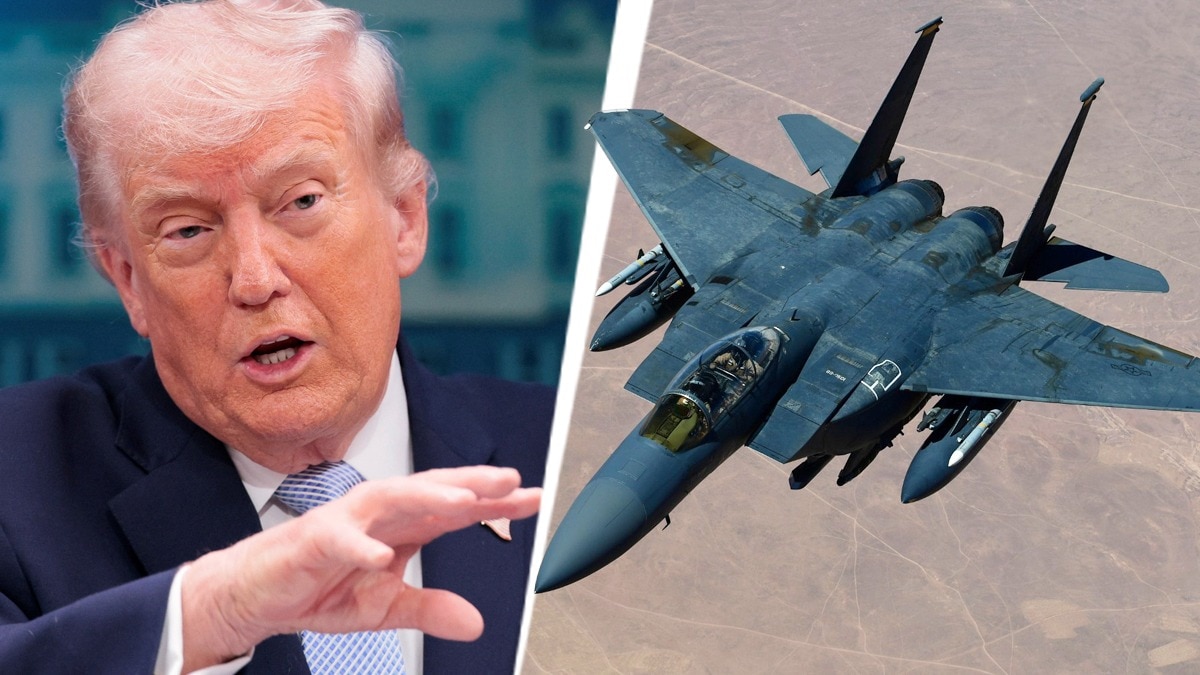
It was a rescue mission straight out of a Hollywood movie. Hundreds of US commandoes slipping deep into Iran under cover of darkness, undetected, scaling a 7,000-foot ridge and rescuing an injured American airman whose F-15E Strike Eagle jet was shot down last week. While the pilot was rescued within a few hours, the mission to pull out the weapons-system officer (WSO) required a whopping 155 aircraft. While the US has given a blow-by-blow account of how it unfolded, the sheer magnitude of the mission to rescue just two airmen and aircraft losses has left several questions unanswered.
Moreover, the location of the US operation in Isfahan, which is quite a distance from where the US airman was stranded in Kohgiluyeh and Boyer-Ahmad province, has led experts to suggest that there might be more at play. Iran has asserted that the real objective of the US operation was to seize uranium from facilities near Isfahan covertly. This claim has been reinforced by several military analysts.
Their assessments rest on two key factors - the scale and nature of the operation, and the significant distance from the site where the F-15E fighter jet was downed. The US has provided little clarity on these two aspects. It has raised an armada of theories.
QUESTIONS OVER US RESCUE MISSION
Questions have been raised about the presence of the F-15E fighter jet in central Iran itself. While the US said it was on a routine mission, a former CIA officer claimed it was preparing for a ground attack. "The downed F-15E in Iran might have been actually preparing for a massive ground attack on the Natanz nuclear facility," CIA veteran Larry Johnson said in a podcast.
However, the aircraft was shot down on April 3 by Iran - the first time in two decades that an American fighter jet was taken down by enemy fire. This incident itself punctured Trump's claims of complete dominance over Iran's skies.
However, the pilot and the WSO ejected. While the pilot was rescued within six hours, a search had to be launched for the other airman, whom Trump called a "highly respected Colonel".
It is here that the US narrative starts to get interesting. Despite being "seriously wounded" and having a sprained ankle, the airman trekked up a 7,000-foot ridge in the Zagros mountains and concealed himself in a crevice. Crucially, the airman, armed with only a handgun, avoided detection from Iranian fighters, who were hunting him, as well as locals. Iran placed a $60,000 bounty on his head.
A section of experts pointed out that such a climb with injuries, especially in rugged terrain, was doubtful. However, it must be noted that US military personnel undergo Survival, Evasion, Resistance, and Escape (SERE) training for exactly this kind of situation.
As he hid in the crevice, the colonel activated an emergency beacon. It allowed US forces to locate him.
THEORIES OVER ABANDONED AIRSTRIP
Then came the rescue operation, which involved 155 aircraft, including four bombers, 64 fighter jets, 48 refuelling tankers, 13 rescue aircraft, and more.
As MQ-9 Reaper drones gave protective cover to the airman, the US seized an abandoned airstrip in southern Isfahan province for the rescue mission. This is around 200 miles inside Iran.
It's no secret that Isfahan holds Iran's primary stockpile of highly enriched uranium, roughly 440-970 pounds. The significant distance of the site from where the airman was located added to the intrigue.
Experts suggested the seizing of the airstrip pointed to prior planning beyond a normal search-and-rescue operation.
"The whole story of the extraction of the second airman is weird. The fact that he was picked up at an ad hoc US airbase set up within 20 miles of the Isfanan site, where Iran's 450 kg of highly enriched uranium is stored, is weird," Israeli author and geopolitical expert Saul Sadka tweeted.
Even Iran's foreign ministry spokesperson, Esmaeil Baghaei, flagged it on X. "The point where US aircraft landed in Isfahan is very far from the location they claimed was the hiding place of the downed pilot," he said.
The narrative only gets murkier from here on.
WHY DID US DESTROY OWN AIRCRAFT?
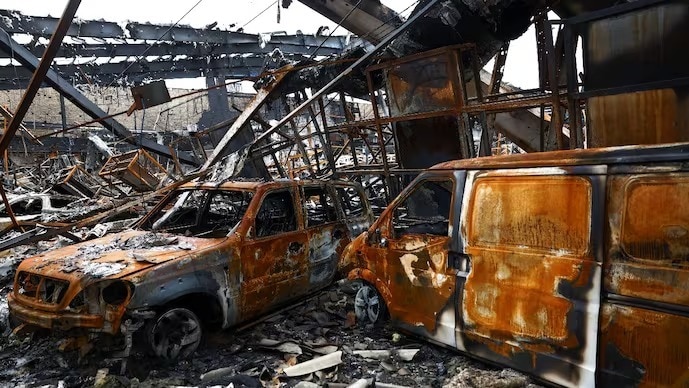
Two MC-130 aircraft, part of a rescue operation that ferried some of the roughly 100 elite US forces, got stuck in the "wet, sandy soil". This was told by Trump during his Monday media briefing. The commandos were eventually extracted by stand-by aircraft, but not before spending a tense few hours inside hostile territory.
However, before departing, US officials said the planes were destroyed to keep them out of enemy hands. It is a standard practice for the military in war zones.
Retired Special Operations officer Anthony Aguilar, in a post on X, underlined that such specialised aircraft, like the MC-130, are typically deployed in clandestine missions.
Aguilar also questioned the US claim that the aircraft got stuck.
"I do not believe that they were stuck. I have seen MC-130Js plough through dirt, mud, snow, and gravel. It is more likely that the aircraft took hits upon entry and also likely took hits and damage while on the ground," he tweeted.
Moreover, a section of experts also pointed out that despite such a large-scale and high-risk incursion and reported clashes with the Iranian military, there was not a single US casualty. At least, not declared officially.
Iran, on its part, claimed it destroyed the two MC-130 transport planes and two Black Hawk helicopters. It also said a "deception" and escape mission from the abandoned airport in Isfahan was "completely foiled". The White House has rejected Iran's allegations.
Altogether, the sheer scale of action, loss of US aircraft, and the absence of tangible proof have raised questions if the objective extended beyond a simple rescue of a US airman.
If the operation went as it was described by the US and Trump, it definitely marks one of the most audacious missions in recent history. But without evidence and key details, the major question that swirls in our minds is not how the operation unfolded, but whether it happened the way it was narrated by Trump to the world.
- Ends
Published By:
Abhishek De
Published On:
Apr 7, 2026 12:36 IST