1 month ago
Pakistan stepped forward as a mediator in the US-Iran war that nobody asked for. Given its track record, its cosying up to Trump and Iran's outright rejection, the answer is far from reassuring.
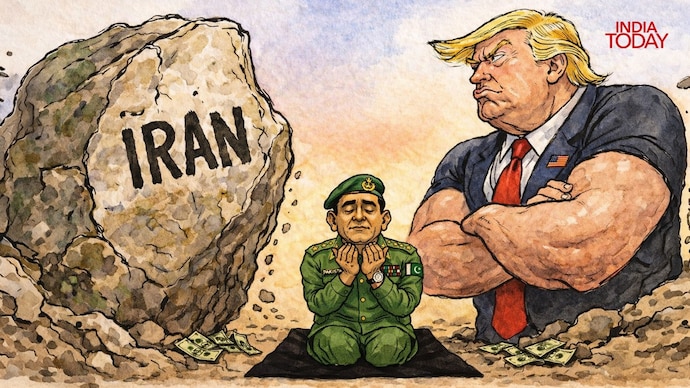
Image: (AI Generated/India Today)

UPDATED: Mar 30, 2026 22:30 IST
Pakistan has never been a country that waits to be invited. When the United States and Iran went to war, when the Strait of Hormuz locked up, when oil crossed $112 a barrel and the world held its breath, Pakistan raised its hand and said: we will fix this. Bold. Spectacularly, almost comically bold. This is a country that topped the Global Terrorism Index in 2026, fought a border war with Afghanistan last month, and has an active insurgency tearing through Balochistan. And yet, there it stood, positioning itself as the world's most enthusiastic peacemaker.
The question is not whether Pakistan had the audacity to try. It clearly did. The question is whether Iran, the country it claims to be helping, has any reason whatsoever to trust it.
The tale of the 20 ships
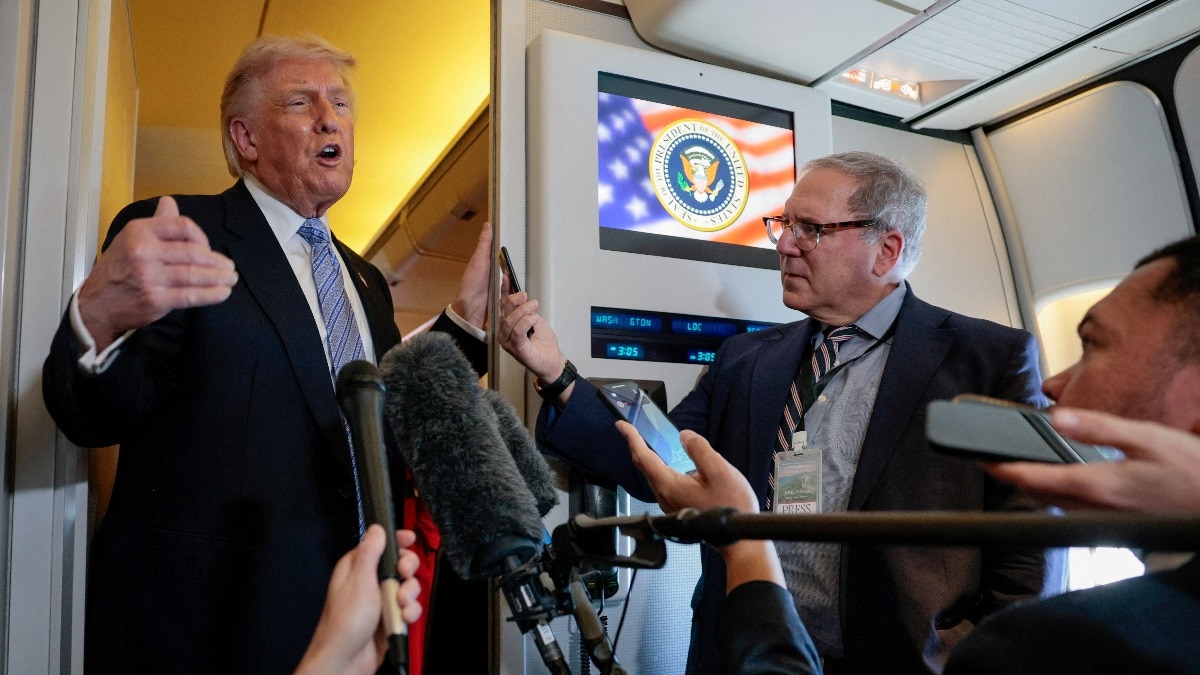
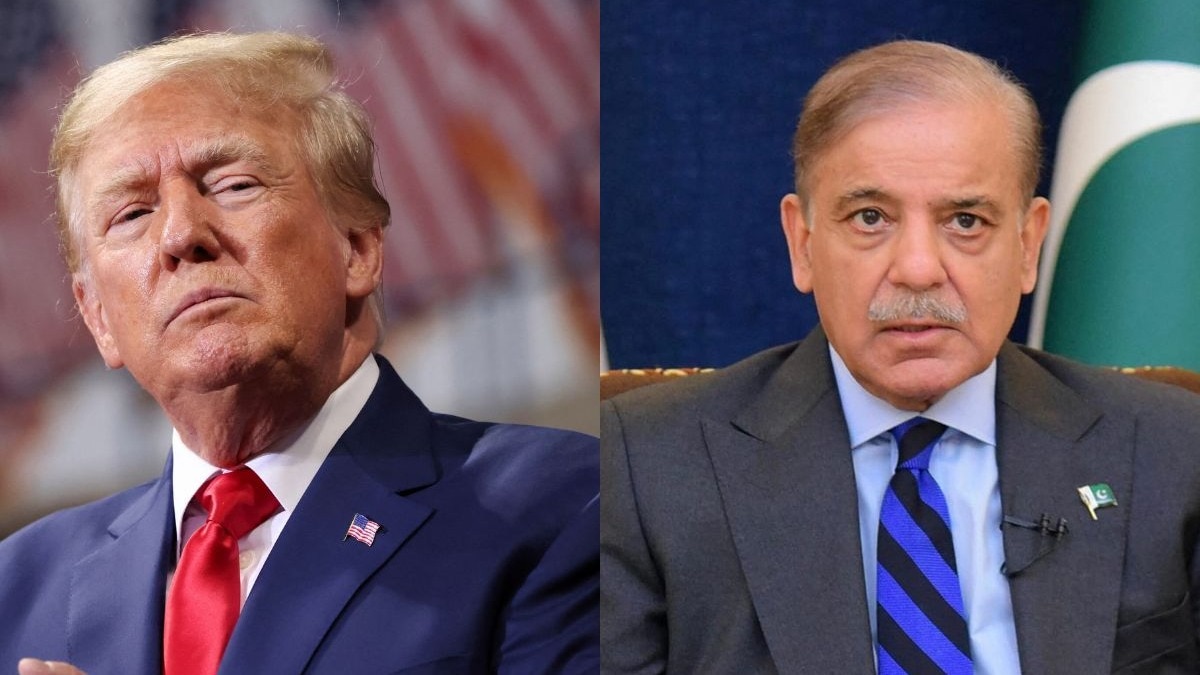
On a Sunday night aboard Air Force One, Donald Trump told reporters that Iran had gifted him 20 big ships of oil through the Strait of Hormuz. A tribute, he called it. A sign of respect. Proof, in his telling, that negotiations were going brilliantly and the war was winding down.
Iran said no such thing.
What Iran actually did was grant permission for 20 Pakistani flagged vessels to transit the strait, two ships per day. Pakistani Foreign Minister Ishaq Dar confirmed this himself and called it a "harbinger of peace." Iran's Foreign Minister Abbas Araghchi clarified separately that countries Iran considered friendly, including India, Russia, China and Pakistan, could expect safe passage. American and Israeli linked vessels could not.
So Iran opened a door for Pakistan. Trump walked through it, grabbed the credit, and told the world Iran had saluted him. And Pakistan, the supposed neutral broker, said nothing to set the record straight. It let Trump have his moment. It let Washington believe the ships were a tribute to American pressure rather than an Iranian courtesy extended to Islamabad.
That is not the behaviour of a neutral party. That is a choice, and Iran noticed.
America's most eager messenger
Pakistan's enthusiasm for American approval over recent months has been remarkable to watch. President Trump praised Pakistan. Secretary of State Marco Rubio praised Pakistan. Islamabad basked in every compliment and, in return, delivered Washington's 15-point demand list to Tehran. Those demands included dismantling Iran's nuclear programme, surrendering highly enriched uranium, limiting its missile capabilities, ending support for regional proxies and effectively ceding control of the Strait of Hormuz. Iran called the proposal "one-sided and unfair." One Iranian official said there was no world in which successful negotiations could happen on those terms.
Pakistan carried that list. Pakistan was the postman for an ultimatum. And then Pakistan hosted a summit in Islamabad that brought together the foreign ministers of Saudi Arabia, Turkey and Egypt. Saudi Arabia is Iran's principal regional rival. It faced Iranian drone and missile strikes. It got a seat at Pakistan's table. Iran did not.
Iran already said no
Iran rejected Pakistan's mediation attempts. This is not speculation. Tehran made clear it had serious reservations about Islamabad's role, and those reservations were entirely logical. A mediator that carries one side's maximalist demands, lets the other side claim credit for your goodwill gestures, and hosts your rivals for consultations is not a mediator. It is a proxy with better tailoring.
India's External Affairs Minister S. Jaishankar put it bluntly, if provocatively, when he reportedly called Pakistan's role "dalal diplomacy" at a closed-door all-party meeting. Pakistan's Defence Minister Khawaja Asif fired back with considerable heat, calling Jaishankar a "hi-fi dalal" and accusing him of "megaphone theatrics." The insults flew. The substance, however, remained on Jaishankar's side of the argument.
What this actually tells us
Pakistan is not a neutral broker in the US-Iran war. It is a country with enormous debts to Washington, deep financial ties to Riyadh, a strategic partnership with Beijing, and a complicated border relationship with Tehran. Navigating all of that simultaneously while claiming impartiality is not diplomacy. It is an act.
Iran knows it. The region knows it. The only question left is how long Pakistan keeps performing.
- Ends
Published By:
indiatodayglobal
Published On:
Mar 30, 2026 22:30 IST
Tune In