1 month ago
Last Updated:February 13, 2026, 17:09 IST
While BNP claimed a landslide victory, student-led groups, who spearheaded 2024 uprising to oust Sheikh Hasina, barely managed to secure a presence in Bangladesh elections


Leader of Citizen Party (NCP), Nahid Islam, addresses supporters in Dhaka. (AP)
For Bangladesh’s student leaders, who spearheaded the 2024 uprising and led to the ouster of Sheikh Hasina, the February 12 elections threw up disappointing results. While the Bangladesh ist Party (BNP) claimed a landslide victory, student-led groups barely managed to secure a presence in the new parliament.
Before the elections, prominent student leaders like Nahid Islam and Asif Mahmud served as advisors in the interim government led by Nobel laureate Muhammad Yunus. Their transition into formal politics via the Citizen Party (NCP) was intended to “break the political dominance" of traditional parties and end established patterns of nepotism.
How did the student leaders perform?
Formed by leaders of the July 2024 uprising, the NCP contested as part of an 11-party alliance with Jamaat-e-Islami. The NCP-Jamaat alliance emerged as a significant force, with Jamaat-e-Islami reportedly securing roughly 68 seats.
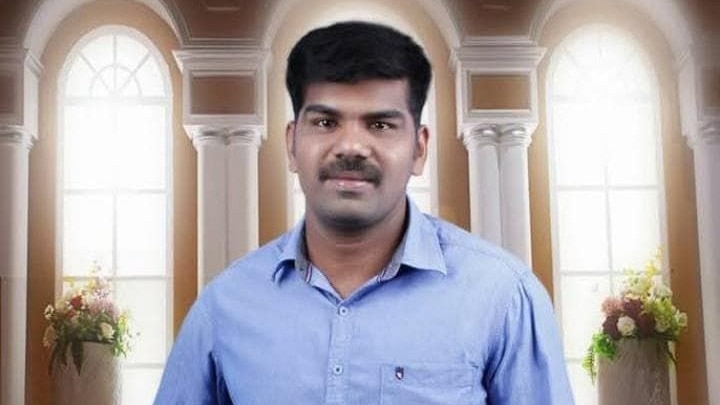
Nahid Islam: The primary face of the student uprising and party chief of the NCP, Islam secured a victory in the Dhaka-11 constituency.
At least three-five top student leaders from the NCP also secured parliamentary seats. Asif Mahmud, a key student coordinator and former interim government advisor, chose not to contest the general election, instead serving as the spokesperson and election steering chief for the NCP.
ALSO READ | The Yunus Paradox: Bangladesh’s Interim Authority And The Enduring Outsider
Why the leaders didn’t get political success: What analysts say
While student-backed candidates had achieved landslide victories in university union elections such as at Dhaka University in September 2025, translating that campus momentum into national seats proved more difficult against established political machines.
The NCP’s sharp collapse, compared to the high expectations was due to a variety of factors:
Lack of infrastructure: The NCP struggled with funding, organization, and a lack of experience in national-level campaigning compared to established political dynasties.
Alliance with Jamaat-e-Islami: To compensate for a lack of funding and organizational experience, the NCP formed a pre-poll alliance with the Islamist party Jamaat-e-Islami. This alliance was highly controversial. It led to resignations by many top student leaders and women activists who felt the NCP was sidelining its original values and becoming a “junior partner" to a radical party. This split eroded the NCP’s image as an independent, youth-driven alternative.
Gender gap: The alliance sidelined women; only two of the NCP’s 30 candidates were female, leading many young women to vote for the Bangladesh ist Party (BNP) instead.
Voter shift to stability: After months of unrest, many first-time and young voters migrated toward the BNP, perceiving it as more capable of delivering immediate governance and economic stability than the newer student-led party.
Governing versus campaigning: Because some student leaders served as advisors in the interim government, they were tied to its successes and failures. This made it difficult for them to maintain their “outsider" status during the campaign.
Strategic errors: Analysts pointed to “missteps," such as an inconsistent ideological platform that ranged from leftist to conservative, preventing the NCP from becoming a cohesive political force.
Independent movements: Some student factions remained independent, forming groups like the Democratic Student Council (DSC) to uphold the “spirit of the July movement" without official party affiliation.
Perceived arrogance: Critics noted that student leaders’ tendency to equate the 2024 uprising with the 1971 War of Independence was seen by many as arrogant, alienating older generations.
With agency inputs
Handpicked stories, in your inbox
A newsletter with the best of our journalism
First Published:
February 13, 2026, 17:02 IST
News explainers Bangladesh’s Heroes Of 2024, Duds In 2026: Why Student Leaders Failed To Make A Mark
Disclaimer: Comments reflect users’ views, not News18’s. Please keep discussions respectful and constructive. Abusive, defamatory, or illegal comments will be removed. News18 may disable any comment at its discretion. By posting, you agree to our Terms of Use and Privacy Policy.
Read More