1 month ago
Labor MP says Australians ‘ripped off’ with card surcharges

Josh Butler
Labor MP Jerome Laxale has been leading the charge on ending surcharges for card transactions, which has now been removed by the Reserve Bank.
Laxale, the Member for Bennelong, said it was “a great result for consumers who have been ripped off at the checkout for too long”.
Digital payments shouldn’t cost consumers more than cash and Australia will get there on 1 October.
There’s more work to do on small business merchant costs, but this is a solid start.
Laxale had been pushing for change for more than a year, critical that the declining use of cash and rise of electronic payments meant Australians were being hit with fees just to use their own money.
The treasurer, Jim Chalmers, said Australians had been paying $1.6bn in surcharges per year, adding that the change would “help with the cost of living”.
Key events Show key events only Please turn on JavaScript to use this feature

Benita Kolovos
Jess Wilson says review will occur into Vic Liberals candidate vetting processes
Stepping away from federal politics for a moment, the Victorian Liberal leader, Jess Wilson, has admitted she’s “frustrated” that the party’s candidate vetting process failed to identify that the man who ousted Moira Deeming for the top spot on the upper house ballot wrote a court character reference for a friend convicted of sexually assaulting a 15-year-old girl.
Wilson told reporters outside parliament on Tuesday that Dinesh Gourisetty, who beat Deeming in a preselection vote on Sunday, should never have made it through the vetting process. Candidates pay a $5,000 application fee to the party, which is meant to cover stringent vetting performed by an external consultancy.
She said:
The situation that we found ourselves in yesterday should never have happened. The situation should not have occurred. It’s fair to say I’m frustrated by this. My team is frustrated by this, and we need to learn from what occurred and ensure that we improve our processes and that the vetting processes that the party undertakes are improved. I know that work is already underway.
Wilson said she told the party president and state director there needed to be a review into “how this occurred”.
She said she was not aware anyone knew the information before Monday, though Gourisetty’s supporters claim the timing was designed to cause “maximum damage” to the party’s executive. Wilson said:
“I’m not aware of anyone who knew about this information [before Monday]. All I know is when I became aware of this information, which was yesterday morning ... I immediately spoke to the party about my expectation that Mr Gourisetty would not be welcome in my team ... We have since passed a resolution through state executive that will make Mr Gourisetty ineligible for a future convention.
Wilson said it was up to Deeming if she wanted to contest the new preselection vote:
“As I said consistently throughout the pre selections, I’ll back all my colleagues and welcome whether Moira wants to put in her nomination form.
She also said she had confidence in the state president, Philip Davis, and that the party did not need to be taken over by the federal administration.
Chalmers welcomes decision to lift minimum wage for young adults
This morning, the full bench of the Fair Work Commission decided to grant 18-20-year-olds the full adult minimum wage – to be phased in for businesses to adjust.
Until now, “junior pay rates” applied to people under 21, meaning 18-year-olds were paid 70% of the award rate, 80% for 19-year-olds and 90% for 20-year-olds.
Junior wages will still remain in place for minors, while the higher rate for junior workers will start to be phased in over a four-year period from December.
Chalmers says the decision recognises the “unfairness” in the system.
This is a great outcome for young workers, especially in retail, fast food and pharmacy. We welcome it.
This is all about ensuring that Australians get fair, decent wages, and the outcome announced by the Fair Work Commission will help achieve that.
Chalmers tells us to expect an ‘ambitious’ budget
Despite the impact of the war on the budget and decision to halve the fuel excise, Jim Chalmers says the budget will still be ambitious and deal with intergenerational inequality.
Chalmers says the legislation to halve the fuel excise will be introduced to parliament today and will contain some “extra powers” for Chalmers to do “more for when we are able to come to a concluded view with the states and territories”.
On the budget, the treasurer says it will take into consideration the uncertain global economic conditions.
Clearly, when we are seeing the way that the global economic conditions are playing out here in Australia, any diligent, responsible government factors that into their budget planning.
There will be a focus on some of the generational issues in our economy and in our budget.
Asked whether cutting the fuel excise will lead to another Reserve Bank rate rise, Chalmers says he won’t comment on the decisions of the central bank, but adds “I don’t think market expectations for interest rates changed much yesterday after the announcement of our policy.”
‘Australians hate paying these charges’: Chalmers
Jim Chalmers is pretty happy this morning after the Reserve Bank decided to ban both debit and credit card surcharges, which will start rolling in later this year.
Speaking to reporters from Parliament House, Chalmers says the changes will increase transparency – with the Reserve Bank also amending interchange fees (the transaction charges paid by a merchant’s bank to a cardholder’s bank for card purchases).
Australians hate paying these charges. Let’s be blunt about it, and the Reserve Bank has done quite a bit of work here. They are responsible for the system that is being changed here. They have the ability to make these changes without the parliament legislating them.
Chalmers also gives his colleagues including Jerome Laxale a shoutout for spearheading this work from parliament.
Labor MP says Australians ‘ripped off’ with card surcharges
Josh Butler
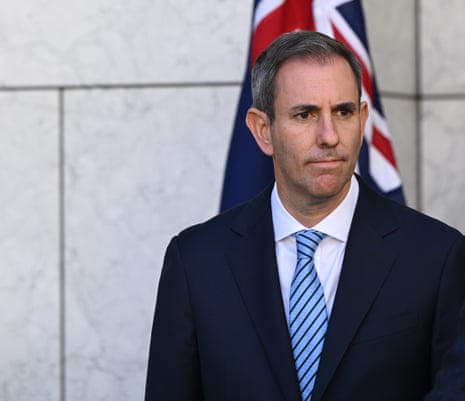
Labor MP Jerome Laxale has been leading the charge on ending surcharges for card transactions, which has now been removed by the Reserve Bank.
Laxale, the Member for Bennelong, said it was “a great result for consumers who have been ripped off at the checkout for too long”.
Digital payments shouldn’t cost consumers more than cash and Australia will get there on 1 October.
There’s more work to do on small business merchant costs, but this is a solid start.
Laxale had been pushing for change for more than a year, critical that the declining use of cash and rise of electronic payments meant Australians were being hit with fees just to use their own money.
The treasurer, Jim Chalmers, said Australians had been paying $1.6bn in surcharges per year, adding that the change would “help with the cost of living”.

Luca Ittimani
Card surcharges to disappear if businesses do as RBA says
Consumers will no longer have to pay card surcharges if businesses pass on the savings from the Reserve Bank’s latest move.
About 16% of businesses charge surcharges and consumers pay about $1.6bn in card payment surcharges a year, the review found.
Businesses charge the extra to pay for access to payment services that process card transactions. The RBA will cap the fees for these services at a lower level.
The Reserve Bank will also let eftpos, Mastercard and Visa eliminate surcharges, with the expectations businesses would follow by 1 October.
They may increase their shelf or menu prices, baking in the cost of payment systems, lifting prices by a one-off 0.1%, the RBA estimated. The bank said this would be alright after surveying customers and finding they preferred to see the final price instead of being caught with a hidden surcharge.
If businesses keep surcharging anyway, the RBA could call for the Albanese government to pass new laws banning the practice.
Ending card surcharges will save consumers $1.6bn a year
The government says the Reserve Bank’s decision to ban card surcharges will save Australians $1.6bn while small businesses will save $910m.
Labor announced in 2024 it was prepared to ban debit card surcharges, subject to work by the RBA.
But the RBA has gone even further to ban credit card surcharges as well.
The treasurer will stand up shortly, no doubt to celebrate the news.
In a statement, the government said:
People shouldn’t be punished for using a credit or debit card. Australians should be able to use debit and credit cards without being penalised, and that’s what this change will help to deliver.

Tom McIlroy
Hastie attacks One Nation over Iran war stance
Coalition frontbencher Andrew Hastie has criticised Pauline Hanson’s position on the war in Iran, saying the One Nation leader is recklessly following Donald Trump.
Speaking to reporters in the press gallery corridor earlier today, the shadow minister for industry said:
Twice now she has supported the war, unreservedly, even suggesting we should send young Australians to the war.
How does that battling Australians who are already dealing with a massive cost-of-living crisis?
It sounds like she’s got her priorities wrong. It’s Maga first, not Australia first.
RBA recommends removing card surcharges
Luca Ittimani
Surcharges on credit and debit card payments should be eliminated by October with banks to cop the lost revenue, the Reserve Bank has concluded.
The RBA has found removing the extra charges levied on consumers paying by card are no longer appropriate for the Australian economy, backing in its decision last July to advocate the removal of surcharges across the board.
The Albanese government had only promised to remove the costs on debit cards. We’ll see how the government responds today.
Big banks had pushed back against the RBA’s proposal and warned they might hike credit card fees and interest rates and cut benefits and rewards points. The bank’s final review paper acknowledges that big banks will likely lose some revenue, pressuring credit card points systems, but argues banks had already been pushing these costs on to small businesses.

Dan Jervis-Bardy
Musicians join campaign calling for 25% gas export tax
A star-studded lineup of Australian musicians – including Jimmy Barnes, Midnight Oil, King Gizzard & the Lizard Wizard and Yothu Yindi – have added their voices to the campaign calling for a 25% tax on gas export revenue.
More than 120 musicians have signed an open letter appealing to the prime minister and avid music fan, Anthony Albanese, to introduce the tax to “ease climate and cost-of-living pressure”.
The musicians join the Greens, Labor-aligned trade unions, crossbenchers and environmentalists in pushing for a 25% gas export tax, which the Australia Institute estimates could raise $17bn per year.
The campaign has renewed momentum after revelations that the Treasury was modelling a new levy to capture windfall profits from gas and thermal companies.
The open letter reads:
Musicians speak up when leaders fall short. We often reflect the will of the people, especially when those in power refuse to. We are doing so, here and now. We call on the Australian Government to act immediately: implement an ongoing 25% tax on gas export revenue, and invest those profits in the communities, culture and climate solutions our country urgently needs.
The intervention from the musicians comes after Labor voted with the Greens to establish a parliamentary inquiry into the tax settings for oil and gas companies, offering another sign that Albanese was open to potential changes.
Albanese downplays inflation impact of fuel excise cut
The prime minister says cutting the fuel excise by 50% for three months won’t add more money into the economy and fuel inflation.
Anthony Albanese says cutting the fuel excise will reduce the price of it, but won’t mean households are spending more.
The idea of some of this simplistic analysis that says that somehow this is putting more money into the economy, as your last caller said … he’s still spending more money than he was before. So how is there more money in the economy? By reducing the cost?
The PM is also asked about an ABC report that early analysis from the prime minister’s department assumed rationing would take effect if the diesel stockpile dropped to 10 days’ supply.
He denies the reporting and calls it spectulation:
That’s the ABC you know going on, you’ll see lots of speculation. What we do, national cabinet will go through all of these processes in an orderly way.
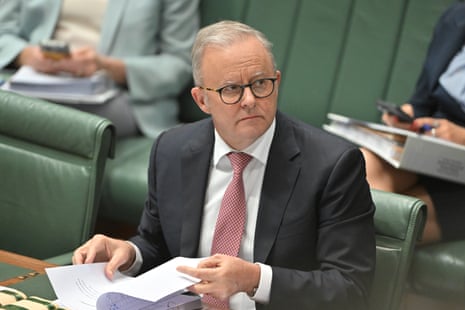
PM remains tight-lipped over triggers for national fuel plan
The government has been vague on exactly what will trigger stage three of the four-stage national plan announced yesterday.
The government has said stage three would be where there is significant disruption to fuel supply, but it’s not exactly clear what that means, and what would be the response for families.
On ABC Radio Melbourne, Anthony Albanese again won’t clarify exactly what that level of disruption means, or what exactly would trigger fuel rationing.
Well the plan outlines it, where there’s extraordinary disruption, but where we’re at, the objective here is to stay at stage two. That’s the objective. That’s why supply is important.
Host Raf Epstein tries to push Albanese and asks whether the government hasn’t decided what exactly that trigger is. Albanese replies, “No, what we’ve decided is to try and keep supply going.”
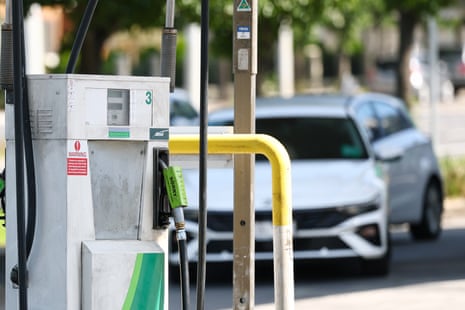
On the fuel excise, he says the measure will “make a difference”
So what we have done to make a difference. I accept that it doesn’t make up for the increase in price but it does make a difference.
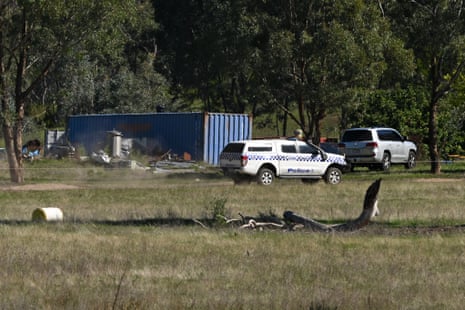
Albanese says it’s ‘good’ Dezi Freeman was shot by police
Anthony Albanese says it’s “good” Dezi Freeman was shot by police yesterday after being on the run for seven months.
Speaking to ABC Radio Melbourne, the prime minister says he attended the funerals of the two officers allegedly killed by Freeman.
Albanese says Freeman “always was going to be brought to justice”.
At the end of this saga, the thing I remember is the sacrifice of those police officers and the fact that our police put themselves in danger each and every day in order to keep us safe.
The head of Asio has made very clear warnings about what this ideology represents. They don’t respect any processes they regard the police and government and our entire society has not been legitimate, and they place themselves outside it, and they represent a risk to others.
Host, Raf Epstein, asks whether it’s “good” when anyone is killed despite their crimes.
Albanese replies:
This guy, I just don’t have any sympathy for him. That’s my position.
He always was going to be brought to justice and it’s clear that he was always going to fight it out.
Minns says states will work out deal to hand back some GST revenue from fuel spikes
The NSW premier, Chris Minns, says the states will try and reach a deal today to hand back some of the GST revenue gained through higher fuel prices.
GST is a percentage, rather than a flat cost per litre like the fuel excise, so as petrol prices go up, so does the GST take.
Speaking to the Today show a little earlier this morning, Minns said legislation is involved and is a little tricky, but the states will meet again today to figure out how to do it.
It’s not as straightforward. The GST deal is complicated, and it needs legislation, but what I think is likely to happen is that we can reduce that excise a bit more and then give that money back to the commonwealth.
So we accept that we don’t want to profit or make excess profits off people’s misery during a difficult period for consumers. So we want to hand back the GST element that’s gone up as a result of petrol prices rapidly increasing over the last six weeks.
Hastie says he’s still ‘open-minded’ on gas tax debate
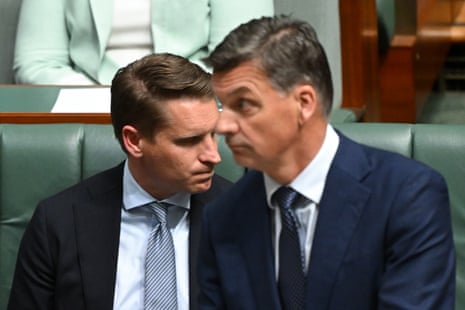
So where does this leave Andrew Hastie on his “openness” to a gas export windfall tax?
Last week he told Guardian Australia he was “sympathetic to that point of view” to place a 25% windfall tax on gas companies:
I think a lot of people, Australians, feel like the multinationals don’t have a social licence, that they’ve had a really good run of our wealth here, and so I’m sympathetic to that point of view … I just know how important those industries are to Australia, so I’d want to get it right. So, I guess I’m open-minded about those questions.
This morning he said he was open-minded “to a debate”, but that didn’t mean he would ultimately support the idea one way or another.
I said I’m open-minded to a debate. An open mind is for closing on a position. And you know, I’m signalling to people that I’m not just going to dismiss their concerns out of hand. Now, we go through a shadow cabinet process, we go through a party room process, and I’m not getting ahead of that.
I’m simply telling people I’m listening, I’m hearing what you’re saying. That doesn’t mean I’m landing on a position.
‘No issue between us’: Hastie denies tensions with Taylor
Andrew Hastie says things are pretty hunky dory between him and Angus Taylor, after Hastie came out saying he was open to gas windfall taxes, an idea Taylor very quickly shut down yesterday.
Speaking to Sky News this morning, Hastie says claims the opposition leader would formally counsel him were “vexatious”.
He says Taylor is a “great leader”.
There’s no issue between us … [Taylor] said he read my transcript closely, and there was a difference between what was reported and what I actually said on the program. So a lot of people use the media to run an agenda, and Angus is a person who establishes the facts, and that’s why he’s a good leader, because he doesn’t jump ahead of the situation. So we’re in a good place.
Angus is a mate. I’ve spent a lot of time in and out of work with him, and we have a great relationship.
Hastie is asked if the chat was formal or casual, Hastie says it was the latter.
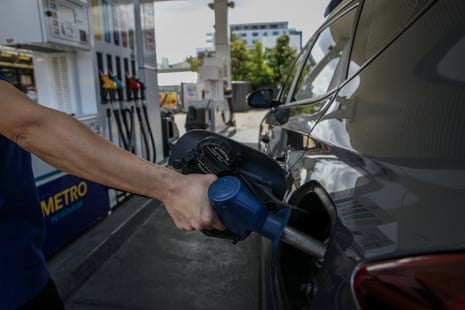
Fuel excise cut will take days or longer to kick in: Bowen
Chris Bowen has urged the public not to “yell” at service stations that don’t immediately reduce their fuel prices after the fuel excise cut kicks in tomorrow.
He says that service stations will have already paid tax on fuel at the bowser, and will be waiting to purchase new fuel with the discounted levy, which can then be passed on to consumers.
Bowen told Sunrise this morning it’ll take a few days at least in the cities for the lower prices to kick in.
The fuel in the tank at the service station might have been there for days. They have already paid the tax. So please, if you turn up tomorrow and the price has not gone down, they are just waiting for the new petrol with the lower tax to come in.
It is really important we do not yell at the poor person behind the counter and say they have not passed on the petrol tax cut yet, because it will take a little while … Days in city areas, it can be a bit longer in regional areas because they have already paid the tax on the petrol in the tank.
NSW government relaxes freight weight limits to save fuel
The New South Wales premier, Chris Minns, has announced his government will relax freight weight limits for freight trucks carrying cargo.
It means trucks will be able to carry more load and do less trips. Minns tells ABC News Breakfast the rules will also be changed to relax the hours that trucks can make deliveries to stores so they can do “more efficient runs”.
[It] means that they can have fewer trips with more tonnage per trip, which we estimate can save between 18 and 35% of the diesel in our economy. It’s a short term measure while we navigate this crisis.
So why doesn’t it happen all the time?
Minns says the measures are cost neutral in the short term, but the heavier the cargo, the worse it is for the roads, meaning roads degrade faster, so it can’t be done permanently.
If we had it in place forever, then it would [degrade roads]. But right now, the urgent priority is to conserve fuel, particularly diesel fuel in our logistic and transport sector. And I mean, we can’t muck around if we’re talking about fuel shortages, and it’s linked to groceries and food. And we want to make this decision early.