1 month ago
As US tech giants rush to expand their operations in the artificial intelligence (AI) sector, they are becoming increasingly dependent on hiring foreign workers via the H-1B visa route, according to a Forbes report. However, measures by the Trump administration to limit the H-1B programme might erode US's competitive edge.
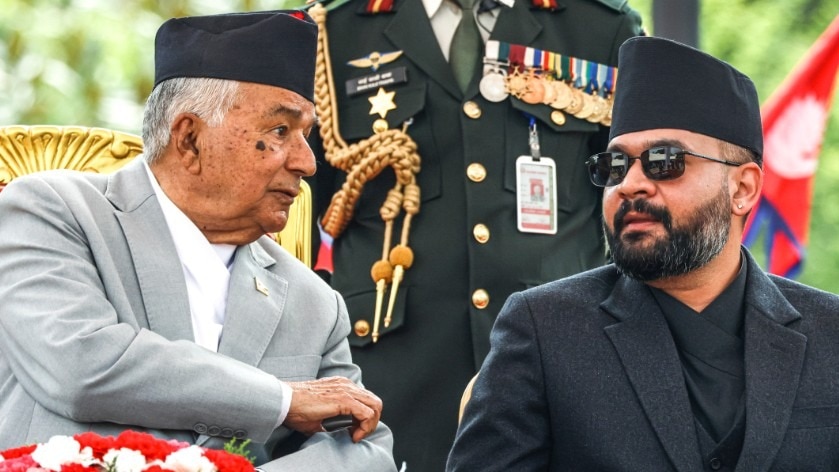
American tech giants are relying on H-1B visa hires for the AI sector even as the US govt puts new limits on the programme. (Image for Representation: File)
US technology companies' push into artificial intelligence is driving strong demand for H-1B visa holders in AI-related roles, according to a report by Forbes. This comes amid the Trump administration's crackdown on foreign hiring by tech companies, especially through the H-1B programme. The clampdown, however, works against the American government's plans to provide the US a leading edge in AI development.
Immigration data analysed by the Foundation for American Policy (NFAP) show that more than 80% of labour condition applications (LCA's) for new H-1B roles at Amazon, Meta, Google, Microsoft and Apple in FY2025 were tied to AI-related occupations. Citing this data, the Forbes report from Sunday (US time) stated that foreign-born professionals were now being deeply embedded in US tech firms' AI expansion strategies.
H-1B visas remain one of the few pathways for highly skilled foreign professionals to work long-term in the US.
The annual cap for the H-1B programme stands at 65,000 visas, with an additional 20,000 for graduates with advanced US degrees through the Optional Practical Training (OPT) route. students make up roughly 70% of full-time graduate enrolment in AI-related fields, making them a major talent pool for technology companies recruiting specialised engineers and researchers.
The report on AI talent hiring using H-1B visas comes amid gloom over the future of the programme used to recruit temporary workers, especially in the tech sector. The crackdown on H-1B visas has seen techies stranded in India away from their jobs and families in the US as visa renewal interviews get postponed into 2027.
AI RACE DRIVING H-1B HIRING BY US TECH COMPANIES
According to The Forbes report, in FY2025, with sizeable investments in artificial intelligence at stake, Amazon, Meta Platforms, Microsoft and Google had the most approved new H-1B petitions, while Apple ranked sixth, according to an NFAP analysis. The data confirm companies hired talent to complement AI spending and broader capital expenditure plans.
"Alphabet, Meta, Microsoft and Amazon each lifted their guidance for capital expenditures and now collectively expect that number to reach more than $380 billion this year," CNBC reported in 2025. According to the Forbes report published on Sunday, analysts say such spending makes it difficult to argue firms hire H-1B workers to cut costs, given US immigration wage rules. Amazon expects to invest an additional $200 billion in 2026, primarily in data centres, while Google plans up to $185 billion and Meta over $300 billion.
According to NFAP's analysis of Labour Department data cited by the Forbes report, more than 80% of LCA's for new H-1B employment at Amazon, Meta, Google, Microsoft and Apple in FY2025 were for AI-related occupations. Amazon filed over 60% of LCA's for software developers, while Meta submitted 58% for similar roles. Google filed more than 71% for software developers, and Apple's filings included 40% for software developers and 24% for electronics and electrical engineers.
Economists say AI investments have supported economic growth. "The AI buildout is adding resilience to the economy at a time when consumption is softening," Stephanie Aliagi of JP Morgan told Forbes.
Economists Giovanni Peri, Kevin Shih and Chad Sparber found foreign STEM inflows explained 30%-50% of US productivity growth between 1990 and 2010, while Michael Clemens estimated up to one-sixth of economic growth came from foreign-born science and engineering professionals.
Joe Rennison wrote in The New York Times that the S&P 500's rise reflected expectations that AI would underpin future market gains.
MEASURES TO LIMIT IMMIGRATION RISK ERODING US's AI EDGE
However, new immigration measures may complicate hiring. In December 2025, US District Court Judge Beryl Howell ruled against the US Chamber of Commerce and the Association of American Universities in their challenge to a $100,000 fee imposed on new H-1B visa applicants. According to Forbes, the $100,000 fee on new H-1B applications would price out many foreign workers from the American job market by increasing the financial burden on companies wanting to hire them.
The Trump administration also finalised changes favouring senior professionals over recent graduates by replacing the previous randomised lottery selection system with a new wage-based weighted system, and proposed limits on OPT and student visa policies that would limit skill development opportunities for foreign students.
History indicates that the Trump administration’s ambitious agenda to curtail the ability of American companies to hire foreign-born talent in the United States would backfire. Research by Britta Glennon, an assistant professor at the Wharton School of Business at the University of Pennsylvania, concluded that new immigration restrictions on H-1B visas would push jobs out of the US.
Speaking to Forbes she stated, "Any policies that are motivated by concerns about the loss of native jobs should consider that policies aimed at reducing immigration have the unintended consequence of encouraging firms to offshore jobs abroad," potentially undermining US leadership in artificial intelligence.
US technology companies' race to dominate artificial intelligence is fuelling strong demand for H-1B visa holders, even as tighter immigration rules threaten future hiring. As data from the NFAP reveals, US tech giants like Amazon, Meta, Google, Microsoft and Apple are heavily reliant on foreign talent to drive the development of their AI initiatives. However, proposed policy changes under the Trump administration risk constraining this talent pipeline, potentially weakening the US edge in AI development.
- Ends
Published By:
Shounak Sanyal
Published On:
Feb 9, 2026