 2 hours ago
Volatility in artificial intelligence (AI) linked stocks has not changed Oppenheimer Asset Management's positive view on the theme, according to John Stoltzfus, Managing Director and Chief Investment Strategist. He believes the recent swings have been driven more by leveraged traders than by any deterioration in the long-term AI story, which he continues to see as a transformational technology.
Stoltzfus expects semiconductors to regain lost ground as businesses and consumers continue their upgrade cycle, while also seeing opportunities beyond technology across sectors such as industrials, financials and consumer discretionary. He believes the Federal Reserve is likely to stay on hold for now, with markets continuing to navigate sticky inflation and bond market volatility.
 This is an edited transcript of the interview.Q: The kind of ferocious swings we've seen on the way up and on the way down in chip names and software names are not for the faint-hearted. At Oppenheimer, you have been largely bullish on the entire artificial intelligence (AI) trade. Are you as bullish as you were six or 12 months ago, or has the volatility tempered your enthusiasm?
A: We have not changed our position. We believe AI is a transformational technology. It's a watershed event. If anything, the recent volatility has largely come from highly leveraged traders playing options, switching between risk-on and risk-off positions.
Earlier, some hedge funds had gone heavily into technology, and when sentiment turned, they rushed to exit, driving the market lower in what we see as a corrective move.
Right now, the S&P 500 is only around 2.5% away from our target, and technology is looking relatively inexpensive compared with where it had been.
One of the biggest misconceptions is that investments in a watershed technology have to become profitable almost immediately. Historically, revolutionary technologies take time before profitability follows.
We believe this story remains intact. AI is likely to benefit all sectors, not just technology—whether it's healthcare, financials, materials or energy.
Q: Bond yields have also surged over the last couple of days. The 30-year yield remains at its highest level since 2007, while the 10-year has not eased much either. What's happening there, and is it a worry?
A: The bond market is trying to do what it would like to see the Federal Reserve do. Going into the Federal Open Market Committee (FOMC) meeting, futures traders were highly leveraged and positioned for the possibility of a rate move. We don't think the Fed is going to hike or cut rates right now.
We expect the Fed to hold steady and remain focused on incoming economic data. If needed, it can either raise or cut rates, but we don't see a reason for either at this point.
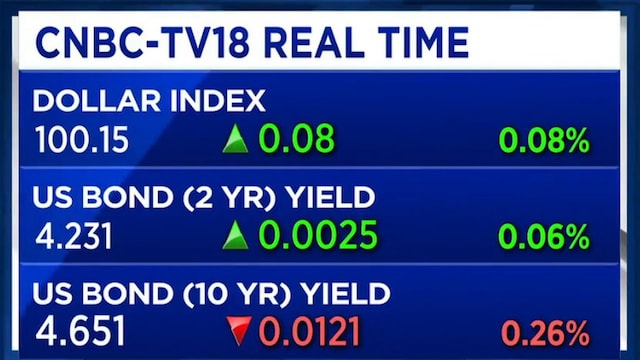
Oil prices remain volatile and inflation is still sticky. The Fed will continue to assess the situation meeting by meeting.
We think the US 10-year Treasury yield is likely to remain somewhere between 3.5% and 5% for quite some time as the market gauges inflation and the pace at which it returns to more normal levels.
The market is still prone to churn, but for intermediate- and long-term investors, these periods often create opportunities, as good companies can get sold off along with everything else.
Q: That's a fairly wide range for the US 10-year yield. But coming back to AI, where do you think more money will be made over the next month—in hardware, hyperscalers and chip companies, or in software names that have staged a comeback?
A: We think chips are likely to recover much of what they have lost during the recent correction.
Semiconductors have a wide range of applications, and we are in an upgrade cycle where both businesses and consumers need newer technology.
Semiconductors remain a good place to be. That said, investors should avoid overconcentration.
For intermediate- to long-term investors, there are also attractive opportunities in industrials, financials and consumer discretionary. There is a broad opportunity set beyond information technology, even though technology itself had a strong rebound.
Watch the full conversation here

Q: So, you are not as optimistic about software? Until a couple of months ago, software was one of the most unloved sectors, but this month we've seen a sharp recovery. ServiceNow is up 22%, SAP has gained 15% since July 1, and in India, the Nifty IT index has risen 18%. Don't you think software can outperform over the next year?
A: We do think software will add value, but not with the same level of confidence as semiconductors.
The semiconductor story is much harder to argue against because of its broad applications.
With software, the key question is how AI develops workarounds and changes the way software is used.
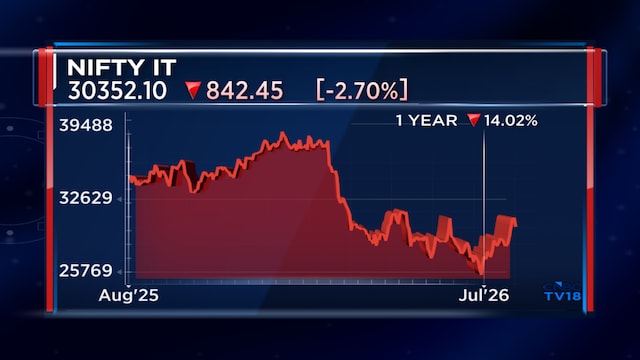
That said, we believe large-cap software companies are likely to perform well over the next few years because their applications offer users a high degree of customisation, whereas AI is a much broader technology that can complement—but not necessarily replace—software.
Catch all the latest updates from the stock market here