1 hour ago
Last Updated:January 24, 2026, 17:17 IST
Iran’s threat to treat any US strike as all-out war has revived tensions just days after a brief de-escalation.

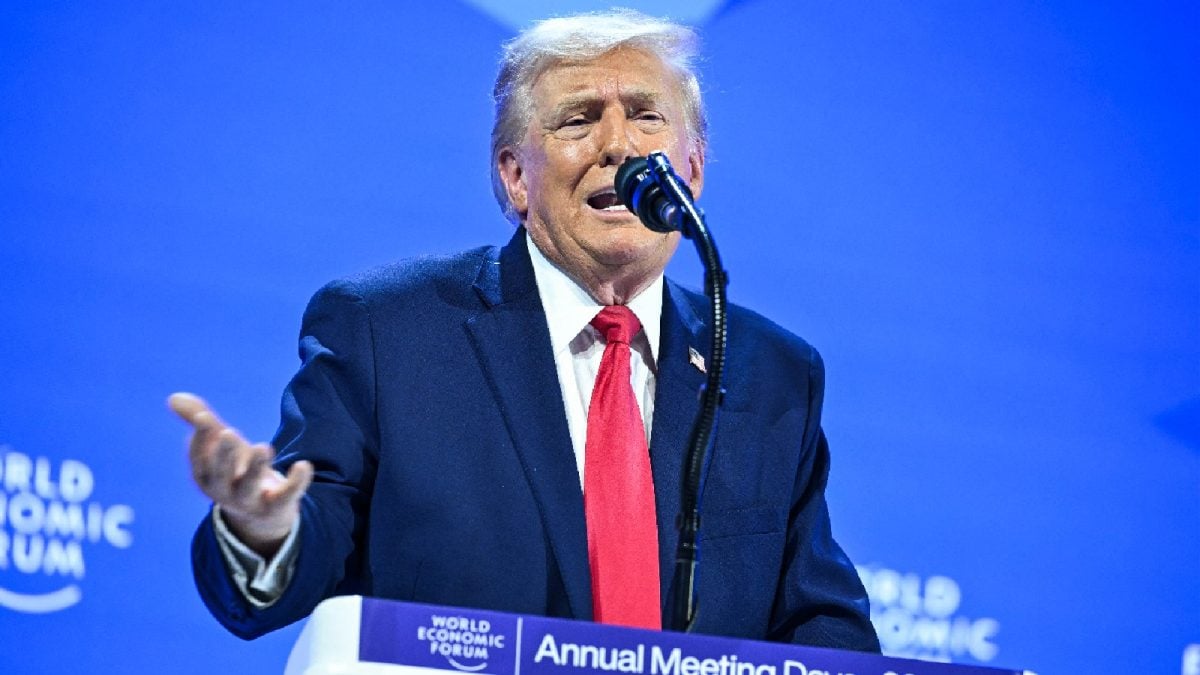
Trump called Ayatollah Ali Khamenei a "sick man" responsible for the destruction of Iran. (Image: AP/File)
The confrontation between the United States and Iran has entered another volatile phase, ending a short-lived lull that briefly suggested both sides were stepping back from the brink.
What is unfolding now cannot be separated from the sequence of events that began in late December, when unrest inside Iran spiralled into one of the deadliest domestic crises the country has seen in years.
At the heart of the renewed tensions is a familiar dynamic: Washington signalling that it is willing to use force, and Tehran warning that any attack, no matter how limited, will be interpreted as full-scale war.
This latest escalation does not sit in isolation. It builds on weeks of internal turmoil inside Iran, competing narratives over executions and casualties, and a near miss in mid-January when US military action was reportedly only a step away before regional pressure forced a pause.
With a US carrier strike group now positioned near Iran and both sides trading increasingly explicit threats, the question is not only how the current moment developed but what it may lead to next.
How The Crisis Began In Late December
The cycle of tension began in late December last year, when widespread anger over soaring inflation, a collapsing currency and deteriorating living conditions triggered protests across Iran. What started as demonstrations over economic hardship quickly transformed into broad anti-government calls demanding political change.
Within days, Iranian authorities responded with a near-total shutdown of internet and phone services. The blackout, imposed on 8 January, was designed to cut communication among protesters, obscure the scale of the unrest and restrict the flow of information out of the country.
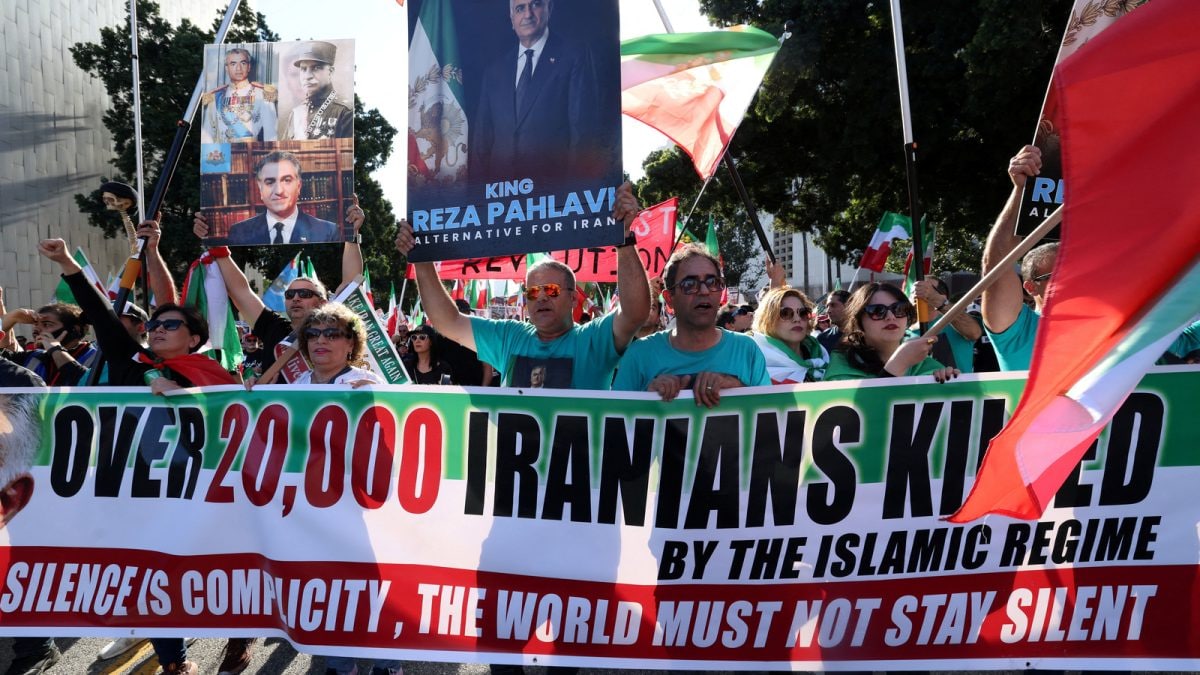
As the protests intensified, the human toll escalated sharply. Activist organisations estimate that more than 5,000 people have been killed so far, though they consider this figure incomplete due to the communications restrictions. An Iranian official quoted by the Guardian acknowledged that thousands had died, blaming the US and accusing “terrorists and armed rioters" of killing civilians. The Human Rights Activists news agency reported more than 24,000 arrests. The unrest was particularly severe in Kurdish areas, with witnesses describing some of the deadliest clashes of the period.
How Tensions Escalated In Early January
Against this backdrop, the US grew increasingly vocal. As reports of Iranian security forces killing demonstrators grew, US President Donald Trump warned that Washington would “come to their rescue." He urged Iranians to “take over your institutions," telling them “help is on its way," fuelling expectations inside Iran that American intervention was imminent.
Trump also singled out Iran’s Supreme Leader Ayatollah Ali Khamenei, calling him “a sick man who should run his country properly and stop killing people."
These statements, layered over a worsening death toll, pushed the crisis into a phase where military options were no longer theoretical. On the night of 14, the US reportedly came close to launching strikes on Iran.
The order to strike was paused only after urgent appeals from regional allies. US news website Axios reported that Israel’s Prime Minister Benjamin Netanyahu warned that Israel was not prepared for the likely Iranian retaliation, and Saudi Arabia’s crown prince Mohammed bin Salman urged restraint due to the risks to regional stability.
A US official told Axios, “It was really close," confirming how narrowly action was avoided.
Why Tensions Momentarily Eased Last Week
The near miss set the stage for a brief period of de-escalation. On 16 January, Trump thanked Iranian leaders in a social media post, claiming they had halted the executions of 800 protesters, including 26-year-old Erfan Soltani, who was scheduled to be executed earlier that week. Though Iran’s top prosecutor, Mohammad Movahedi, denied that the government had ever planned such mass executions.
By Sunday, partial internet access had been restored inside Iran, with monitors reporting the return of some online services. The streets, however, were described as tense rather than settled. With chants against Khamenei echoing from residential windows in Tehran, Shiraz and Isfahan, the atmosphere remained fraught even as open demonstrations declined.
This combination — the halted strike, the apparent pause in executions and the partial restoration of communications — created what appeared to be a moment of stabilisation.
Why Tensions Have Flared Again
The brief calm that followed last week’s near-strike unravelled rapidly after Trump warned that any attempt on his life would trigger overwhelming retaliation against Iran. “I have very firm instructions — anything happens, they’re going to wipe them off the face of this earth," he said in an interview on Katie Pavlich Tonight on NewsNation.
The remark was framed around the possibility of an assassination attempt against him, after Trump had publicly called for an end to Ayatollah Ali Khamenei’s nearly 40-year rule, a comment that deeply unsettled Tehran.
Iran reacted immediately. On Tuesday, armed forces spokesperson Abolfazl Shekarchi warned that Iran would “set fire to their world" if any action was taken against Khamenei. He said, “Trump knows that if any hand of aggression is extended toward our leader, we not only cut that hand but also we will set fire to their world."
The exchange over Khamenei’s safety set the stage for a broader escalation. As Trump returned from the World Economic Forum in Davos, he announced aboard Air Force One that a “big flotilla" of US warships was moving toward Iran. A carrier strike group led by the USS Abraham Lincoln had already travelled west from the South China Sea and was approaching the Persian Gulf. Trump described the deployment as “a warning rather than a combat mission," but said the US was watching Iran closely and that any killing of protesters would trigger serious consequences.
The naval movement revived speculation that Washington was preparing operational options. Tehran responded with its strongest language yet. A senior Iranian official told Reuters that “all types of attacks, whether they are limited or unlimited or surgical or kinetic," would be treated as complete warfare, adding that Iran had moved to a state of high military readiness and was preparing for “the worst-case scenario." The Islamic Revolutionary Guard Corps said it had its “finger on the trigger," and officials repeatedly emphasised that a country under constant US threat must ensure that “everything at its disposal" can be used to restore balance.
What Options The US Has Now
The arrival of the carrier strike group has intensified speculation over possible US military action. Prior to an operation last June, Washington had never directly attacked Iran, and while it has spent years preparing for strikes on Iran’s nuclear programme, the idea of launching attacks to protect protesters involves a different set of targets and objectives.
Trump’s options fall into several broad categories. Symbolic strikes could target Iran’s nuclear or missile programmes, signalling that Washington is enforcing its red lines without directly altering the trajectory of the protests. Another possibility involves attacks on Iran’s security apparatus — the IRGC, law enforcement forces or the Basij militia — or cyber operations against institutions tied to the crackdown.
These actions might offer protesters a moral boost, but Iran’s security forces number in the millions, making it unlikely that a one-off strike would meaningfully reduce the state’s capacity for repression.
The US could also target Iranian economic infrastructure. Analysts note that strikes on key oil export terminals or natural gas facilities would deal a significant blow to a government already struggling under sanctions and domestic upheaval. Such actions would be risky, potentially affecting global energy markets, but would command Tehran’s attention.
The most consequential option, and the most unpredictable, is a strike aimed at removing Khamenei. Such a move would create an unprecedented power vacuum, as Iran has experienced only one succession since 1979 and lacks consensus on a successor. This uncertainty, combined with Pezeshkian’s warning that an attack on Khamenei would trigger war, makes this option particularly explosive.
Would A US Strike Help Iranian Protesters?
The answer is far from clear. Analysts warn that the impact would depend less on the damage inflicted and more on its psychological effect on both protesters and the regime.
A strike could embolden demonstrators, intensify fissures within the ruling system and potentially hasten political change. But there is also the risk that the regime could respond with greater violence, repeating patterns seen in Hungary in 1956 and Iraqi Kurdistan in 1991, when populations rose up expecting American assistance but faced brutal repression.
A political transition in Iran, experts emphasise, will not be driven by US troops entering the country. Iran’s future will ultimately be determined by Iranians, and any external intervention carries unpredictable consequences.
How Iran May Respond Next
The presence of the USS Abraham Lincoln serves two purposes: it provides the US with options to defend against Iranian retaliation, and it acts as a psychological tool, signalling that Washington is prepared for escalation if needed. Analysts expect Iran to calibrate its response to any US action, mirroring symbolic strikes with symbolic retaliation.
Iran’s response to US forces in Qatar last June is an example of how both sides have managed to de-escalate while preserving the appearance of strength.
The scenario shifts dramatically if Khamenei is targeted. Pezeshkian’s warning makes clear that such an action would be viewed as war, and while the consequences are impossible to predict, the US is more prepared for that possibility now than in previous years.
Handpicked stories, in your inbox
A newsletter with the best of our journalism
First Published:
January 24, 2026, 17:17 IST
News explainers After A Short-Lived Pause, US-Iran Tensions Are Flaring Again: What Triggered The Escalation?
Disclaimer: Comments reflect users’ views, not News18’s. Please keep discussions respectful and constructive. Abusive, defamatory, or illegal comments will be removed. News18 may disable any comment at its discretion. By posting, you agree to our Terms of Use and Privacy Policy.
Read More