1 hour ago
Sergio Gor, the US Ambassador to India, appeared in Bishkek even as the Kyrgyz capital was hosting the SCO Summit, being attended by several leaders, including Russia's Putin and China's Xi. Gor said he went to cheer Team USA for the Nomad Games, but his companion and meetings reveal there was more to his visit.
US Ambassador to India Sergio Gor suddenly and abruptly appeared in Kyrgyzstan's capital Bishkek on Monday. The presence of the Donald Trump-appointed diplomat in Bishkek, even as leaders of the China-Russia-led Shanghai Cooperation Organisation (SCO) gathered there, has left many wondering if it was just a coincidence.
Gor said he was there with Republican Senator Steve Daines to support the American contingent at the World Nomad Games, being held simultaneously in Bishkek.
Apart from serving as the US Ambassador to India, Gor is also President Donald Trump's Special Envoy for South and Central Asian Affairs. Therefore, while Gor was well within his remit in travelling to one of the Central Asian republics to advance US interests, it is equally important to look at Senator Daines's presence and the policies he has advocated for years.
Moreover, Gor's meetings with the presidents of Kyrgyzstan, Uzbekistan, Kazakhstan and Tajikistan indicate that the Nomad Games provided an opening for business diplomacy in a region that was once part of Russia's sphere and is now seeing an expansion of Chinese influence.
It is also great optics by President Trump. He has sent his close aide a city packed with leaders from the rival camp, including Russia, China and Iran.
While there's no evidence that Gor attended Bishkek during the SCO summit to undermine it, his choice of back-to-back meetings and Daines's long-standing interest in Central Asia suggest that the visit was not as random as the Ambassador's sporting cover made it appear.
Another thing to note here is that Sergio Gor was born Sergey Gorokhovsky in Tashkent (then part of Soviet Uzbekistan) in 1986. His family reportedly left Uzbekistan for Malta in 1994, when he was about seven, and moved to Los Angeles in 1999, according to US think tank OCCRP. He is also reported to be fluent in Russian, a language still widely spoken across the former Soviet republics of Central Asia.
GOR LANDED IN BISHKEK AS SCO LEADERS GATHERED
Right after landing in Bishkek, Gor, the US Ambassador to India, announced the reason for his arrival in a post on X. "Just arrived in the Kyrgyz Republic with Senator Steve Daines for the World Nomad Games in Bishkek! Proud to be here cheering on Team USA — the American Cowboys!" Gor posted on X.
In a separate post, he reiterated that he was there to support the American contingent. "Great to be in the Kyrgyz Republic with my friend Steve Daines to support our American athletes in the Nomadic Games!" Gor said in another post, four hours later.
Interestingly, Daines, a Republican Senator, wore a cowboy hat in the photo Gor shared. Reposting the same image, Daines said, "Great time with US Ambassador India cheering on Team USA!"
The sixth World Nomad Games, featuring traditional sports such as horseback, archery and wrestling, drew athletes from 104 countries. But the Games were not taking place in an ordinary setting.
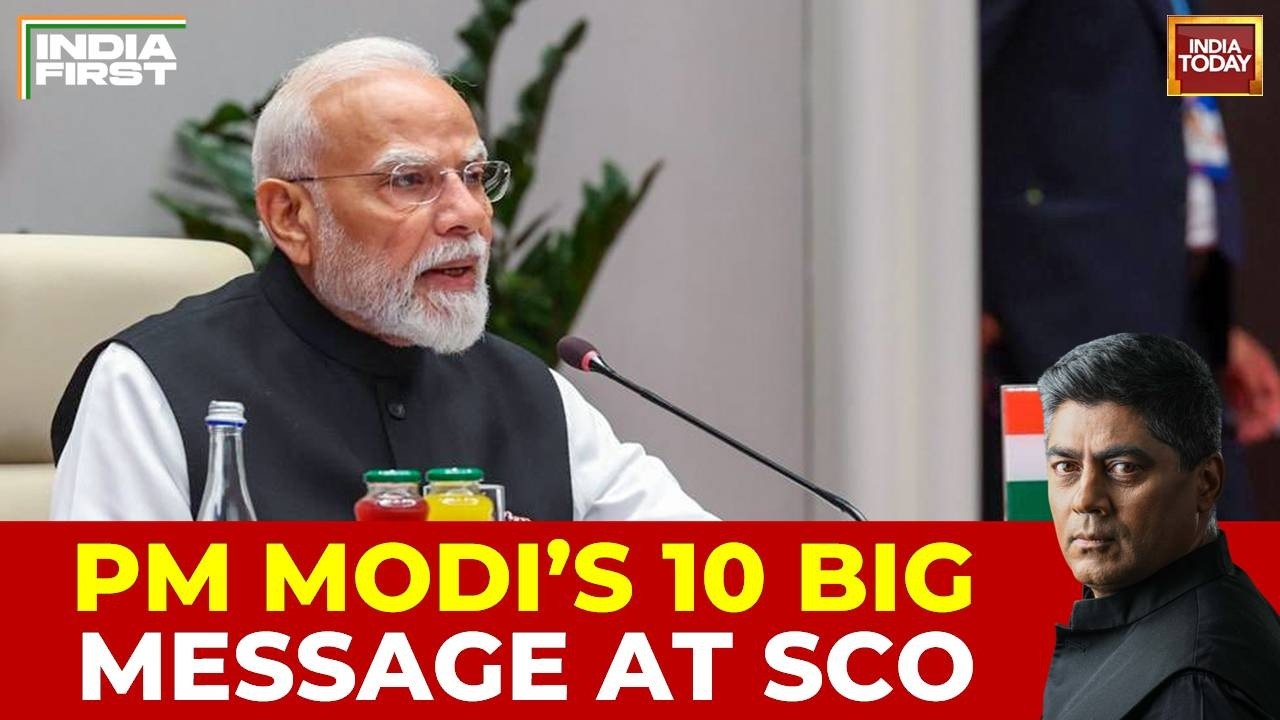
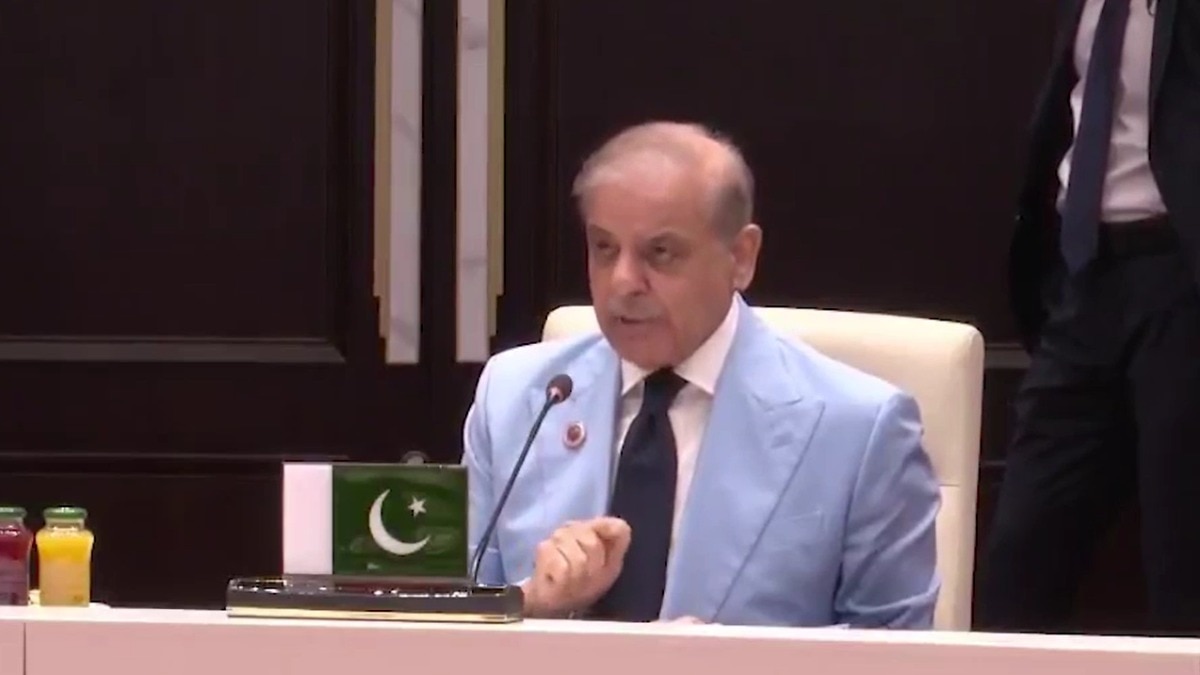
The opening ceremony of the World Nomad Games coincided with the two-day SCO summit, which began in Bishkek on August 31. Among the attendees at the Games were Prime Minister Narendra Modi, Russian President Vladimir Putin, Iranian President Masoud Pezeshkian, Pakistani Prime Minister Shehbaz Sharif, Turkish President Recep Tayyip Erdogan, Kazakh President Kassym-Jomart Tokayev and Belarusian President Alexander Lukashenko attended the Games' opening ceremony, according to news agency Reuters.
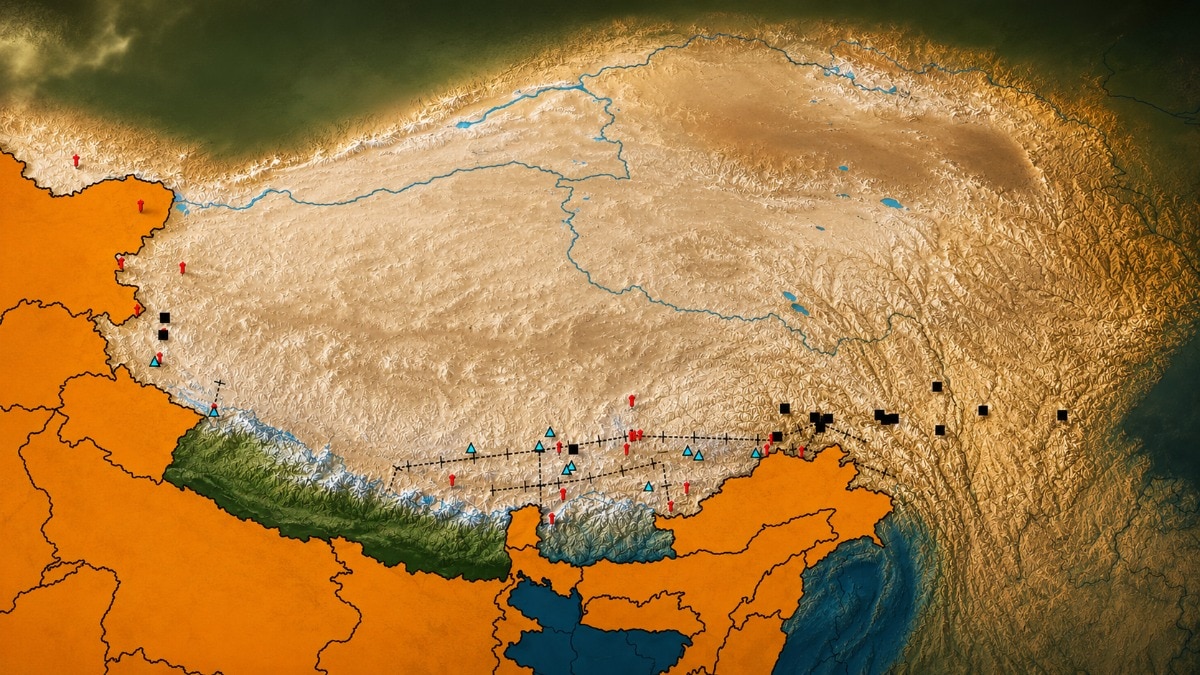
Chinese President Xi Jinping attended the SCO summit but stayed away from the opening ceremony, because of floods and landslides in Tibet.
The Games and the SCO summit, therefore, produced overlapping spaces for diplomacy. Some of the leaders who had travelled to Bishkek for the SCO gathering also attended the cultural programme kicking off the sporting event.
That allowed Gor and Daines to enter the crowded diplomatic arena without participating in the SCO summit. The United States is not a member of the political and economic grouping which experts describe as a counterweight to American and Western influence.
Yes, Gor didn't attend the SCO meetings. But, the presence of one of Trump’s closest aides in Bishkek on a day when leaders of the "other camp" were present there, was bound to generate speculation.
GOR IS NOT JUST THE US ENVOY TO INDIA. TRUMP HAS A CENTRAL ASIAN ROLE FOR HIM
However, Ambassador to India, Gor, also has another, wider role. Trump appointed him the United States Special Envoy for South and Central Asian Affairs. His portfolio, therefore, extends to the five Central Asian republics of Kazakhstan, Kyrgyzstan, Tajikistan, Turkmenistan and Uzbekistan. It was a new special-envoy position created by Trump for his "great friend" who had been at his side for years. So, Kyrgyzstan is very much part of his official domain. The sequence of Gor's posts on X tells the story of his engagements.
After announcing his arrival, his support for Team USA, and cheering on American athletes, Gor revealed he met Kazakh president Sadyr Zhaparov in Bishkek. They discussed bilateral political relations, trade and investment. Particular attention was given to the C5+1 mechanism, an arrangement which brings the United States together with all five Central Asian republics. Kyrgyz state news agency Kabar, reported that the two sides discussed the prospect of holding a summit of C5+1 heads of state in 2027. They also discussed the B5+1 business platform and ways to expand ties between American and Kyrgyz businesses.
Zhaparov raised the issue of simplifying US visa procedures for Kyrgyz citizens, including the visa-bond requirement and other restrictions. Gor agreed with the Kyrgyz president's proposals and expressed readiness to help strengthen relations.
Gor and Daines then met Tajik President Emomali Rahmon. The talks covered bilateral and regional issues, trade, investment, energy, industry and mining, according to Interfax, a Moscow-based news agency. Rahmon described the C5+1 mechanism as an important platform for regional dialogue and said Tajikistan wanted a broader relationship with the United States.
Gor then posted about his interaction with Kazakhstan President Kassym-Jomart Tokayev. "A very insightful meeting with the President of Kazakhstan. Commercial diplomacy between our two countries is at record levels and growing. We are looking forward to President Tokayev visiting the United States later this year," Gor said.
Together, the meetings show that Gor used the Bishkek gathering to engage four of the five Central Asian presidents. Trade, investment, energy, mining, visas and the C5+1 mechanism were all on the table. The World Nomad Games might have provided an opening, but Gor's itinerary revealed the work of a special envoy.
WHY STEVE DAINES'S PRESENCE MATTERS
While Gor did the heavy lifting, meeting one president after another, the man in a cowboy hat accompanying him is equally important, if one wants to understand the visit's significance.
Steve Daines is a Republican senator from Montana. He's a Trump ally and a member of the Senate Committee on Energy and Natural Resources. In the last few years, he emerged as one of the strongest advocates in the US Congress for deeper engagement with Central Asia and the wider Caspian and Caucus region.
Daines had travelled to Kazakhstan, Uzbekistan, Tajikistan, Turkmenistan and Kyrgyzstan in 2024, when he met the presidents of all five countries. According to his website, no US senator had visited all five Central Asian republics in more than a decade.
In November 2025, he introduced bipartisan legislation to repeal the Jackson-Vanik trade restrictions affecting Central Asian countries. The Cold War-era provision was adopted in 1974 to pressure the Soviet Union over restrictions on emigration. Its continued application has complicated the establishment of permanent normal trade relations with some former Soviet republics.
Explaining his legislative push on X in 2025, Daines said, "Central Asia is strategically critical and home to a wealth of natural resources that would increase American prosperity, but the region is still subject to outdated restrictions that hinder US trade. Today I introduce a bill to repeal the Jackson-Vanik trade restrictions and unleash the full potential of US relationships with Central Asia."
As of now, the legislation has not been repealed. In a June 2026 speech at the Trans-Caspian Forum, Daines said the broader Caspian Basin had "obvious geographic importance due to its position between Russia, China, and Iran" but had suffered from a lack of American engagement. He argued that the Central Asian states had historically looked north towards Russia, but that Moscow had exploited this position to retain regional dominance. He also said the United States could no longer neglect countries that wanted deeper ties with Washington and whose friendship had geopolitical importance.
Central Asia holds substantial reserves of uranium, oil, natural gas, copper, lithium, zinc and rare-earth elements that are vital to US energy, defence, technology and manufacturing. Access to these resources could help Washington secure its supply chains and reduce dependence on China, which dominates the processing of many critical minerals.
Apart from interests in natural resources in Central Asia, the US might also be looking at some strategic footing in the region. The five Central Asian republics were part of the Soviet Union until its collapse in the early 1990s. The USR's inheritor, Russia, retained considerable political, military, economic and cultural influence in the region after their independence. But China has steadily expanded its footprint through trade, infrastructure, energy projects, lending and the Belt and Road Initiative. Beijing has also developed its own China-Central Asia framework, separate from the SCO.
China also has direct rail links with Kazakhstan, while the China-Kyrgyzstan-Uzbekistan railway is under construction to extend the network deeper into Central Asia. China also imports uranium, copper, zinc, gold, oil and natural gas from Central Asia. It's also increasingly seeking the region's lithium and rare-earth deposits.
Also, the region is important because it lies between Russia, China, Iran, Afghanistan and the Caspian Sea.
Even as Russia and China have had these engagements with the Central Asian states, they have generally pursued multi-vector diplomacy. While maintaining relations with Russia and China, they have sought trade, investment and political partnerships with the United States, Europe, Turkey, India and other countries. That's an opening Washington is looking for.
Republican Senator Daines sees the same resources as an opportunity to increase American prosperity. Maybe, also an American footprint in the region. Remember Trump isn't too happy with losing Afghanistan's Bagram Air Base that it once held.
Then the optics of sending your envoy to a city packed with leaders from the rival camp, and having him meet the host and its neighbours, makes for a powerful statement.
These are the reasons Gor's trip to Bishkek was consequential, as was his choice of companion. Daines is no stranger to Central Asia and has long had his sights set on the region. So, Gor's arrival might have come as a surprise, but the diplomatic work that followed was anything but random.
- Ends
Published By:
Sushim Mukul
Published On:
Sep 1, 2026 19:28 IST