 58 minutes ago
India's capital markets have taken a significant step toward blockchain-based finance. State-owned REC Ltd. has raised ₹500 crore through India's first tokenised corporate bond issue. The issue received subscriptions for over 8 times the issue size. It's a landmark moment in the ongoing efforts to make India's bond market faster, cheaper, and deeper.
By CNBCTV18.com September 8, 2026, 11:40:37 AM IST (Updated)
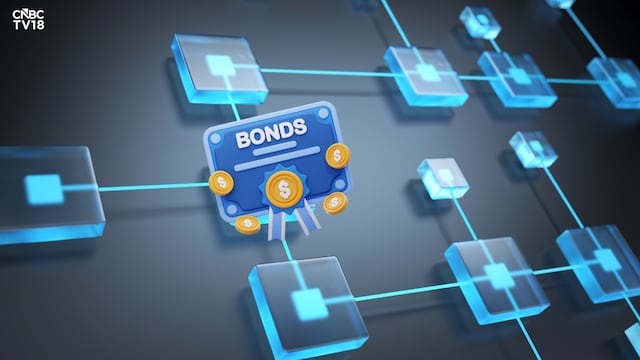
REC Limited, one of India’s largest power financiers, just raised ₹500 crore through tokenised bonds, the first in the country. What’s better, the issue was oversubscribed by more than 8 times, reflecting strong investor demand for the new fundraising mechanism.
If successful, the experiment could pave the way for broader adoption of blockchain-based securities, combining tokenised assets with the RBI's digital rupee to create faster, cheaper and more transparent capital markets. It places India alongside jurisdictions such as Hong Kong and parts of Europe that are already experimenting with tokenised debt issuance.
The real significance is not that a bond has gone on the blockchain. It is that regulators are now testing whether the entire process of issuing, trading and settling securities can eventually move onto a programmable digital infrastructure.
What exactly is a tokenised bond?
A tokenised bond is a conventional debt security whose ownership records are represented digitally on a blockchain or distributed ledger rather than on traditional market infrastructure. The issuer still pays a coupon, investors still earn interest, and the bond still has a maturity date and legal contractual obligations.
Think of it this way: For a traditional bond, ownership is recorded in multiple databases operated by depositories, exchanges and clearing corporations. Settlement involves several intermediaries. Transfer of securities and money can take time.
In a tokenised bond, ownership is represented as digital tokens on a shared ledger. Bond and payment can move simultaneously. Settlement can happen almost instantly or on the same day.
Why does blockchain help here?
Tokenisation promises to modernise the "plumbing" of financial markets.
Faster settlement: Today, multiple intermediaries update separate records before a transaction is considered complete.
A distributed ledger creates a shared record that all authorised participants can access. This allows near real-time settlement.
Lower operational costs: Financial institutions spend enormous resources reconciling records between depositories, custodians and clearing systems. A common ledger could reduce that duplication.
Greater transparency: Every transaction leaves a traceable digital record, making it easier for regulators and participants to verify ownership and tracking.
A tokenised bond is not a cryptocurrency
Cryptocurrencies are standalone digital assets whose value does not come from a contractual debt obligation. A tokenised bond is best viewed as a test of a new financial operating system, not a new asset class.
Tokenised bonds don’t change the economics of raising debt, only the technology that records ownership and moves money.
How India's first blockchain bond worked
REC's bond issue was supported by a regulatory sandbox under the Securities and Exchange Board of India (SEBI). The transaction used the Reserve Bank of India's (RBI) wholesale digital currency rather than private crypto tokens.
The company raised ₹500 crore through bonds carrying a 7.30% coupon and a maturity of about 20 months. The issue attracted bids worth around ₹796 crore, indicating strong institutional demand.
What are the risks to consider?
New infrastructure may face cybersecurity, system integration and operational challenges.
Rules around tokenised securities are still evolving globally. Regulators must address custody, interoperability and legal enforceability questions.
A tokenised bond remains a bond. Blockchain cannot eliminate the risk of default by the company, or the demand for a bond issue by a particular company, or the interest-rate risk. It only changes the record-keeping infrastructure.
Read more: A beginner’s guide for aspiring creators in India
(Edited by : Sriram Iyer)
First Published:
Sept 8, 2026 11:18 AM
IST
HomeTechnology NewsWhat Is a Tokenised Bond? How India's first blockchain bond will actually work and why it matters