1 hour ago
After a chaotic 2025, the new year is shaping up to be an uncertain one for H-1B visa-holders and applicants. New US rules, including higher fees, wage-based lotteries and tougher background checks, under President Trump could further restrict visas unless American courts step in to block them.
This year might turn out to be a very uncertain one for H-1B visa holders as the US government prepares more restrictive rules for the programme. (Image: File)
H-1B visa-holders are likely to face a tougher immigration environment in 2026 as the Trump administration presses ahead with policies aimed at reducing legal immigration to the US, tightening eligibility rules and raising the cost of hiring foreign professionals. The woes that began in 2025, the year Donald Trump took over as US President for a second time, are going to continue in 2026.
As if to reveal the direction the Trump policy is headed, visa cancellations by the US rose to 100,000 in 2025, a sharp rise against the 40,000 in 2024, the last year of the Biden administration. Around 10,000 of the visas cancelled last year were study and work visas.
While the White House has occasionally voiced support for high-skilled visas, policy actions and regulatory changes suggest increased uncertainty this year for H-1B workers, international students and their employers.
A proclamation issued on December 16 signals the administration's broader intent to restrict legal migration, including measures that could indirectly affect H-1B holders through heightened scrutiny of applications and re-reviews of previously approved cases.
Additional rules expected in 2026 might further limit employers' ability to hire foreign talent and increase compliance burdens for universities and companies that rely heavily on international professionals.
WHY ARE COSTS INCREASING AND OPTIONS NARROWING FOR H-1B VISA-HOLDERS?
One of the most consequential developments for H-1B applicants is the US government's push to sharply raise costs for new visas. A $100,000 annual fee on new H-1B visa holders, which is currently under legal challenge, would dramatically increase the financial burden on employers and could deter companies from sponsoring foreign workers altogether. Alongside the fee, officials are planning new regulations that would further restrict eligibility and make the programme more expensive to access.
At the same time, the administration has finalised a rule that will overhaul the H-1B lottery system beginning in 2026. According to Forbes, instead of giving all applicants an equal chance, USCIS, the nodal agency, will weigh selections based on Department of Labour wage levels, favouring senior, higher-paid roles over entry-level positions.
According to an article by Forbes, the chances of USCIS selecting Level IV registrants, who are the most senior and have the highest pay, will now rise by 107%. Meanwhile, Level I registrants, who along with Level II registrants comprise around 90% of all H-1B applicants, and have the least work experience and wages, will see their chances of being selected drop to a dismal 15.29%.
Analysts say this change will significantly reduce the odds for recent graduates and early-career professionals, particularly international students, who typically fall into lower wage categories.
WHY WILL INTERNATIONAL STUDENTS HAVE TO DEAL WITH HIGHER H-1B ODDS IN 2026?
For international students hoping to transition to H-1B status, the outlook is especially challenging. Most student-linked H-1B applications historically fall within the lowest two wage levels, which would see their selection chances drop sharply under the new weighted lottery system.
Proposed and pending rules could also restrict Optional Practical Training (OPT) and STEM OPT programmes, which offer foreign students anywhere between 12 and 24 months to acquire vital work experience before or after completing course requirements. These measures would thus limit post-graduation work opportunities that many students rely on to gain experience and qualify for H-1B sponsorship.
Further proposals, including fixed admission periods that would make it difficult for foreign students to complete courses that are more than four years, and stricter oversight of universities, are expected to reduce the ability of international graduates to remain in the United States and enter the high-skilled workforce.
WHY IS THE WHITE HOUSE GIVING MIXED SIGNALS ON THE H-1B VISA PROGRAMME?
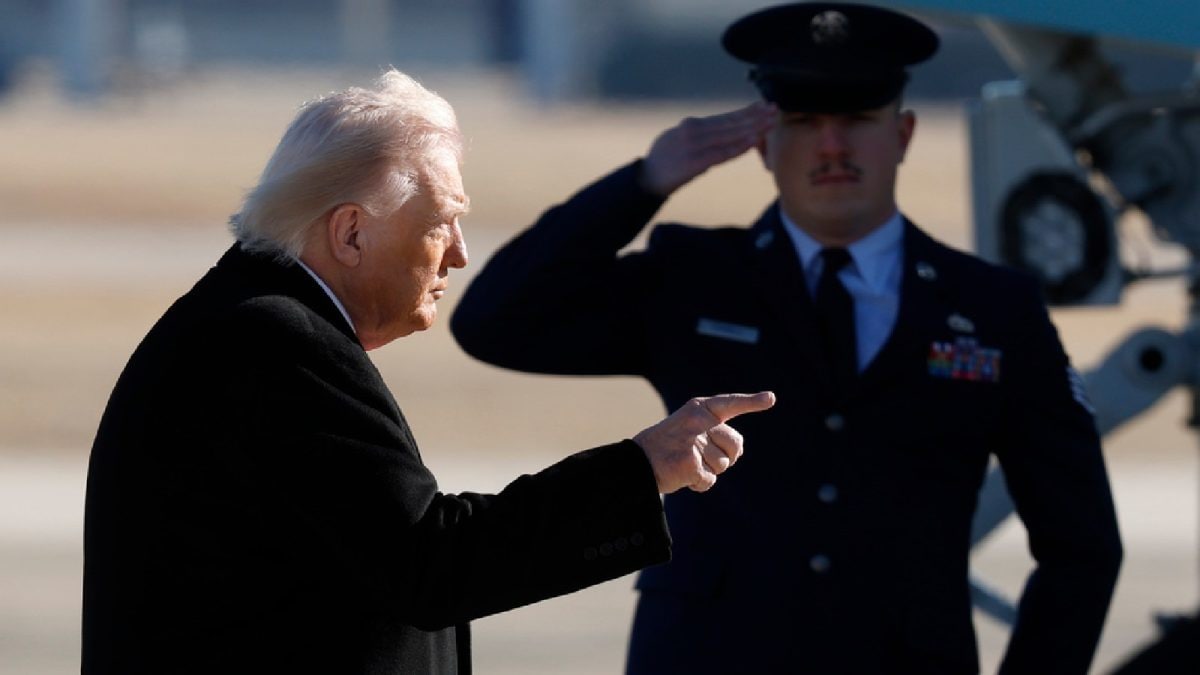
President Donald Trump has repeatedly offered public reassurance to businesses and technology leaders that he supports the H-1B visa programme, often arguing that the US lacks sufficient domestic talent in specialised fields. He has described H-1B visas as essential for attracting skilled professionals and has cited his own use of the programme as evidence of its value to the economy.
However, those statements have had limited impact on actual policy. According to a report by Forbes, immigration decision-making within the administration continues to be driven not by Trump, but by senior aides like Homeland Security Advisor Stephen Miler, who are committed to sharply reducing both legal and illegal immigration and routinely ignore Trump's positive remarks on H-1B visas and international students. .
Measures such as steep fee hikes, tighter eligibility rules and a restructured H-1B lottery system suggest that curbing the inflow of foreign professionals remains a core objective, regardless of the president’s occasional pro-H-1B remarks.
HOW WILL LEGAL BATTLES DETERMINE THE FATE OF H-1B VISA HOLDERS?
Many of the most consequential changes facing H-1B visa holders in 2026 are likely to be decided in US courts. According to Forbes, the US Chambers of Commerce filed a plea against Trump's proclamation raising H-1B visa fees to $100,000 by arguing that the President had overridden his authority by issuing such an order. The plea first went to the District Court of the District of Colombia, where an Obama-era judge upheld the order's legality, and is currently in the US Appeals Court where a judge agreed to fast-track the case.
Similarly, a coalition of US States led by California also sued the Trump Administration against the H-1B fee hike, arguing that the exorbitant fees would place an unsustainable burden on not only private industry, but also public welfare services whose service quality would drastically decrease without trained foreign workers. Importantly, it was reported by the Los Angeles Times that states like California had resorted to using the H-1B programme to tide over a critical shortage of trained teachers in the US.
Employer groups, universities, and immigration advocates have also mounted legal challenges against proposed fee increases, lottery restructuring and wage rules, arguing that the administration has exceeded its statutory authority and violated administrative law.
A ruling either way in any of these suits could set a precedent for how far the executive branch can go in using fees and proclamations to reshape employment-based immigration without congressional approval. Similarly, lawsuits challenging the weighted lottery system could determine whether experience-based selection replaces the long-standing random draw as early as the next filing cycle.
WHAT H-1B VISA HOLDERS AND APPLICANTS CAN EXPECT IN 2026
For H-1B visa holders, 2025 was a chaotic year, with new rules including ending visa stamping in third countries and new social media screening rules led to consulates across the world, but especially in India, postponing H-1B visa interviews from December 2025 all the way to October 2026, with one unfortunate soul having their date pushed back to 2027.
This postponement led to several professionals who had travelled home for visa processing being stranded away from their jobs and families, while immigration attorneys and employers were compelled to release advisories asking H-1B visa-holders not to leave the US.
The year 2026 could prove especially uncertain, with policy shifts that favour seniority over potential as far as new H-1B applicants are concerned and raise almost unsurmountable financial barriers for both employers and foreign workers. This is despite US employers remaining dependent on foreign talent across sectors like technology, healthcare and engineering. Unless the US courts intervene, potential H-1B applicants would be wise to prepare for more disruptions, limitations and uncertainty this year.
- Ends
Published By:
Shounak Sanyal
Published On:
Jan 14, 2026