1 month ago
The US launched PaxPass and announced Foundry School at the Pax Silica summit, where India joined nearly 20 members in signing the AI Opportunity Declaration. The measures signal Washington's bid to secure trusted AI supply chains and train talent across partner economies.

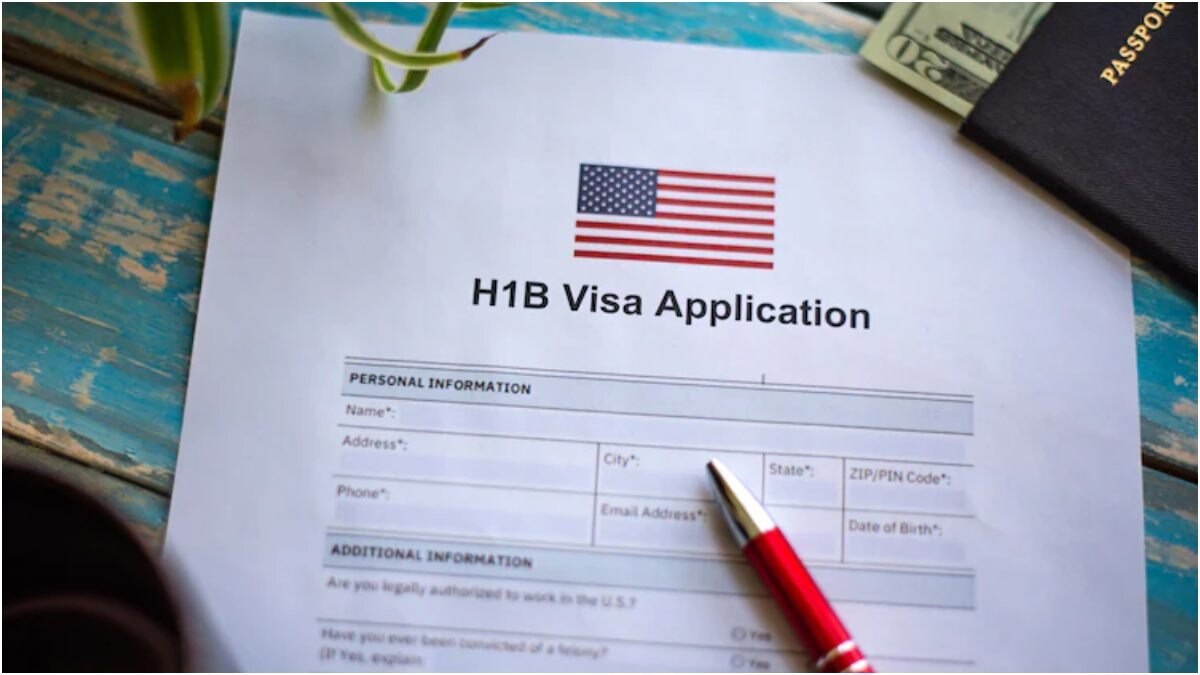
Image used for representational purposes only

Washington,UPDATED: Jun 25, 2026 22:24 IST
The United States on Thursday unveiled PaxPass, a platform meant to make the movement of critical AI goods easier, and announced Foundry School with Stanford University to build a workforce for emerging technologies across member states of the Pax Silica initiative. Nearly 20 members of the initiative, including India, also signed the AI Opportunity Declaration at its second summit.
Speaking at the summit, US Under Secretary of State for Economic Affairs Jacob Helberg said the declaration was based on a clear approach to artificial intelligence. “The Declaration reflects a simple but important idea. Governments should not approach AI primarily through the lens of prescription. We should approach it through the lens of opportunity,” he said. He also announced a USD 50 million US funding commitment for PaxPass. Separately, nine new countries and the European Union joined the Pax Silica initiative on the sidelines of the summit.
Helberg said PaxPass could change how trusted partners use critical goods that power the AI economy by bringing together cargo verification, AI-powered risk assessment and pre-approved fast-track processing for trusted shipments. “PaxPass will reduce friction, strengthen supply chain resilience and accelerate trusted trade. To support this effort, the United States is committing USD 50 million in foreign assistance funding dedicated to the development and deployment of PaxPass,” he said. He added that the US was backing its vision with real investment.
He also announced plans for Foundry School, a workforce development initiative being launched with Stanford to train entrepreneurs, engineers and advanced manufacturing leaders across the Pax Silica economies. “In parallel, Stanford and the State Department will develop a first-of-its-kind curriculum for institutions across Pax Silica economies to adopt and teach advanced manufacturing, which is not yet well established. It is a stand-alone field of study,” Helberg said. “FoundrySchool will give the next generation of technologists, industrial leaders, the shared foundation and the capabilities that underwrite prosperity in this field,” he said.
Helberg said the US had recently announced what he described as the first-of-its-kind economic security zone and a model aimed at attracting investment, expanding trusted manufacturing capacity and creating innovation that supports long-term growth. “Our hope is that this is only the first of a handful of such zones across the Pax Silica network, creating a connected ecosystem where investment, innovation, and trusted production reinforce one another across different countries,” he said. “These aren't isolated projects. They're profitable, replicable pilots designed to help countries solve a lot of challenges together, and they're designed to set the model that will scale the economy,” Helberg said.
Addressing the gathering at the Donald J Trump Institute of Peace in Washington, US Deputy Secretary of State Christopher Landau said the technologies shaping this century, including advanced chips, AI infrastructure, energy and minerals, were too important and too vulnerable to coercive policies and markets. “Pax Silica exists to keep these technologies and the future growth of all of us in trusted hands. Governments didn't build the frontier of technology. Our companies did it,” he said. “When the United States unleashes its private sector and partners with nations that do the same, no state-directed rivalry takes place. No single nation holds everything that these technologies supply chains. That is our strength, not our weakness,” Landau said, adding, “Our combined capabilities are something no command economy can compete with.”
Landau said the initiative's premise was to align public purpose with private capability and remove hurdles holding back growth. “Our premise here is simple. Align public purpose with private capability. Strip away the friction that has held us back and let free enterprise do what no government has ever done. That's the purpose of the AI opportunity,” he said. He also said nine new countries had signed the Pax Silica declarations. Argentina, Germany, the Netherlands, Chile, Costa Rica, Greece, Kazakhstan, Panama and the European Union joined the initiative on the sidelines of the summit, as the US pushed ahead with new trade, training and investment measures under Pax Silica.
With PTI Inputs
- Ends
Published By:
India Today Web Desk
Published On:
Jun 25, 2026 22:24 IST