 1 month ago
HomeMarket NewsUS jobless claims rise to 215,000 but layoffs remain low despite Iran war uncertainty
The number of Americans signing up for unemployment benefits — a proxy for layoffs — has stabilised in a low range of mostly 200,000 to 250,000 a week since the US economy emerged from a brief but nasty pandemic recession in 2020.
By AP May 28, 2026, 6:29:40 PM IST (Updated)
2 Min Read
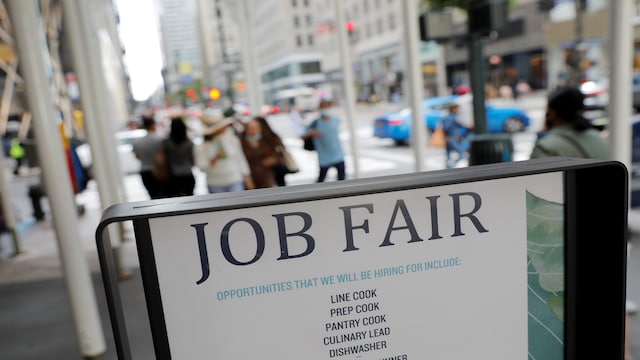
More Americans sought unemployment benefits last week, but layoffs remain low despite economic uncertainty caused by the Iran war. The Labour Department reported on Thursday (May 28) that jobless claims were up to 215,000, up from 210,000 the week before.
The four-week moving average of claims, which smooths out week-to-week volatility, rose by nearly 6,300 to 209,000. The number of Americans signing up for unemployment benefits — a proxy for layoffs — has stabilised in a low range of mostly 200,000 to 250,000 a week since the US economy emerged from a brief but nasty pandemic recession in 2020.
The persistently low number of claims suggests that most U.S. companies have not resorted to layoffs. But even if they’re not cutting jobs, employers haven’t been adding many either. Last year, companies, nonprofits and government agencies added fewer than 10,000 jobs a month, the weakest hiring outside recession years since 2002.
Also Read: US Dollar near one-week high as US-Iran tensions flare, yen nears intervention zone
Job creation has picked up a bit so far this year, to an average of 76,000 a month from January through April. By contrast, they added 122,000 a month in 2024 and averaged nearly 400,000 a month from 2021 through 2023 as the economy roared back from COVID-19 lockdowns.
But the United States now needs fewer jobs to keep the unemployment rate from rising. President Donald Trump’s immigration crackdown and ongoing Baby Boomer retirements mean that the monthly “break-even rate″ of monthly hiring may be as low as zero. And the unemployment rate — 4.3% in April — has, in fact, remained low by historic standards.
But the Iran war has clouded the economic outlook as higher energy prices squeeze consumers and businesses. Iran responded to U.S. and Israeli attacks by turning to economic warfare — closing the Strait of Hormuz, through which a fifth of the world’s oil passes, and causing the biggest disruption of global oil supplies in history.
Also Read: Trump says US not satisfied yet on deal with Iran
In response, US gasoline prices have surged to an average of $4.43 a gallon from an average of $2.98 a gallon on the eve of the conflict, according to AAA.
(Edited by : Jomy Jos Pullokaran)
First Published:
May 28, 2026 6:28 PM
IST