 1 month ago
The US and Iran gave conflicting accounts on allowing UN inspections at bombed nuclear sites. The disagreement complicated wider talks on Hormuz access, sanctions relief and the fragile Lebanon ceasefire.

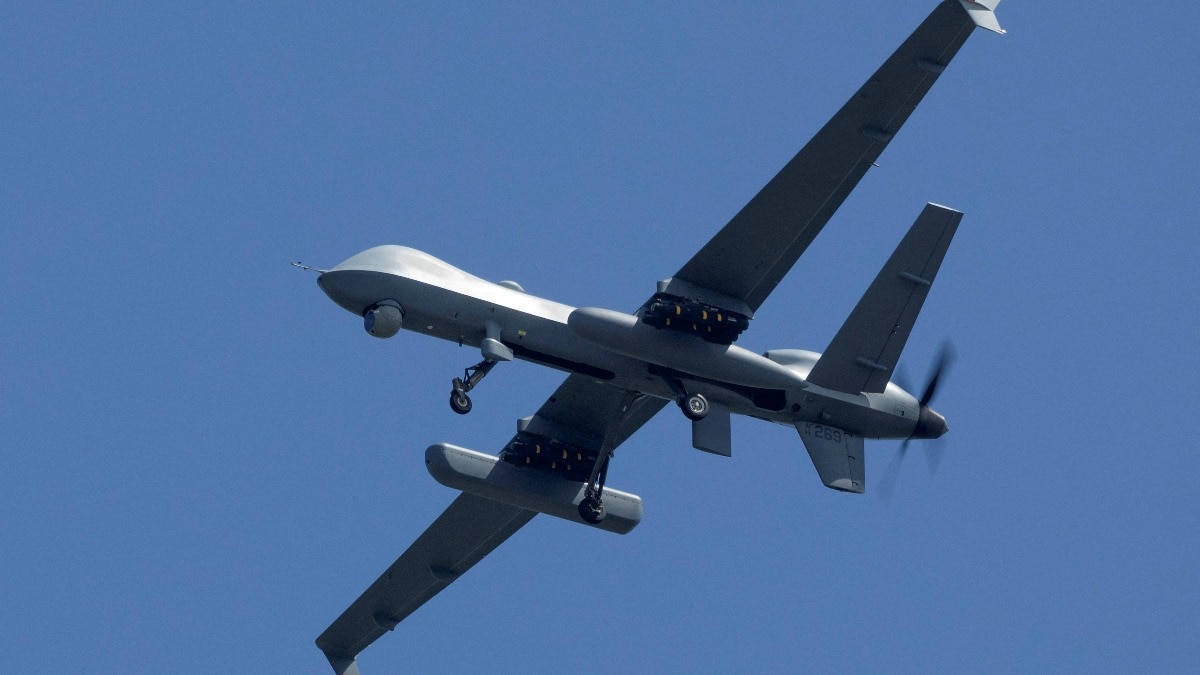
Stock photo used for illustration

Islamabad,UPDATED: Jun 23, 2026 21:42 IST
The US and Iran gave conflicting accounts on Tuesday on whether Tehran had agreed to let UN inspectors visit Iranian nuclear sites bombed by the US, even as talks continued on a permanent end to the war. The dispute came as mediators worked on the next steps after talks in Switzerland and as a fragile ceasefire in Lebanon came under fresh strain.
Iran's president met Pakistani officials involved in the mediation effort, while technical teams worked on details from the Switzerland talks. At the same time, there were signs of movement on shipping through the Strait of Hormuz, with the Maritime Organisation saying a plan was under way to evacuate 11,000 stranded seafarers through the waterway.
Earlier in the day, Iranian Foreign Ministry spokesperson Esmail Baghaei told reporters in Tehran that UN inspectors were not scheduled to examine the nuclear sites bombed by the US last year, rejecting comments made a day earlier by US Vice President JD Vance. In response, President Donald Trump said on social media that Iran had agreed to nuclear inspections long into the future, adding that without this concession, "there would be no further negotiations!"
The Atomic Energy Agency has not commented on its possible role. The agency has moved in and out of Iran since Israel's 12-day war in 2025, but it has not been given access to bombed enrichment sites targeted by the US.
On the Strait of Hormuz, Maritime Organisation Secretary-General Arsenio Dominguez said the evacuation plan for stranded seafarers was being carried out with Iran, Oman, other coastal states in the region, the US and the maritime industry. "We have secured the necessary safety guarantees and have thoroughly verified the conditions for safe navigation to support these operations," he said.
But the uneasy ceasefire has already been tested, with Iran saying it closed the strait again after fighting broke out between Israel and the Iran-backed Hezbollah in Lebanon. The US said negotiators had discussed "mechanisms" to ensure the strait remained open. Data and analytics company Kpler said 39 ships crossed the strait on Monday, after about 92 crossings between Friday and Sunday. Before the war, around 100 ships a day used the route.
Iran said the Switzerland talks led to specific negotiation groups on sanctions relief, nuclear issues, reconstruction and monitoring, according to the state-run IRNA news agency. The report quoted Deputy Foreign Minister Kazem Gharibabadi, who is leading the technical talks, as saying the countries also set up a contact mechanism on ship movements through Hormuz and on the fighting in Lebanon between Israel and Hezbollah.
Violence returned to southern Lebanon on Tuesday when Israeli soldiers opened fire, killing two people after two days of calm following a ceasefire brokered on Saturday. A return to heavy fighting could affect the wider talks, as Iran has demanded a full truce in Lebanon as part of any broader deal. Israel occupies part of Lebanon and says it must be able to strike militants launching attacks into northern Israel. The Israeli military said troops fired at four Hezbollah members on a bulldozer and a motorcycle after they entered a security zone and did not stop despite warning shots. Lebanon's state-run News Agency said the two men were killed next to a bulldozer clearing a road. No Israeli airstrikes or shelling have been reported since Sunday, and Hezbollah has not claimed any attacks in what has been the longest halt in the fighting since the latest Israel-Hezbollah war began on March 2.
Differences also emerged over how Iran could use any unfrozen financial assets. After the Switzerland talks, Vance said the money would be used to buy American-grown corn, wheat and soy, and that the US and Qatar would have approval over the process. Iran, however, said it had no current demand for US crops and that its import decisions would be based on "prices and quality". "It is interesting that the philosophy and goal of the war, which was the destruction of the Iranian civilisation and the collapse of Iran, has become enriching American farmers," Baghaei said. Iran's ambassador in Geneva, Ali Bahreini, also challenged Vance's claim, saying, "Iran is the only country who decides what to do with those assets." Meanwhile, the US military's Central Command said two US aircraft carriers were continuing to operate in the Middle East.
Pakistan and Qatar, which are mediating, said the proposed "de-confliction cell" would include the Lebanese government and "ensure the adherence of the termination of military operations in Lebanon". But Israeli Prime Minister Benjamin Netanyahu said on Monday that his military still had "full freedom of action" to stop any threats. Neither Israel nor Hezbollah is a signatory to the US-Iran deal. Netanyahu has said Israeli forces will remain in southern Lebanon until all threats to Israel are removed, while Hezbollah has said it will not stop attacks unless Israel commits to withdrawing. Asked about Netanyahu's remarks, Trump said, "we're going to take a look at it," and added that the situation would "get solved."
The main highway leading south from Beirut was crowded on Tuesday with displaced people returning home. Among them was Hawraa Nour El-Din from Khirbet Selm, who said, "We don't want the negotiations done by the government. We want Iran to negotiate on our behalf, and we are returning victorious, whether everyone likes it or not." In Washington, the State Department said a new round of Israel-Lebanon talks began on Tuesday, with both political and security issues on the agenda. Overall, the day saw continued negotiations between the US and Iran, disagreement over nuclear inspections and unfrozen funds, efforts to reopen movement through Hormuz, and fresh uncertainty over the Lebanon ceasefire.
With PTI Inputs
- Ends
Published By:
India Today Web Desk
Published On:
Jun 23, 2026 21:42 IST