1 month ago
US forces disabled a merchant tanker in the Gulf of Oman after it repeatedly tried to breach the blockade of Iranian ports. The incident underscored a widening regional war as Iran and its allies struck US-linked targets, shipping lanes and energy routes.

Irbil,UPDATED: Jul 25, 2026 05:58 IST
The United States said on Friday that it fired on another merchant vessel trying to breach its blockade of Iranian ports, as Iran targeted American positions around the Persian Gulf and the wider region braced for further escalation. There was no sign of either side stepping back after a 13th straight night of strikes, with Washington warning Americans in the Middle East that options to leave could become more limited and Iran's Revolutionary Guard telling residents of neighbouring countries to stay away from bases hosting US troops.
The conflict also widened at sea and across the region. Saudi Arabia said it struck Yemen's port city of Hodeida after Iranian-backed Houthi rebels attacked Saudi oil tankers in the Red Sea, while Oman sent a delegation to Tehran for talks on managing shipping in the Strait of Hormuz. Even as US President Donald Trump said negotiations with Iran were "by far the most serious that we've seen", there were no public signs of a diplomatic breakthrough.
US Central Command said American forces disabled the M/T Lavine in the Gulf of Oman after the ship tried at least four times to run the blockade. Capt Tim Hawkins, a CENTCOM spokesman, told The Associated Press that the crew had been warned but did not comply with commands, after which the military fired into the engine room. It was the second commercial ship disabled since the blockade was reimposed, and CENTCOM said it had also redirected 12 vessels.
On July 15, the same day the naval blockade was reimposed, the US military said it opened fire on the Curacao-flagged oil tanker Belma as it sailed towards Kharg Island, Iran's main oil export terminal in the Gulf. After the ship "ignored multiple warnings", a US aircraft disabled it by firing a missile into its smokestack.
Trump, speaking earlier on Friday, said negotiations with Iran were "by far the most serious that we've seen" but added that he was "not in a hurry" to end the war. Iranian Foreign Minister Abbas Araghchi, meanwhile, said Iran "will not bow to US" bullying. In an interview with the semi-official Tasnim news agency, he said the Islamic Republic was "neither intimidated by threats nor will we yield to pressure" and pointed to ongoing discussions with China and Russia.
At the centre of the conflict is the Strait of Hormuz, a vital route for global energy supplies that has been effectively shut by Iranian attacks, pushing up fuel prices and causing wider economic disruption. CENTCOM said its latest barrage was meant to "further degrade Iran's ability to threaten civilian mariners and commercial vessels transiting regional waters" as the US tries to reopen the strait, through which one-fifth of the world's oil and gas moved in peacetime.
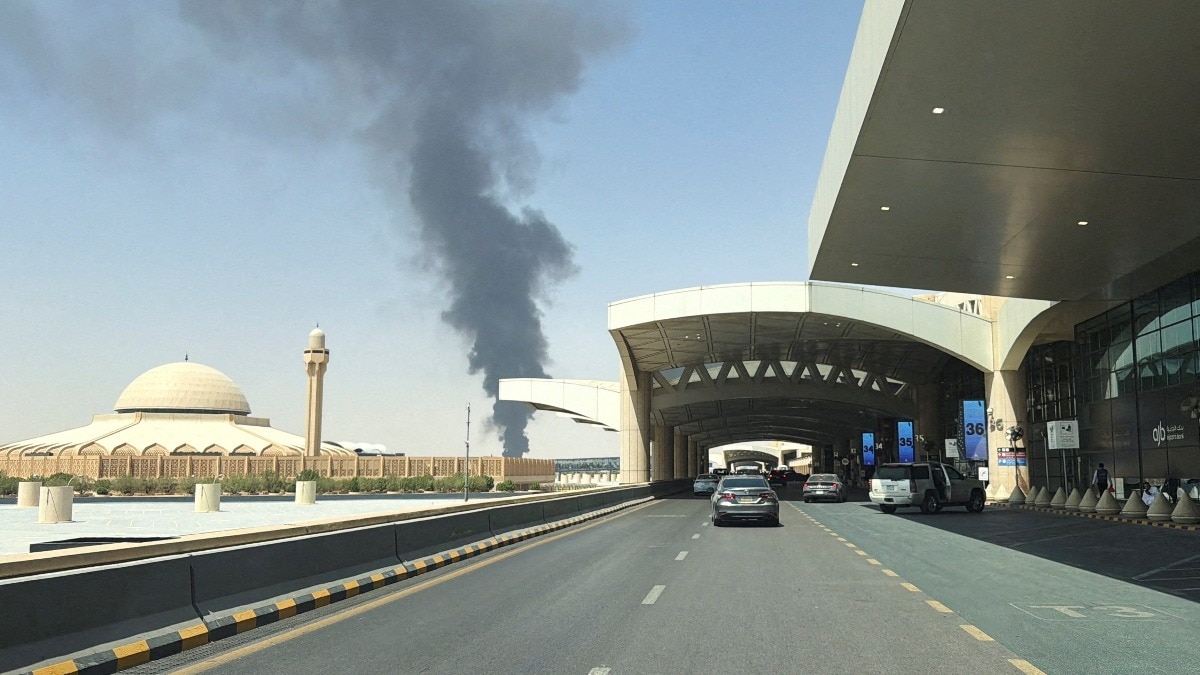
In Iraq's northern city of Irbil, security officials said US-led forces shot down five explosive-laden drones on Friday. Repeated blasts were heard in the city, which hosts American military advisers, and black smoke was seen near the airport, where US forces are based. US military officials did not respond to requests for comment. Iran's Revolutionary Guard said it had also targeted the US base in Udairi, Kuwait, destroying three ammunition and storage sheds, and had struck a watchtower used by the US Navy's Fifth Fleet in Bahrain. CENTCOM did not respond to questions on those claims, while Bahrain and Jordan said they had intercepted Iranian aerial attacks.
US strikes were also reported across Iran. Semi-official outlets Fars and ISNA said a Revolutionary Guard naval base in northern Iran was hit. Blasts were also reported on Qeshm Island, which hosts naval assets including drone boats, and in Isfahan province, home to a major Iranian air base and one of the country's nuclear sites. Additional strikes reportedly hit Khuzestan in the southwest and Fars province in the south.
Iran's position in the Strait of Hormuz has added to its leverage in any talks, and the Houthis raised that pressure further by attacking two Saudi oil tankers in the Red Sea on Thursday. The group had threatened to close the Bab el-Mandeb Strait to Saudi-linked shipping. A Saudi Press Agency report, quoting an official at the Transport General Authority, also said a Saudi vessel was targeted on Friday while sailing in the Red Sea, causing minor damage to its hull.
Early on Saturday, Houthi-run Al Masirah television said Saudi strikes hit facilities belonging to the state telecommunications corporation and also targeted Kamaran island off Yemen's western coast. It said one employee was injured and a woman was also wounded on the island. Saudi Arabia said it would do everything necessary to protect its ships and warned the Houthis that if they continued "hostile acts then there will be no hesitation in responding". Trump has also threatened "major military punishment" if Houthi attacks on ships continue.
The Bab el-Mandeb route at the southern tip of the Arabian Peninsula links the Red Sea with the Gulf of Aden, and around 12 per cent of world trade, including one-fourth of global container traffic, passes through it. The route has become even more important for Saudi Arabia as it diverts millions of barrels of oil a day to avoid the Strait of Hormuz. Brent crude slipped slightly on Friday to about USD 96, but remained well above its pre-war level of around USD 72 a barrel. In the US, average petrol prices rose to USD 4.11 a gallon, according to AAA.
The war's human cost also continued to grow. Iran's Health Ministry said 3,434 people had been killed since the conflict began. The Maritime Organization said at least 6,000 mariners were stranded on about 400 vessels around the Strait of Hormuz. UN human rights chief Volker Turk called for "urgent action" to help them, and his office said some had been abandoned by ship owners and left to "fend for themselves without food, water, fuel, medical care, electricity or means to communicate with their families".
There was no public sign of progress in diplomatic efforts. Pakistan's Foreign Minister Ishaq Dar met Araghchi on Friday, but before the meeting the Iranian minister appeared to dismiss further mediation, saying he did not think the conflict needed more mediators and insisting the US must change its position. The US and Israel attacked Iran on February 28 and have since offered shifting goals for the war, including toppling Tehran's government and ending its nuclear programme. Israel has also signalled it could rejoin the conflict, with Prime Minister Benjamin Netanyahu's office saying he would travel to the US next week to meet Trump. Overall, the latest developments showed a widening conflict at sea, across the Gulf and in Yemen, while diplomacy remained uncertain and the risks to civilians, shipping and energy supplies kept rising.
With PTI Inputs
- Ends
Published By:
India Today Web Desk
Published On:
Jul 25, 2026 05:58 IST