1 month ago
The United States launched a fresh wave of strikes on Iranian military targets for the 13th straight night. The fighting has widened across the Gulf and key shipping routes, deepening fears of a broader regional war.
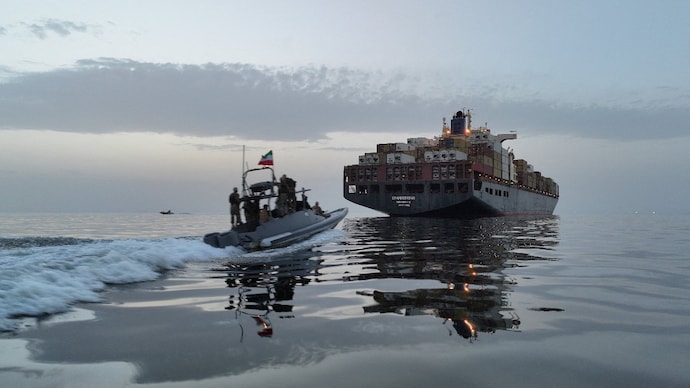
The situation around the Strait of Hormuz has become a major flashpoint between US and Iran. (Reuters)

UPDATED: Jul 24, 2026 05:11 IST
The United States carried out a fresh wave of strikes on Iran on Friday, marking the 13th consecutive day of attacks as tensions between Washington and Tehran continue to escalate after the collapse of a ceasefire agreement.
US Central Command (CENTCOM) said American forces began another round of strikes against Iranian military targets, describing it as the 13th consecutive night of operations.
"US forces started another night of strikes against Iranian military targets at 6:45 p.m. ET today. This is the 13th consecutive night of strikes aimed to hold Iran accountable and diminish threats from the Islamic Revolutionary Guard Corps to commercial shipping," CENTCOM said in a post on X.
U.S. forces started another night of strikes against Iranian military targets at 6:45 p.m. ET today. This is the 13th consecutive night of strikes aimed to hold Iran accountable and diminish threats from the Islamic Revolutionary Guard Corps to commercial shipping.— U.S. Central Command (@CENTCOM) July 23, 2026
The latest strikes come amid a widening regional confrontation, with Iran and its allies launching retaliatory attacks against US partners in the Gulf. Jordan, Bahrain and Kuwait have reported missile and drone attacks from Iran, including an assault on Kuwait's Al-Abdali border crossing with Iraq.
The escalation has raised concerns over the safety of critical infrastructure and global energy supplies, with both sides increasingly targeting or threatening strategic assets.
CENTCOM, while carrying out the strikes on Iran, said on Thursday that the strikes were aimed at holding Iran accountable and reducing threats posed by the Islamic Revolutionary Guard Corps (IRGC) to commercial shipping in the region.
US operations against Iran have expanded from southern areas to western and central parts of the country. The US military's Central Command has said its campaign will continue to "further degrade" Iran's ability to threaten maritime traffic and regional security.
Iranian media on Thursday reported that US forces carried out strikes on military targets in Bushehr, near the country's only operating commercial nuclear power reactor. The reports said the area was targeted multiple times in recent days.
Iran has also reported casualties from US strikes. Iranian officials on Thursday said two people were killed and 11 others injured in what a Khuzestan provincial official described as a US missile strike on the Shalamcheh border crossing with Iraq.
Despite the ongoing attacks, Iran has continued to demonstrate its ability to launch missile and drone strikes. Tehran has targeted US-linked military assets in Kuwait, Bahrain and Jordan, while Iranian forces have also struck vital water desalination and energy facilities in Kuwait.
The conflict has also expanded into maritime routes. Iranian-aligned Houthi forces on Thursday claimed responsibility for attacks on two Saudi oil tankers in the Red Sea, describing the action as part of a naval blockade against Saudi Arabia. The move has raised concerns over another potential threat to global energy shipments, alongside tensions around the Strait of Hormuz.
The situation around the Strait of Hormuz has become a major flashpoint. The United States has warned against attacks on commercial shipping, while Iran has threatened to retaliate against regional oil, gas and power infrastructure if its own civilian facilities are targeted.
Iran's joint military command said any attack on its infrastructure would lead to a severe response and warned that it could prevent oil exports from the region. Iranian state media on Thursday also reported an explosion near the Strait of Hormuz, with the Revolutionary Guards claiming that one of three oil tankers caught fire and warning that the waterway was under its control.
The latest phase of fighting began after a ceasefire agreement collapsed, triggering a fresh wave of strikes and counterattacks. The conflict has now resulted in significant casualties, with Iranian officials reporting civilian deaths and injuries, while the US military has confirmed the deaths of American service members in retaliatory attacks on bases in the region.
The continued exchange of strikes has increased fears of a broader regional war, with both sides showing no immediate signs of stepping back from the confrontation.
- Ends
Published By:
Nitish Singh
Published On:
Jul 24, 2026 05:11 IST