1 hour ago
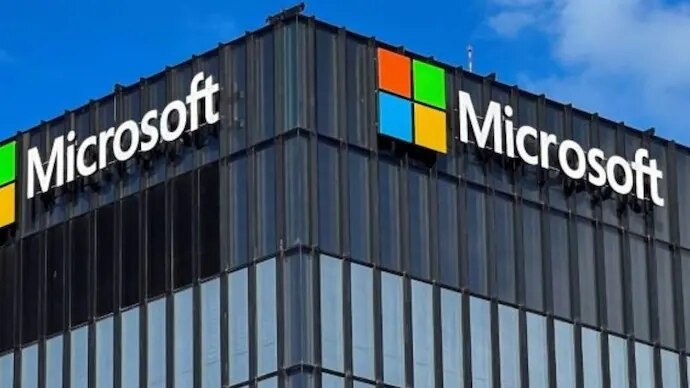
The Donald Trump administration has suspended several major India-based IT companies, including Tata Consultancy Services (TCS), Infosys, Wipro and HCL, as well as Cognizant and Capgemini and US tech giants Microsoft and Adobe, from its Permanent Labour Certification (PERM) programme, which is a crucial step in the employer-sponsored Green Card process. The US Department of Labour said it would not accept new or process pending permanent labour certifications involving the affected companies, alleging that these firms had abused the system to hire foreign workers at the expense of American workers.
The biggest fallout from the suspension of the Green Card programme may not be felt immediately. It could come when Indian IT companies decide whether sponsoring foreign workers for permanent residency is still worth the uncertainty.
Immigration attorney Geeta Darubra of Alma Immigration told India Today Digital that continued uncertainty around the PERM programme could push companies to sponsor fewer Green Cards or hire more US workers, which is the ultimate goal of the White House. Indian H-1B workers, who already face lengthy waits for employment-based immigration amid the Trump administration's immigration crackdown and rising visa fees, could find it even harder to pursue the American dream.
"If this trend continues, companies may place more emphasis on compliance, hire US workers and use alternative visa categories such as the L-1A," Darubra said.
She said the broader impact on Indian professionals could be significant if scrutiny extends further. Indian H-1B workers may become more reluctant to settle in the US amid uncertainty over immigration policy and existing backlogs in the EB-2 and EB-3 categories.
For Indians who came to the US on an H-1B hoping eventually to get a Green Card, the question is bigger than a delayed application: will their employers still be willing to sponsor them and, even if they do so, will the US still be the long-term destination they planned for?
WHAT IS PERM AND WHY IS IT CRUCIAL?
PERM stands for Permanent Labour Certification. For readers unfamiliar with the US immigration system, PERM is essentially a labour certification process that employers generally need before sponsoring foreign workers for certain employment-based Green Cards.
The employer has to show to the US Department of Labour that there are no qualified, willing and available US workers for the specific job. It must also show that hiring the foreign worker will not adversely affect the wages and working conditions of similarly employed US workers.
In simple terms, the employer must establish that employing the foreign worker meets US labour rules. Once the PERM stage is completed, the employer can generally move towards subsequent stages of the employment-based Green Card process.
That is why the latest suspension is important.
If an affected company cannot file a new PERM application, an employee whose employer has not yet started that process cannot move forward with that particular Green Card route. According to the immigration attorney, the PERM suspension does not cancel existing H-1B visas. The concern is particularly for workers who have not yet started PERM and those approaching the six-year H-1B limit.
WHAT COULD BE THE IMMEDIATE IMPACT ON INDIANS?
The immediate impact for Indian employees at the affected companies is likely to be a delay or blockage in the employer-sponsored Green Card process. A worker whose employer has not yet filed a PERM cannot simply begin that stage while the company remains suspended from the programme.
"Any employee whose company has not yet filed a PERM, cannot start the PERM process," Darubra said.
That can be crucial for Indian H-1B workers because the Green Card process is often the route through which they seek to move from temporary US work status towards permanent residency. The longer the suspension lasts, the longer some workers may have to wait before their employers can move ahead with their applications.
DOES THE PERM SUSPENSION AFFECT H-1B VISAS?
This is another most important point for Indian H-1B workers. An employee with valid H-1B status does not automatically lose that status because their employer has been suspended from PERM.
"As long as an employee has valid H-1B status, this suspension does not affect their H-1B status or ability to remain/work in the US on valid H-1B status," Darubra said. In simple terms, the latest action does not mean an Indian software engineer working for TCS, Infosys, Wipro or HCL suddenly loses their H-1B visa.
WHICH INDIAN WORKERS COULD BE HIT HARDEST?
The impact will not necessarily be the same for every Indian worker. An employee with a valid H-1B who is not close to the six-year limit may primarily face uncertainty and delays in starting or progressing towards permanent residency.
The situation becomes more complicated for workers approaching the maximum period of H-1B status. H-1B status is generally subject to a six-year limit, although US immigration law provides certain routes for qualifying workers to extend their status beyond that period. A worker's progress in the employment-based Green Card process can therefore become particularly important when they approach that six-year point.
Darubra said the suspension could affect H-1B holders reaching their six-year maximum if they do not have a PERM in process or an approved I-140.
This does not mean every worker in that situation will automatically have to leave the US. But the suspension could make their immigration planning more difficult and limit some of the options available to them.
WHAT HAPPENS TO PENDING PERM APPLICATIONS?
The immigration attorney said pending applications are not automatically cancelled based on the latest updates. However, she said they could face heavier scrutiny from the Labour Department.
"This is only speculation," she said, stressing that the possibility of increased audits has not been confirmed.
For workers already somewhere in the PERM process, the immediate concern is therefore how the Labour Department handles pending applications while the suspension remains in place. The duration of the suspension could become crucial. It is worth noting that US Vice-President JD Vance has said the suspension will remain in place "as long as it needs to".
WHY INDIANS COULD FACE AN EXTRA LONG WAIT
The development comes against the backdrop of lengthy employment-based immigration backlogs affecting Indian applicants. Indian professionals seeking permanent residency through employment-based categories such as EB-2 and EB-3 can already face significant waits.
Darubra said the impact could be heightened for Indian workers and their dependants, particularly those without an approved I-140.
"They already face immense backlogs to obtain their US green card, and this additional layer can add even more wait times," she said.
The concern, therefore, is not simply that a form may take longer to process. It is that another delay could be added to an immigration journey that is already lengthy for many Indians.
COULD TCS, INFOSYS AND WIPRO CHANGE THEIR US HIRING?
If Indian IT companies remain unable to use the PERM programme, they could reassess how they recruit, retain and sponsor foreign professionals in the US. Darubra said it is difficult to predict exactly what companies will do. However, she said firms could potentially sponsor fewer Green Cards or hire more US workers because of the uncertainty.
That could affect Indian professionals even before they begin the Green Card process.
If companies become more cautious about permanent residency sponsorship, Indian H-1B workers could find that securing a US job does not necessarily translate into a clear path towards settling permanently in America.
The companies could also explore other employment-based immigration options.
CAN INDIAN IT COMPANIES USE OTHER VISA ROUTES?
One alternative that companies could consider is the L-1A visa, Darubra said. The L-1A is used for certain intracompany transfers involving executives and managers. It can also provide a route towards permanent residency through the EB-1C category without requiring the PERM labour certification.
However, that does not mean every Indian H-1B worker can simply switch to an L-1A. Eligibility depends on the employee's role, employment history and individual circumstances.
COULD INDIANS BECOME LESS WILLING TO SETTLE IN THE US?
According to the expert, if scrutiny spreads, Indian H-1B workers could become more reluctant to settle in the US. If companies become less willing to sponsor Green Cards, that pathway could become less predictable.
And that could influence how Indian professionals view the prospect of building a permanent future in the US.
WHAT HAPPENS NEXT FOR INDIAN H-1B WORKERS?
Several major questions remain unanswered.
How long will the PERM suspension last? How many applications will be affected? What will happen to pending applications? Will the affected IT companies change their Green Card sponsorship policies? And could the scrutiny spread to more companies?
The US Department of Labour has yet to provide all those details.
The immigration attorney said the suspension is a signal that compliance and documentation around PERM and H-1B applications are likely to face greater scrutiny.
The immediate takeaway for Indian workers is not that their H-1B visas have been cancelled. It is that a crucial route towards permanent residency has been blocked for some of the biggest employers of Indian technology professionals in the US.
- Ends