 1 month ago
Trump warned Iran the US would hit a bridge or power plant for any attack on ships in the Strait of Hormuz. The threat highlighted a widening regional conflict that has rattled energy supplies and global markets.

Stock photo used for illustration

Dubai,UPDATED: Jul 22, 2026 19:16 IST
US President Donald Trump has warned Iran that the United States will strike a bridge or power plant each time Tehran fires at a ship in the Strait of Hormuz, as the conflict deepened with fresh American strikes and Iranian missile and drone attacks in the region.
The warning came as air defences opened fire over Tehran, Iran launched missiles towards Jordan's city of Aqaba near Israel, and alerts were issued in Bahrain and Saudi Arabia. Diplomatic efforts have shown little public progress, while the closure of the Strait of Hormuz has continued to disrupt global energy supplies and unsettle markets.
In a social media post, Trump returned to earlier threats to target civilian infrastructure in response to Iranian attacks. "From this point forward, any time the Islamic Republic of Iran shoots at a ship in the Strait of Hormuz, whether it be by Missile, Rocket, Drone, or any other device or weapon, the United States will bomb and destroy ONE BRIDGE OR POWER PLANT," he wrote.
The 11th night of American airstrikes on Iran came as both sides remained firm in their positions over the Strait of Hormuz, a crucial waterway for global energy that remains largely closed because of Iranian attacks. Iran has avoided striking Israel since hostilities resumed last month, apparently in an effort to keep it from re-entering the war. But the missile and drone attack on Aqaba, within sight of Israel's Eilat, raised fears of the conflict widening further after an agreement to halt hostilities collapsed.
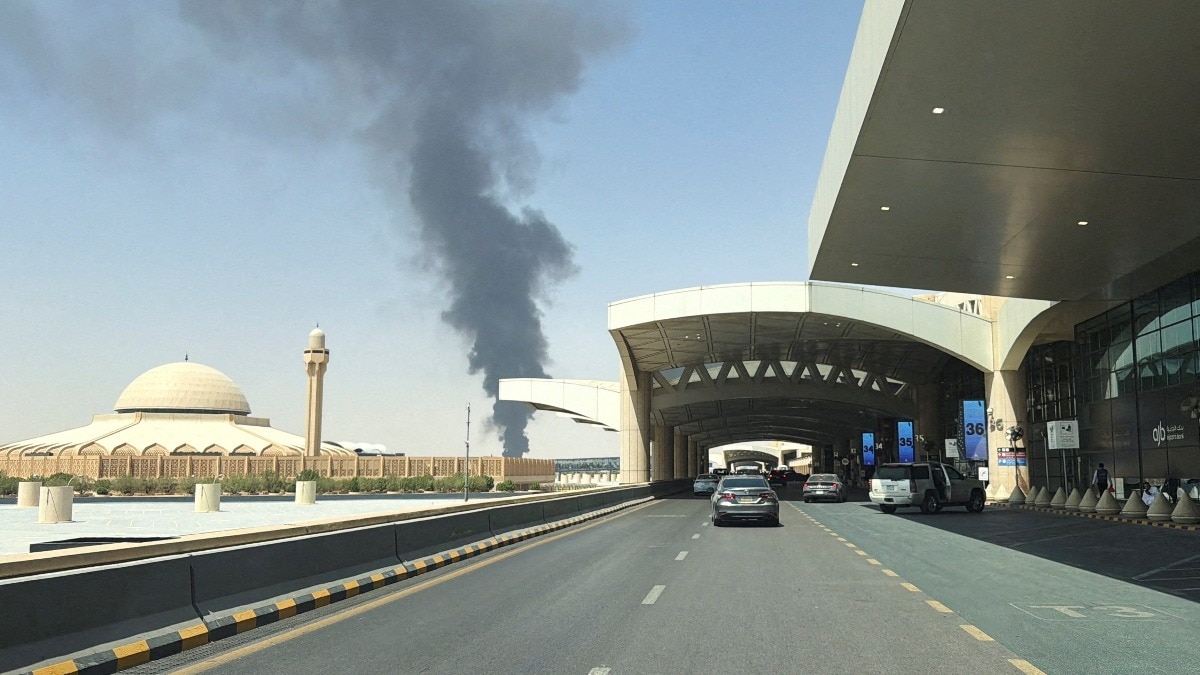
Jordan's military said it intercepted four Iranian missiles over Aqaba, while two others fell in "uninhabited areas". Videos filmed by people in Eilat showed plumes of smoke overhead. Jordan also said it intercepted four Iranian drones. Another missile alert sounded in Bahrain, while Saudi Arabia asked residents in the Gulf city of Dammam to seek shelter. Saudi authorities later said the danger had passed, without giving details.
The US military said earlier on Wednesday that it had completed an 11th night of strikes on Iran, targeting aircraft hangars and drone storage sites. Iran's state-run IRNA news agency reported explosions in several provinces. Iran's Health Ministry said US strikes over the past 11 days had killed 53 people, including six women and three children, and wounded nearly 600. Iran's paramilitary Revolutionary Guard said its retaliatory attacks would continue.
The closure of the strait, through which a fifth of the world's traded oil and gas passed in peacetime, has sent shockwaves through the world economy. A new threat by Iran-backed Houthi rebels in Yemen to target Saudi shipping in the Red Sea has also put another major trade route at risk. Benchmark Brent crude rose to around USD 94 a barrel, while petrol prices were climbing again ahead of the US midterm elections this fall.
Before the latest strikes, Iranian Interior Minister Eskandar Momeni visited Pakistan, a key mediator in the conflict, in an effort to revive diplomacy. But it remained unclear what new arrangement could end a war that has increasingly centred on control of the Strait of Hormuz. Iran's Interior Ministry spokesman Ali Zeinivand said "diplomacy isn't called off" and that messages were still being exchanged, according to IRNA.
At a regional summit in the Philippines, US Secretary of State Marco Rubio criticised Iran's actions in the strait. "If we create a precedent in the Middle East where a nation state can decide that they are going to control an international waterway, charge a toll and if you don't pay them, blow up your ships, we have created a very dangerous precedent which will repeat itself in other parts of the world, including in this region," he said. In response to Iran's attacks, the US re-imposed a blockade on Iranian ports.
Speaking from the Oval Office on Tuesday, Trump also expressed little interest in possible talks, saying the US had "no interest in meeting". He signalled that US forces could soon target Pickaxe Mountain, an under-construction Iranian nuclear site buried deep under a mountain on the south side of Iran's Natanz enrichment site. Natanz was bombed by the US during the 12-day war between Iran and Israel in 2025, but Pickaxe Mountain has not been hit and Iran has continued digging there. Iran has always said its nuclear programme is peaceful, even as it resumed enriching uranium to near weapons-grade levels after Trump scrapped the 2015 nuclear deal during his first term. The US and others believe Iran had a nuclear weapons programme until 2003 and could rebuild it in the future.
As the fighting entered its 11th night, military exchanges, threats over the Strait of Hormuz and the lack of visible diplomatic movement kept the conflict on edge, with the impact being felt across the Middle East and global energy markets.
With PTI Inputs
- Ends
Published By:
India Today Web Desk
Published On:
Jul 22, 2026 19:16 IST