22 hours ago
Colombians protest nationwide after Trump threats
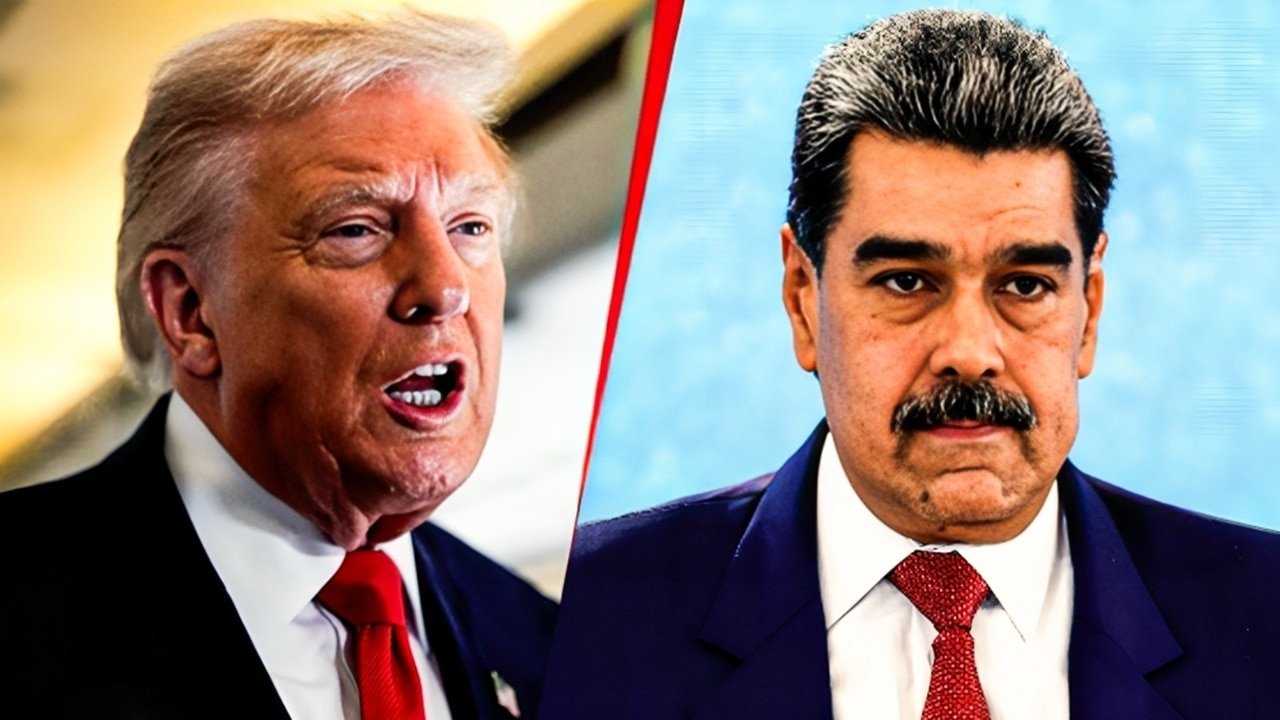
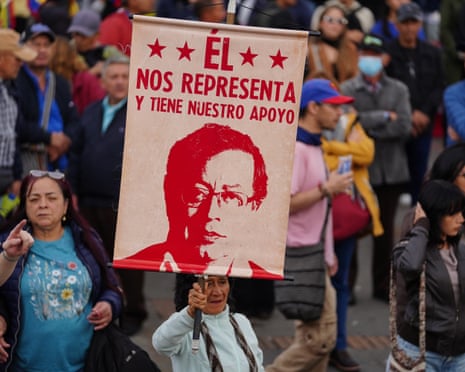
Crowds of Colombians have gathered in public squares across the country in nationwide demonstrations “to defend national sovereignty” against Donald Trump’s military threats.
Colombia’s flags waved in the breeze from rooftops, windows and taxi antennas in the capital, Bogotá, on Wednesday in response to President Gustavo Petro’s call for a “day of national mobilisation”.
“The U.S. is the biggest threat to world peace,” one placard at said at a protest in the city’s central Plaza de Bolívar. Hundreds of demonstrators chanted “Long live free and sovereign Colombia!”
In a security alert, the US embassy in Bogotá warned Americans to steer clear of the protests “as they have the potential to turn violent”.
As the Associated Press also reports, Petro has been frustrated with Colombian congressional resistance to his contentious reforms, and as he faces a series of electoral tests he has found in Trump the perfect foil as he fights for his legacy.
“He wants this stage where he is the clearest adversary, rhetorically or politically, to the US,” said Sergio Guzman, a political risk analyst based in Bogotá.
Key events 3h ago US Venezuela raid killed 100, says Caracas 4h ago US operation put 'stain' on Venezuela relations – Rodríguez 5h ago Colombians protest nationwide after Trump threats 5h ago Trump confirms Petro call and flags meeting soon 5h ago Starmer discusses Greenland in call with Trump 6h ago Trump and Petro talk in phone call – reports 6h ago Colombia warns of regional 'catastrophe’ after Washington's Venezuela attack 7h ago Trump signs proclamation withdrawing from international organizations, White House says 7h ago Trumps says Venezuela will 'only' buy US goods with proceeds from oil sale under new deal 7h ago The day so far 8h ago 'We do not owe US anything': Venezuelan oil company says negotiations ongoing 8h ago Marinera was 'stateless vessel' with 'long history of nefarious activity', says UK defence secretary, arguing mission was lawful 9h ago Explainer: what are Trump’s real options for gaining control of Greenland? 10h ago Explainer: why so much interest in a rusty tanker in the Atlantic? 10h ago Rubio says US plan for Venezuela is stability, recovery, then transition 10h ago Ukraine welcomes US seizure of Russian-flagged tanker 10h ago US House speaker insists no expectation for boots on the ground in Venezuela 11h ago US 'not winging it' in Venezuela, says Rubio 11h ago UK Home Office calls oil tanker seizures 'important activity with US allies' 12h ago Leavitt brushes off Russia anger over ship seizure 12h ago Leavitt says US controlling Greenland would deter China and Russia in the Arctic 12h ago Crew of seized tanker could face US prosecution, White House says 13h ago Rubio says US on verge of deal to take 'all the oil stuck in Venezuela' 13h ago Venezuela interim authorities want oil seized on the Sophia, says Rubio 13h ago Hegseth says US military power, on display with tanker seizures, 'will continue' 13h ago Rubio meeting with Denmark on Greenland issue next week 14h ago UK confirms support to US seizure of Russian flagged oil tanker 14h ago Senior Russian lawmakers decries US seizure of Russian-flagged tanker as piracy 14h ago 'No state has right to use force against ships' from other jurisdictions, Russia says after US seizure of Russia-flagged tanker 14h ago 'We will always be there for Nato, even if they won't be there for us,' Trump says 15h ago US military confirms seizure of Russian-flagged tanker 15h ago Russia's footage of Marinera purports to show US special forces helicopters near tanker 16h ago Venezuela-linked Russia-flagged tanker seized in North Atlantic near Iceland - US media report 16h ago Icelandic coast guard says it is monitoring movements of Marinera 16h ago Reported US attempt to seize Russian-flagged Marinera - context 17h ago US attempting to seize Russian-flagged tanker - media reports 17h ago Danish, Greenlandic ministers seek urgent meeting with US Rubio over Greenland's future 17h ago Russia reportedly sends submarine to escort ‘shadow fleet’ tanker being pursued by US 17h ago Live in Greenland? Share your views on Trump's comments 18h ago UK's Farage says Trump right about need for big Nato base in Greenland - but using force to seize it would be 'outrageous' 18h ago Brigitte Bardot's funeral gets under way in Saint-Tropez 19h ago Ukraine's national interests will be protected at Paris talks, Zelenskyy's chief aide says 19h ago Ukraine-US talks to continue in Paris, Zelenskyy says 19h ago Eyes on Marinera oil tanker as Russia deploys naval escort 19h ago EU reveals weak hand as Trump raids Venezuela and threatens Greenland 20h ago How a US takeover of Greenland would undermine Nato from within - analysis 20h ago More than 700 flights from Amsterdam cancelled due to extreme weather 20h ago European leaders rally behind Greenland as US ramps up threats 21h ago Morning opening: One step forward, one step back Show key events only Please turn on JavaScript to use this feature
“I’m a bit of an insomniac. So at almost 2am, I was awake, actually, and the first explosion, I swear I thought it was an earthquake.”
For Anna (not her real name), a journalist based in Caracas, it took some time for the realisation to dawn on her that the US had attacked Venezuela’s capital. “But then when the explosions continued in the following 20 minutes, one after the other, something deep down told me, you know, it’s the Americans.”
In this podcast published today, Anna describes to Helen Pidd the atmosphere on the streets of Caracas and the nervousness that many continue to feel about the regime.
And Tom Phillips, the Guardian’s South America correspondent, describes the apprehension and mixed feelings among Venezuelans crossing the border with Colombia.
He also outlines the mistrust and fragility within the new leadership, the disappointment of the opposition movement, and how considerations about the country’s vast oil reserves may have shaped Washington’s calculations.
The podcast can be heard here:
Venezuelan interim president Delcy Rodríguez has defended plans to open up her country’s oil market to Washington, as Donald Trump’s vice-president JD Vance reiterated that the US would have complete control of the country’s supplies.
As reported earlier, Rodríguez said on Wednesday that America’s attack to remove her predecessor, Nicolás Maduro, put a “stain” on the countries’ relations, but added it was “not unusual or irregular” to trade with the US, adding that Venezuela was “open to energy relations where all parties benefit”.
Trump’s administration has sought to assert its control over Venezuelan oil, seizing a pair of sanctioned tankers while announcing it will manage all sales of future crude production and oversee the sale of the country’s petroleum worldwide.
That and more is in our newly launched full report here:
Jonathan Watts
The US’s first overt attack on an Amazon nation last weekend is a new phase in its extractivist rivalry with China.
The outcome will decide whether the vast mineral wealth of South America is directed towards a 21st-century energy transition or a buildup of military power to defend 20th-century fossil fuel interests.
Although this onslaught was ostensibly aimed at one corrupt dictatorship in a miserably dysfunctional country, the ramifications are far wider.
Venezuela’s oil is the obvious objective, but not the only one.
You can read the full analysis here:
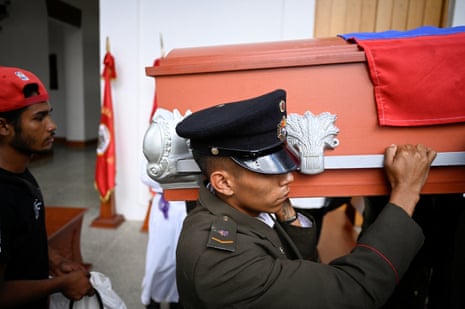
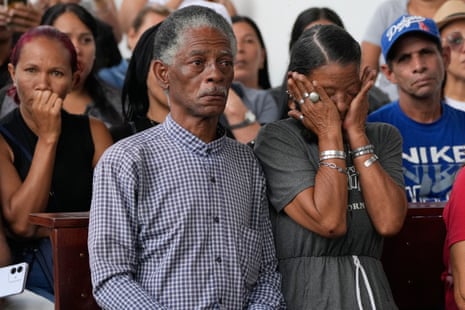
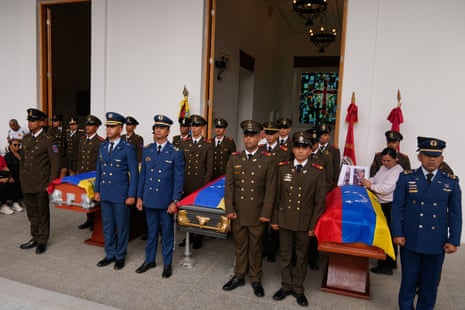
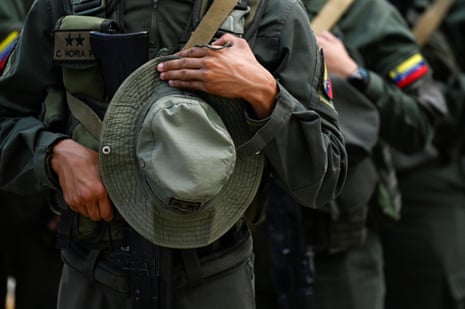
Venezuela’s military has held a funeral for some of the soldiers killed during the US operation that captured president Nicolás Maduro.
Venezuelan interior minister Diosdado Cabello said late on Wednesday that 100 people including civilians died in the US raid at the weekend.
The army earlier posted a list of 23 of its personnel killed. Below are some images from Caracas of Wednesday’s funeral procession to honour the dead.
Donald Trump’s administration has said it will dictate decisions to Venezuela’s interim leaders and control the country’s oil sales “indefinitely” after toppling Nicolás Maduro.
“We obviously have maximum leverage over the interim authorities in Venezuela right now” following the capture operation, White House press secretary Karoline Leavitt told a briefing on Wednesday.
We’re continuing to be in close coordination with the interim authorities, and their decisions are going to continue to be dictated by the United States of America.
Trump’s assertion of US dominance over the oil-rich country comes despite its interim leader Delcy Rodríguez saying there is no foreign power governing Caracas.
“There is a stain on our relations such as had never occurred in our history,” Rodríguez said about the US attack to depose her predecessor.
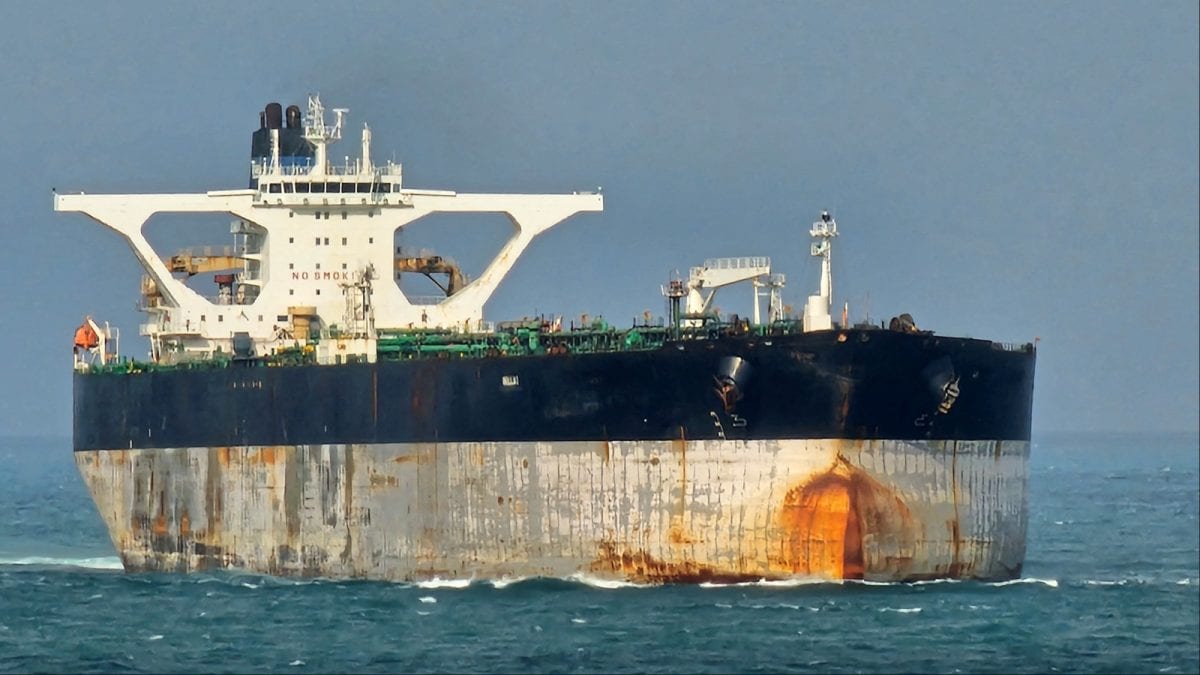
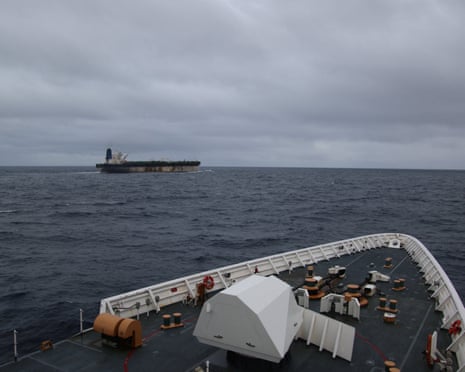
The US European Command’s confirmation that it boarded the Russian-flagged oil tanker Marinera over alleged sanctions violations brings to an end a dramatic two-week pursuit that began in the Caribbean and concluded in the Atlantic.
Separately on Wednesday, the US coast guard announced it had intercepted another dark-fleet tanker that is under sanctions, the M Sophia, in a pre-dawn operation in the Caribbean.
Commenting on the twin operations, the White House signalled it would continue to seize Venezuela-linked oil vessels after Donald Trump last month imposed what he described as a “complete blockade” on ships transporting oil for Caracas.
Asked whether the seizure of a Russian-flagged oil tanker in the Atlantic risked escalating tensions with Russia, the White House’s press secretary did not respond directly but said the vessel’s crew could be transferred to the US for prosecution “if necessary”.
For more on this and the day’s other main Trump administration stories, see our overview here:
Donald Trump and his advisers are working up a sweeping plan to dominate Venezuela’s oil industry for years to come, the Wall Street Journal has reported.
The US president has told aides he believes his efforts could help lower oil prices to $50 a barrel, according to the report on Wednesday.
Citing people familiar with the matter, the report also says a plan being considered includes the US exerting some control over Venezuela’s state-run oil company PDVSA, including acquiring most of its oil production.
The report could not be immediately verified.

Tom Phillips
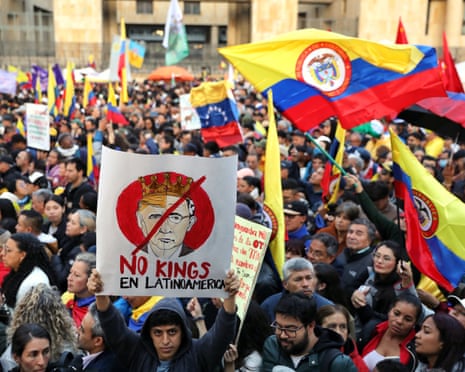
Thousands of protesters have taken to the streets of cities across Colombia to decry Donald Trump’s threats to expand his military campaign in South America into their territory, after last weekend’s deadly attack on Venezuela.
In Cúcuta, a city on Colombia’s eastern border with Venezuela, several hundred demonstrators marched towards its 19th century cathedral waving the country’s yellow, blue and red flag and shouting: “Fuera los yanquis!” (“Out with the Yanks!”)
Demonstrator José Silva, 67, said the abduction of Venezuelan president Nicolás Maduro during Saturday’s attack made a mockery of Trump’s claim to be “the president of peace”.
The full report we’ve just published is here:
US Venezuela raid killed 100, says Caracas
Further to our last post, Venezuela had not previously given a number for those killed in the weekend US operation that removed president Nicolás Maduro from power, but the army posted a list of 23 names of its dead.
Interior minister Diosdado Cabello said late on Wednesday that 100 people died in the US raid, Reuters reports.
Venezuelan officials have said a large part of Maduro’s security contingent was killed “in cold blood”, and Cuba has said 32 members of its military and intelligence services in Venezuela were killed.
Cabello also said that Maduro’s wife, First Lady Cilia Flores – who was detained alongside him – suffered a head injury during the US raid, while Maduro sustained a leg injury.
As our piece on the pair’s appearance in a New York City court on Tuesday detailed, Flores had two large Band-Aids on her face – on the temple and forehead.
Venezuela’s interim president Delcy Rodriguez, who Cabello praised during his weekly show on state television as “courageous”, on Tuesday declared a week of mourning for members of the military killed in the raid.
Venezuela’s interior minister is being quoted just now as saying 100 people died in the US attack on the country at the weekend, and that the toll includes civilians.
We’ll bring you more on Diosdado Cabello’s comments as they come to hand.
US operation put 'stain' on Venezuela relations – Rodríguez
Venezuela’s interim leader has said US forces’ attack to depose her predecessor put a “stain” on the countries’ relations, but she defended plans to sell oil to Washington.
“There is a stain on our relations such as had never occurred in our history,” Delcy Rodríguez said on Wednesday, cited by AFP.
But she added it was “not unusual or irregular” to trade with the US now, following the announcement by state oil firm PDVSA that it was in negotiations to sell crude to the US.
Rodríguez was separately quoted as saying in a meeting with the leadership of Venezuela’s national assembly that the country was “open to energy relations where all parties benefit”.
Colombians protest nationwide after Trump threats
Crowds of Colombians have gathered in public squares across the country in nationwide demonstrations “to defend national sovereignty” against Donald Trump’s military threats.
Colombia’s flags waved in the breeze from rooftops, windows and taxi antennas in the capital, Bogotá, on Wednesday in response to President Gustavo Petro’s call for a “day of national mobilisation”.
“The U.S. is the biggest threat to world peace,” one placard at said at a protest in the city’s central Plaza de Bolívar. Hundreds of demonstrators chanted “Long live free and sovereign Colombia!”
In a security alert, the US embassy in Bogotá warned Americans to steer clear of the protests “as they have the potential to turn violent”.
As the Associated Press also reports, Petro has been frustrated with Colombian congressional resistance to his contentious reforms, and as he faces a series of electoral tests he has found in Trump the perfect foil as he fights for his legacy.
“He wants this stage where he is the clearest adversary, rhetorically or politically, to the US,” said Sergio Guzman, a political risk analyst based in Bogotá.
Trump confirms Petro call and flags meeting soon
Donald Trump just confirmed he spoke with Gustavo Petro, saying he “appreciated his call and tone” and that a meeting between them at the White House would be arranged soon.
The US president said on his Truth Social platform:
It was a Great Honor to speak with the President of Colombia, Gustavo Petro, who called to explain the situation of drugs and other disagreements that we have had. I appreciated his call and tone, and look forward to meeting him in the near future. Arrangements are being made between Secretary of State Marco Rubio and the Foreign Minister of Colombia. The meeting will take place in the White House in Washington, D.C.
Starmer discusses Greenland in call with Trump
Keir Starmer spoke with Donald Trump on Wednesday evening and set out his position on Greenland, the UK government said.
Both leaders also discussed the joint operation to intercept the Marinera tanker, recent progress on Ukraine and the US operation in Venezuela, said the statement, cited by Reuters.
Starmer had earlier said he stood with Denmark in its defence of Greenland and that no one else should determine the future of the vast territory after Trump said he needed it for defence.
Trump and Petro talk in phone call – reports
Donald Trump and Colombia’s Gustavo Petro held a phone call on Wednesday afternoon, Reuters has cited a Colombian presidential source and local media as saying.
It is the first phone call between the two presidents since Trump said on Sunday that a US military operation focused on Colombia’s government “sounds good” to him.
Details of the conversation were not immediately made clear but the source within Petro’s office said the call was “cordial” and “respectful”.
Colombia warns of regional 'catastrophe’ after Washington's Venezuela attack
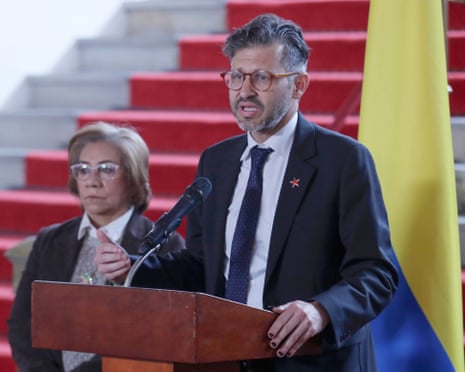
The US military strike on Venezuela that deposed its leader Nicolás Maduro could ripple out into a “catastrophe” for the whole of South America, Colombia’s deputy foreign minister has said.
“If there is a major humanitarian crisis, the impact, the devastation will be unstoppable ... We are talking about a catastrophe that Latin America has never seen,” Mauricio Jaramillo told Agence France-Presse in an interview in Bogotá on Wednesday.
Colombia shares a porous 2,200km (1,370-mile) border with Venezuela and has been the major recipient of migrants fleeing the economic and political crisis there.
Jaramillo said Colombia could never be “fully prepared in the event there is a degradation brought about by war”, especially at a time Latin America is split on Donald Trump’s actions.
Rightwing governments in Argentina and Ecuador have backed Maduro’s ouster but leftists in Brazil, Mexico, Colombia and others have firmly condemned it.
Jaramillo said:
That division obviously undermines a regional solution ... Without shared premises and minimum consensus, it’s obviously very difficult to respond at the regional level.
He added that a US military attack on Colombia seemed “unlikely” but that the country would have a “legitimate” response if needed.
Colombia and its first-ever leftist president, Gustavo Petro, have consistently criticised Washington’s mass naval deployment in South America, its bombing of alleged drug-smuggling boats, seizure of Venezuelan oil tankers and Saturday’s capture of Maduro.
The censure from Bogota has irritated Trump, who has accused Petro of being a drug baron – which Petro denies – and warned him on Saturday to “watch his ass”.
This is Adam Fulton picking up our live coverage. Stay with us for the latest developments
Trump signs proclamation withdrawing from international organizations, White House says
Donald Trump has also signed a proclamation withdrawing the United States from 35 non-United Nations organizations and 31 UN entities that “operate contrary to US national interests”, the White House said in a statement.
It did not list the organizations, but said they promote “radical climate policies, global governance, and ideological programs that conflict with US sovereignty and economic strength”.
It said the move was the result of a review of all international intergovernmental organizations, conventions and treaties that the US is a member of or party to, per Reuters.
“These withdrawals will end American taxpayer funding and involvement in entities that advance globalist agendas over US priorities, or that address important issues inefficiently or ineffectively such that US taxpayer dollars are best allocated in other ways to support the relevant missions,” the White House said.
Since beginning his second term a year ago, Trump has sought to slash US funding for the UN, ended US engagement with the UN Human Rights Council, extended a halt to funding for the Palestinian relief agency UNRWA and quit the UN cultural agency UNESCO. He has also announced plans to quit the World Health Organization and the Paris climate agreement.