 1 hour ago
Trump says Israel-Lebanon ceasefire extended by three weeks
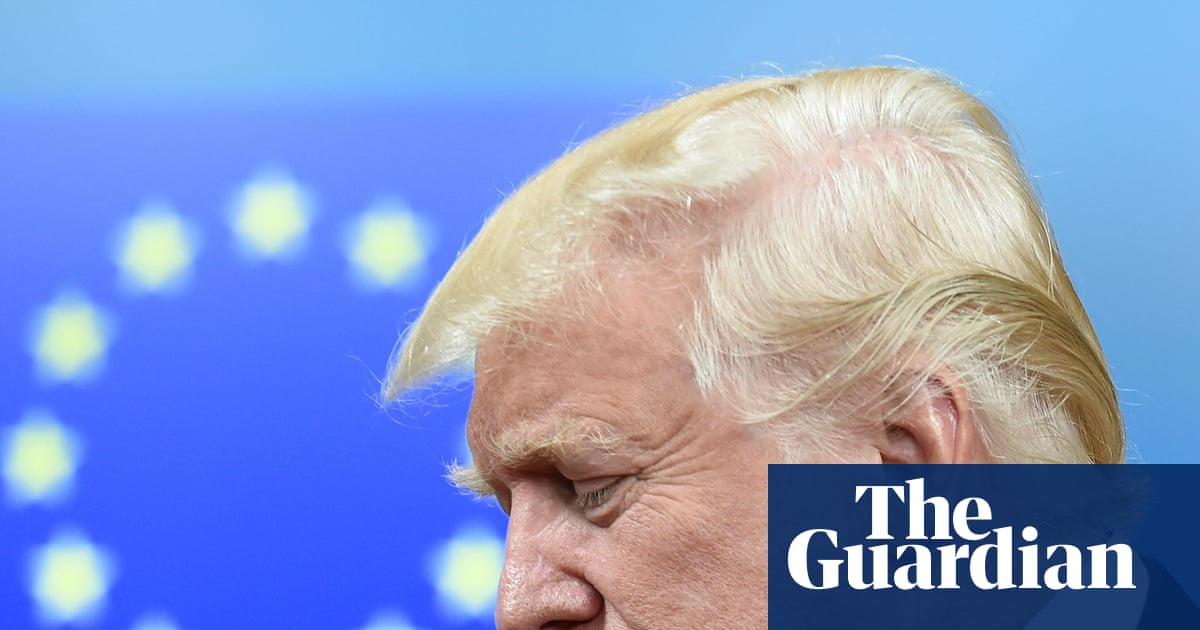
US President Donald Trump announced today that an Israel-Lebanon ceasefire would be extended by three weeks.
“The Meeting went very well! The United States is going to work with Lebanon in order to help it protect itself from Hezbollah,” he wrote on Truth Social.
“The Ceasefire between Israel and Lebanon will be extended by THREE WEEKS,” he added.
He said that the leaders of Lebanon and Israel could meet at the White House “in the near future”.
Key events Show key events only Please turn on JavaScript to use this feature
Looking at financial markets amid the continuing US-Iran standoff, global stocks mostly fell on Thursday, retreating after recent gains as investors tempered their optimism for a quick end to the Middle East war.
The benchmark international oil contract – Brent North Sea crude – rose further above $100 a barrel, rekindling fears of pervasive inflation that could dent economic growth worldwide.
Wall Street’s main indexes finished lower after a volatile session, joining most markets in Europe and Asia in retreating, Agence France-Presse reports.
US investors were more preoccupied with high oil prices on Thursday than most recent days, said Art Hogan of B. Riley Wealth Management, noting the market had been on an upswing since late March.
He said:
There’s still a tug of war between the fundamentals, the earnings that have been better than expected thus far and the fact that the news coming out of the strait of Hormuz has not gotten more constructive.
Business activity in the eurozone contracted for the first time in 16 months in April, as the Middle East war drove up energy prices and disrupted global supply chains, according to the closely-watched Flash Eurozone purchasing managers’ index (PMI) published by S+P Global.
S+P chief business economist Chris Williamson said:
The eurozone is facing deepening economic woes from the war in the Middle East, presenting a major headache for policymakers.”
Donald Trump says the secretary of the US navy, John Phelan, was fired after conflicts with senior Pentagon leadership over shipbuilding.
The Pentagon said on Wednesday that Phelan would depart the role “effective immediately”, without providing an explanation for his sudden exit amid the US naval blockade of Iranian ports and ships.
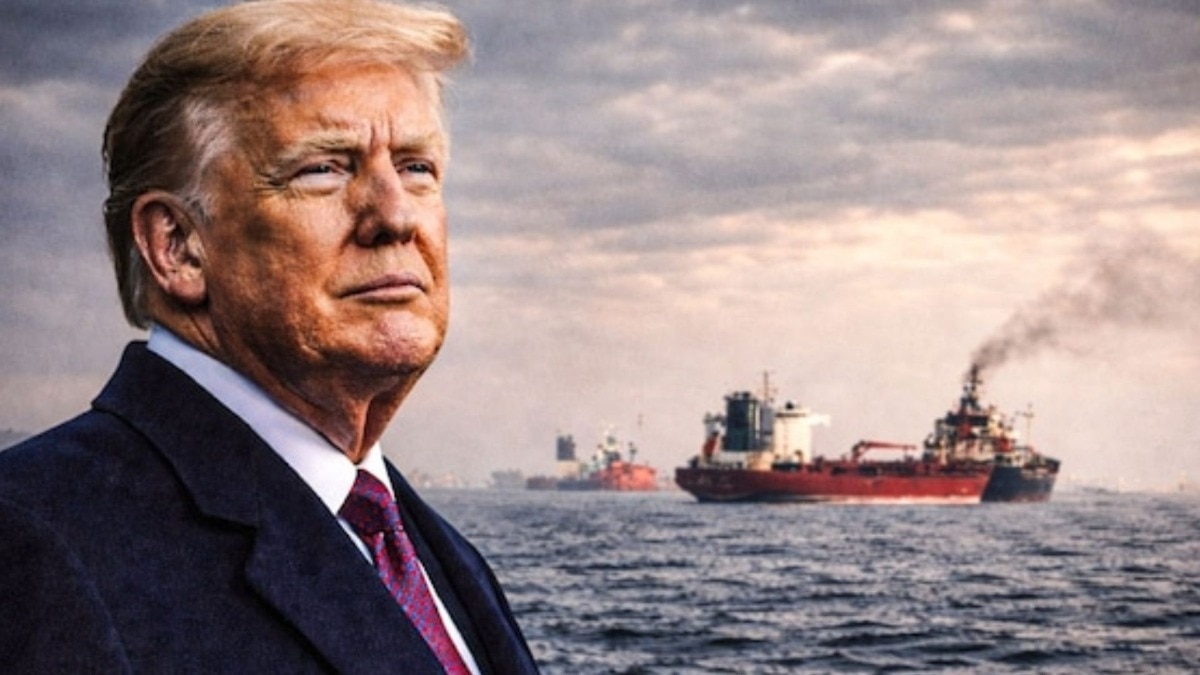
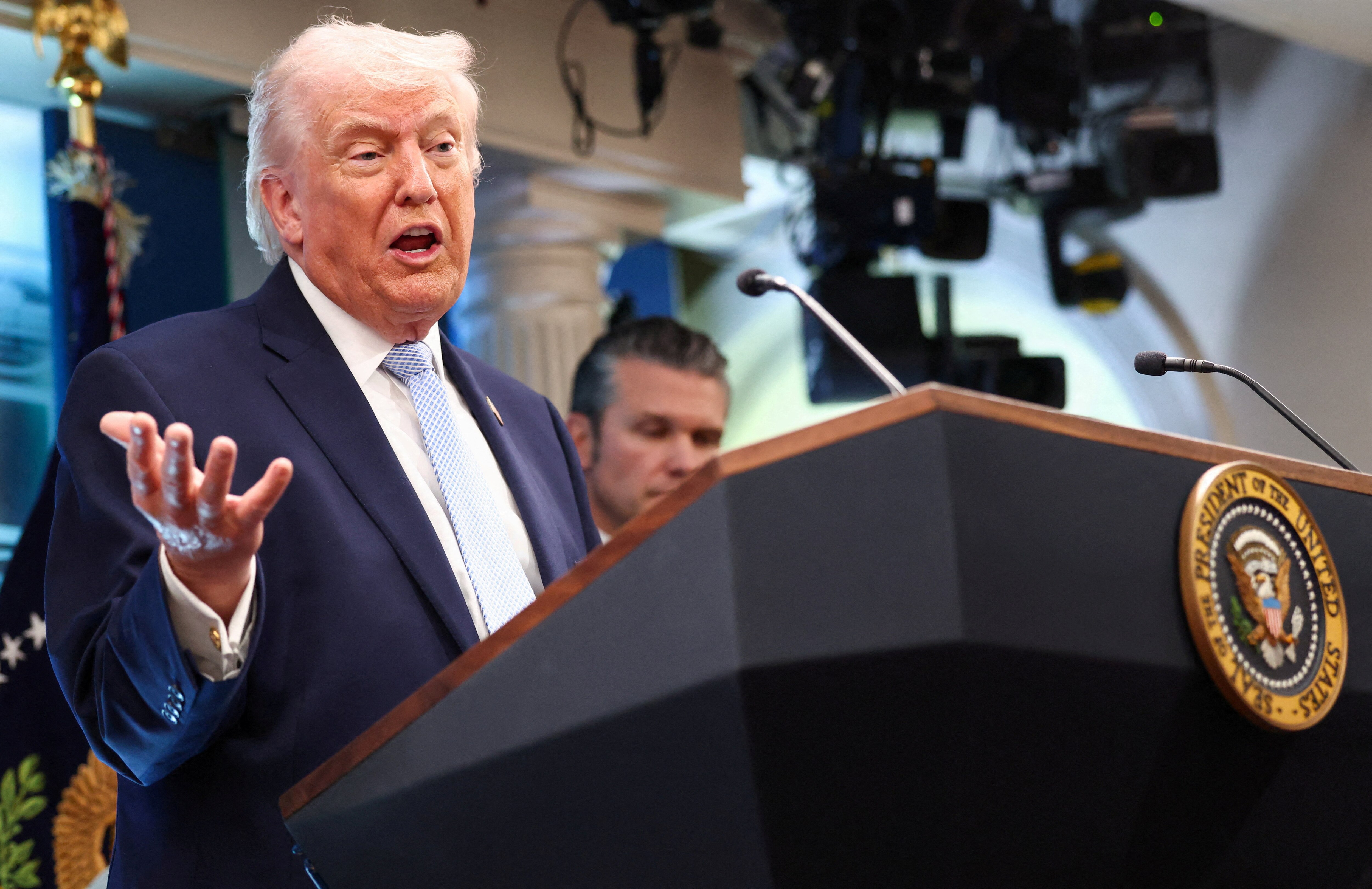
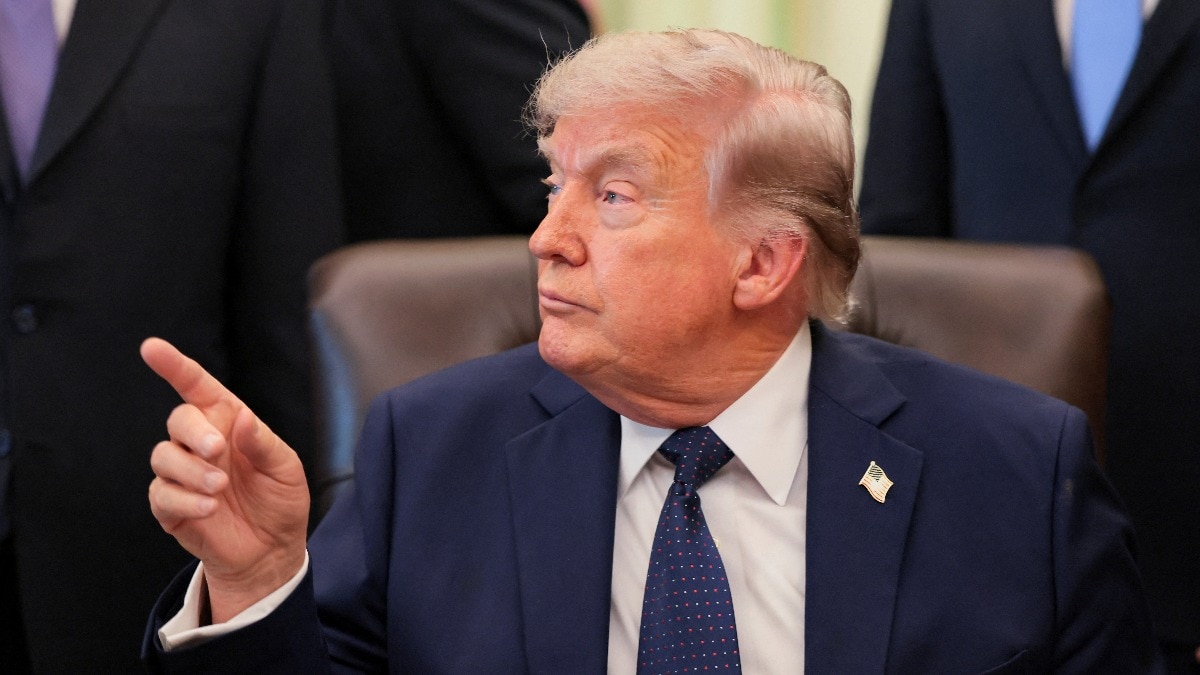
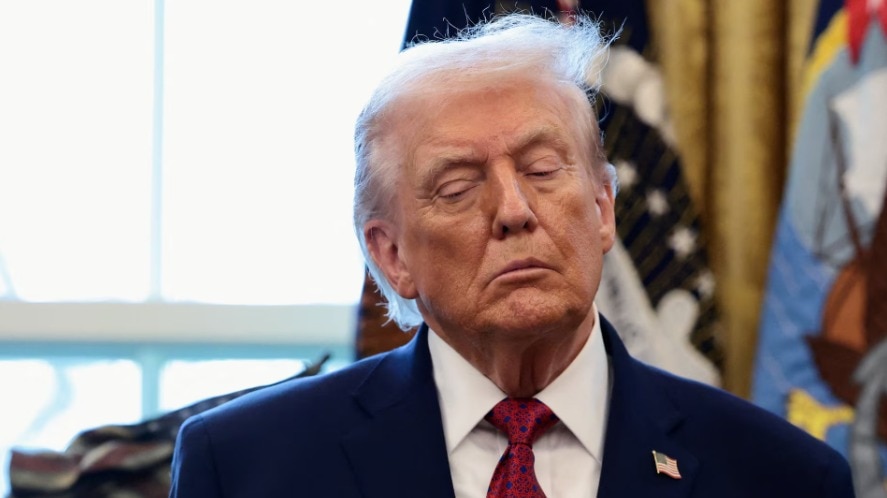
Donald Trump told reporters in the Oval Office on Thursday:
He’s a hard charger, and he had some conflicts with some other people, mostly as to building and buying new ships.
Got to get along, especially in the military, got to get along, you know. And some people liked him, some people didn’t, and that’s usually the truth about everything.”
Reuters quoted sources as previously saying Phelan – a billionaire seen as having close ties to Trump – was dismissed in part because he was moving too slowly to implement reforms to speed shipbuilding and because he had fallen out with key Pentagon leadership.
Trump has overseen a purge of top military personnel since returning to office early last year.
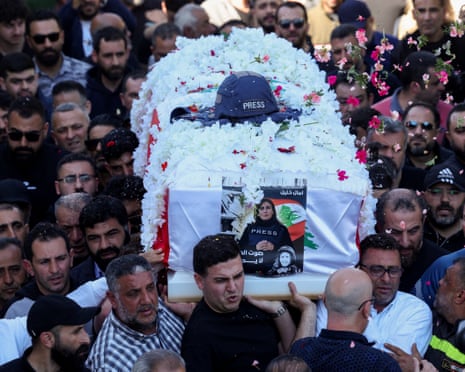
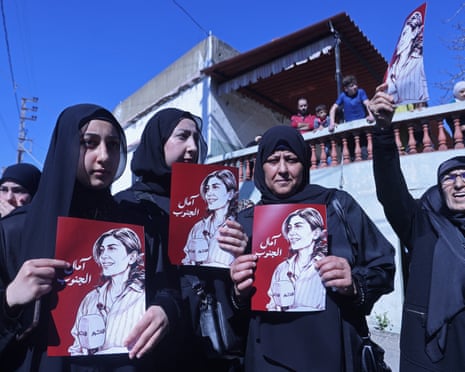
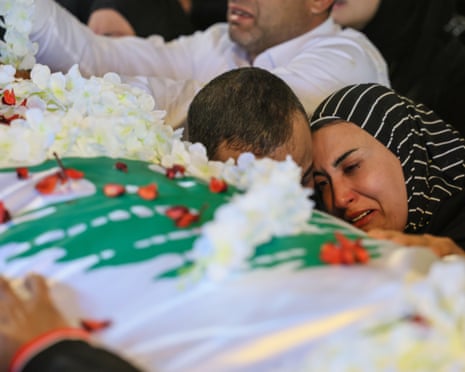
Here are some images from the funeral of Lebanese journalist Amal Khalil, whose killing in an Israeli “double-tap” strike in southern Lebanon has prompted international outrage.
Colleagues say the 43-year-old was killed during a sustained attack by Israeli forces and that rescuers trying to dig her out of the rubble of a building were also targeted and prevented from providing life-saving assistance.
Her death prompted renewed accusations that Israel has a policy of targeting media workers, despite its repeated denials.
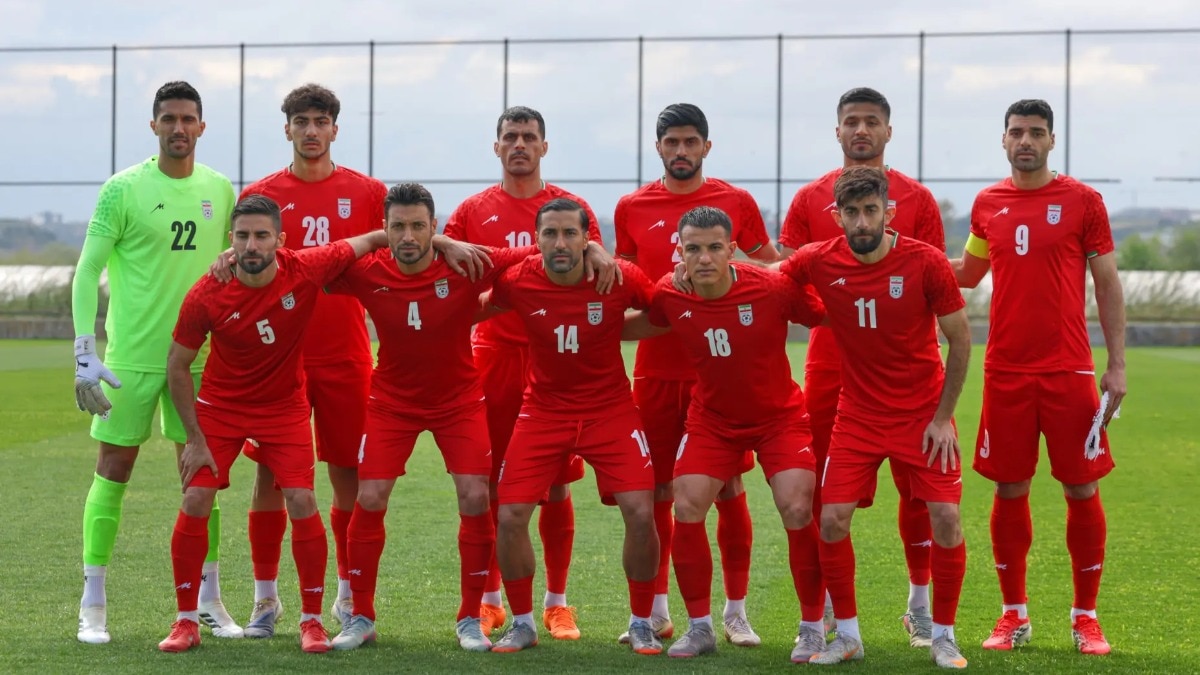
Following on from the last post: US secretary of state Marco Rubio said Washington had no objections to Iranian players participating in the 2026 World Cup but that they would not be allowed to bring with them people with ties to Iran’s Islamic Revolutionary Guard Corps (IRGC).
“Nothing from the US has told them they can’t come,” Rubio said of the players on Thursday.
Donald Trump also said his administration “would not want to affect the athletes” in comments he made at the White House, Reuters reports.
Paolo Zampolli, a Trump envoy who has no official connection with the World Cup, had earlier suggested that Italy should replace Iran at the tournament.
Rubio said the problem wasn’t letting in the Iranian athletes but others they wanted to bring along with ties to the Revolutionary Guards.
They can’t bring a bunch of IRGC terrorists into our country and pretend that they are journalists and athletic trainers.”
Italy rejects replacing Iran at World Cup
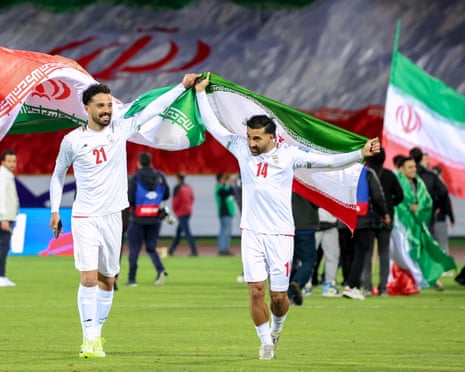
Italian sports officials say Italy is not interested in replacing Iran at the upcoming World Cup after a suggestion to that effect by a Trump administration official.
Iran has not withdrawn from the World Cup and the team is preparing to play in the US despite the war in the Middle East. Fifa says its group-stage games near Los Angeles and in Seattle will go ahead as planned in June.
The Financial Times reported that Paolo Zampolli, the US special envoy for global partnerships, had suggested the swap to Donald Trump and Fifa president Gianni Infantino.
Zampolli emphasised to Associated Press on Thursday that “my request is not a political request”.
The request – made to Trump and Infantino on Wednesday – was meant as a contingency plan in case Iran could not participate in the soccer tournament at the last minute.
Zampolli said:
I had a dream. My request was for the Italian people and the American-Italian people.”
He had told the FT that, with four titles, the Italian national team’s appearance in the World Cup would be justified, despite its failure last month to qualify.
Italian officials rejected the suggestion, with sports minister Andrea Abodi saying: “First of all, it’s not possible. Secondly, it’s not a good idea.”
Finance minister Giancarlo Giorgetti called the suggested swap “shameful”.
Continuing from the last post: Hezbollah said it carried out four operations in south Lebanon on Wednesday in response to Israel’s strikes.
A lawmaker with the Iran-backed militia, Hassan Fadlallah, reiterated Hezbollah’s objection to the Lebanon-Israel talks but also said at a televised press conference that he wanted the ceasefire to continue but “on the basis of full compliance” by Israel.
Israel is occupying a belt of the south that extends 5-10km (3-6 miles) into Lebanon, saying it aims to shield northern Israel from Hezbollah attacks.
Israel’s military reiterated a warning to residents of south Lebanon not to cross into the area.
A Lebanese official quoted by the AP said Beirut wanted the ceasefire extension as a prerequisite for talks to expand beyond the ambassadorial level to the next phase, in which Lebanon would push for an Israeli withdrawal, the return of Lebanese detained in Israel and a delineation of the land border.
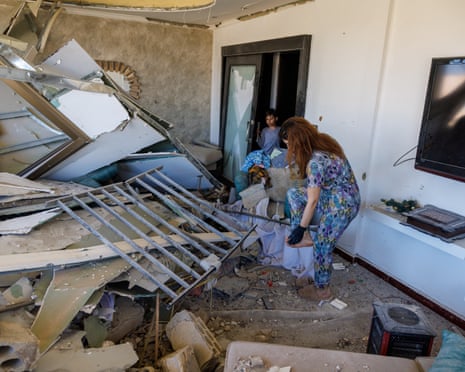
The Israel-Lebanon ceasefire that Donald Trump has announced will be extended has yielded a significant reduction in violence but attacks have continued in southern Lebanon, where Israeli troops have seized a self-declared buffer zone.
The Israeli military said on Thursday it killed two armed individuals in southern Lebanon after identifying them approaching soldiers and posing what it described as an immediate threat.
It was not immediately clear whether the incident was related to strikes reported earlier in nearby areas by Lebanon’s health ministry, which said an Israeli air strike had killed three people and artillery shelling wounded two others, including a child, the Associated Press is reporting.
Those killed by Israeli strikes included Lebanese journalist Amal Khalil, according to a senior Lebanese military official and her employer, Al-Akhbar newspaper. Our full report is here.
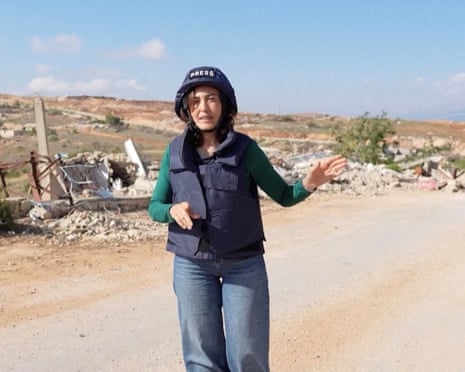
Wednesday was Lebanon’s deadliest day since the 10-day ceasefire took effect on 16 April. It was set to expire this Sunday before Trump today announced the three-week extension after Israel-Lebanon talks hosted by the US at the White House.
Interim summary
US President Donald Trump announced on Thursday that an Israel-Lebanon ceasefire would be extended by three weeks. He wrote on Truth Social that “the Meeting went very well! The United States is going to work with Lebanon in order to help it protect itself from Hezbollah.” He said that the leaders of Lebanon and Israel could meet at the White House “in the near future”.
Speaking to reporters in the Oval Office, Trump said the US has “hit about 75% of our targets” in Iran. He also said a deal has not been reached yet because Iran is “in turmoil”. Trump added that he would not use a nuclear weapon against Iran as the conflict continues without a clear end in sight.
Israel’s killing of a Lebanese journalist in a strike has been met with international outrage as Lebanon’s prime minister described the attack as a “war crime”. Amal Khalil, 43, was killed in what colleagues described as a sustained attack by Israeli forces, with rescuers attempting to dig her out of the rubble of a building also targeted and prevented from providing life-saving assistance.
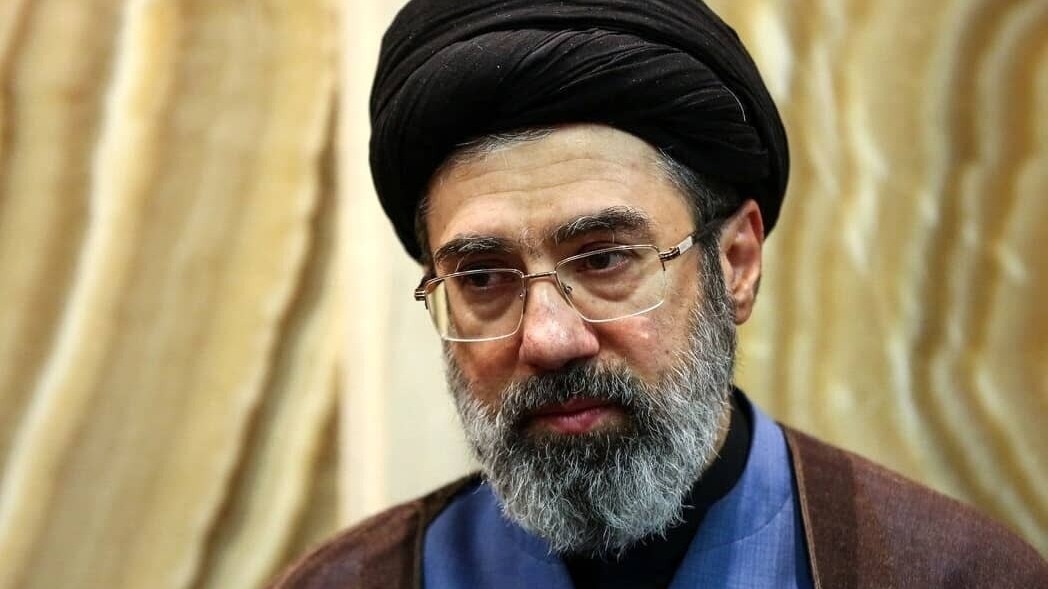
Iran’s president, Masoud Pezeshkian, said that there are no “hardliners” or “moderates” in Iran, responding to US president’s Donald Trump’s post on Truth Social claiming that there is internal division within Iran’s leadership. Separately, Seyed Abbas Araghchi, Iran’s foreign minister, said that Iran’s state institutions “continue to act with unity, purpose, and discipline”.
Pope Leo XIV urged the United States and Iran to return to talks to end the war Thursday and condemned capital punishment, calling for a new “culture of peace” to replace the recourse to violence. “As a pastor I cannot be in favor of war,” he told reporters in a press conference on his way home from his trip to Africa. “I would like to encourage everyone to find responses that come from a culture of peace and not hatred and division.”
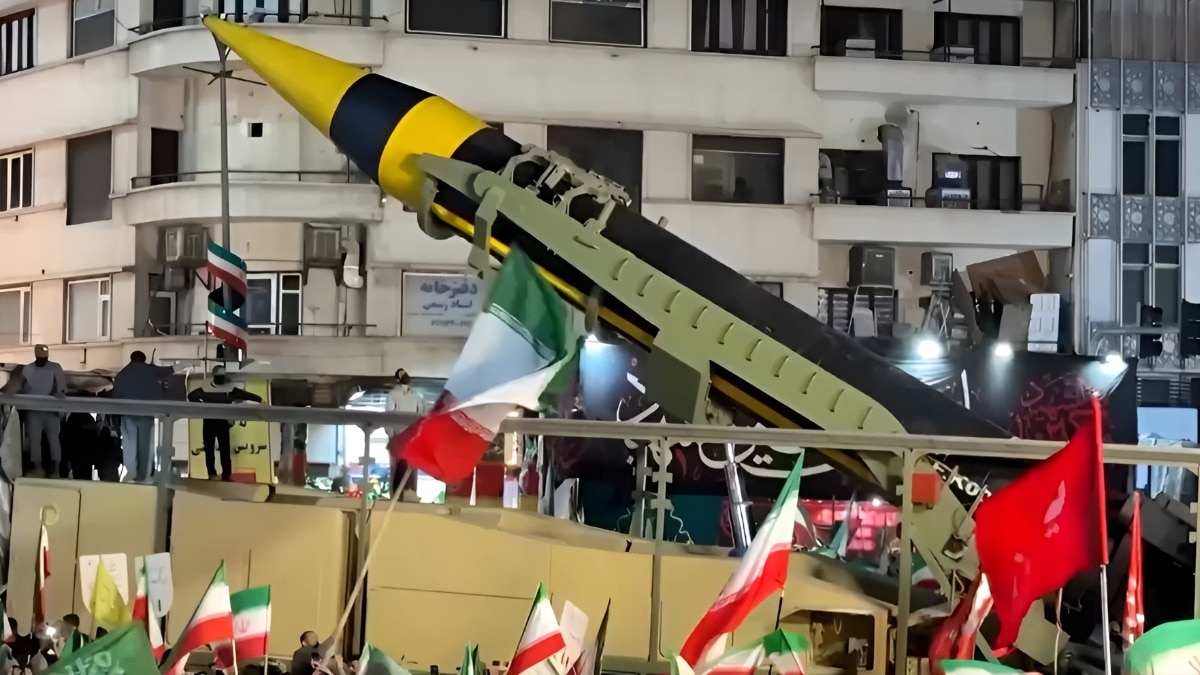
Earlier today, Trump again said that the US has “total control over the strait of Hormuz”, adding that Iran’s leadership was so hobbled by infighting that it was unclear who was in charge. But the US president’s claim seemed questionable in the face of the seizure of two container ships by Iranian commandos and a US report warning it could take six months to clear the strait of mines.
Trump says Israel-Lebanon ceasefire extended by three weeks
US President Donald Trump announced today that an Israel-Lebanon ceasefire would be extended by three weeks.
“The Meeting went very well! The United States is going to work with Lebanon in order to help it protect itself from Hezbollah,” he wrote on Truth Social.
“The Ceasefire between Israel and Lebanon will be extended by THREE WEEKS,” he added.
He said that the leaders of Lebanon and Israel could meet at the White House “in the near future”.
Hezbollah said on Thursday it launched rockets at northern Israel in response to the country’s ceasefire “violation”, Reuters reports.
“In defence of Lebanon and its people, and in response to the Israeli enemy’s violation of the ceasefire and its targeting of the town of Yater in southern Lebanon,” Hezbollah “targeted the Shtula settlement with a rocket salvo”, the Iran-backed militant group said in a statement.
The Israeli military said “several launches that crossed from Lebanon into Israeli territory were identified” and intercepted.
The attacks come as the US is slated to host a second meeting between Lebanese and Israeli envoys on Thursday.
Trump says he would not use a nuclear weapon against Iran
Speaking to reporters earlier today, Donald Trump said that he would not use a nuclear weapon against Iran as the conflict continues without a clear end in sight.
“Why would I use a nuclear weapon where we’ve totally, in a very conventional way, decimated them without it?”, he said on Thursday. “No, I wouldn’t use it. A nuclear weapon should never be allowed to be used by anybody.”
Trump posted a threat on social media earlier this month saying that a “whole civilization will die tonight,” referring to Iran, unless the country reached a deal to reopen the strait of Hormuz.
Trump says 'don't rush me' when asked how long he'll wait for Iran deal
Trump also told reporters that Iran might have loaded up their weaponry “a little bit” during the two-week ceasefire. He said that the US military could “knock that out” in about one day.
When he was asked how long he was willing to wait for a long-term peace deal with Iran, he replied: “Don’t rush me”.
“Their navy is gone. Their air force is gone, their anti-aircraft is gone ...maybe they loaded up a little bit during the two-week hiatus, but we’ll knock that out about one day, if they did,” Trump added.
“I want to make the best deal. I could make a deal right now ... but I don’t want to do that. I want to have it everlasting,” Trump said.
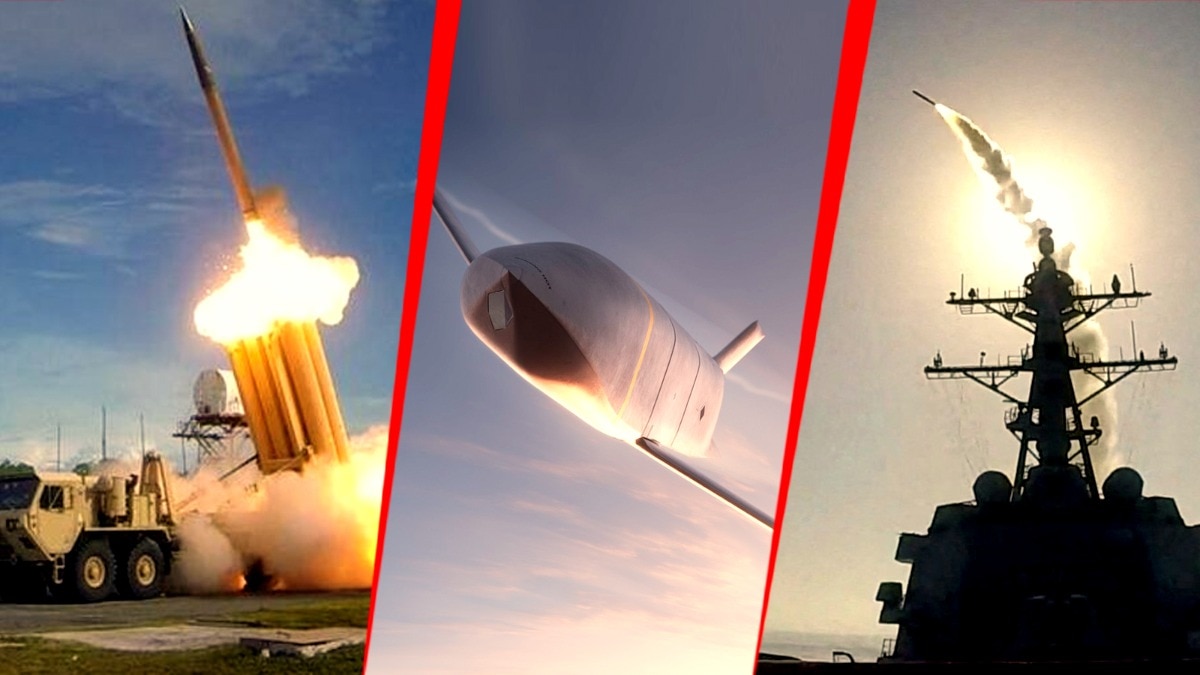
Speaking to reporters in the Oval Office, US president Donald Trump said the US has “hit about 75% of our targets” in Iran. He later said that number was 78% percent.
“We’ve hit about 75% of our targets,” he said on Thursday. “We stopped a little early because they want to have some peace, and we have a blockade that’s 100% effective, and they’re getting no business.”
“They’re not doing well economically, financially, they’re not doing any business because of the blockade,” Trump said.
He also said a deal has not been reached yet because “they’re in turmoil”.
“We have been speaking to them, but they don’t even know who is leading the country. They’re in turmoil. They’re in turmoil, so we thought we’d give them a little chance to get some of their turmoil resolved,” Trump said.
“I took the country out militarily in the first four weeks,” he said. “Now what we’re doing is sitting back and seeing what deal, and if they don’t want to make a deal, then I’ll finish it up militarily with the other 25% of the targets. We’ve hit 78% of the targets that we’ve wanted to hit.”

Patrick Wintour
Analysis: Trump may talk of regime infighting, but Iran seems united by strategy born of war
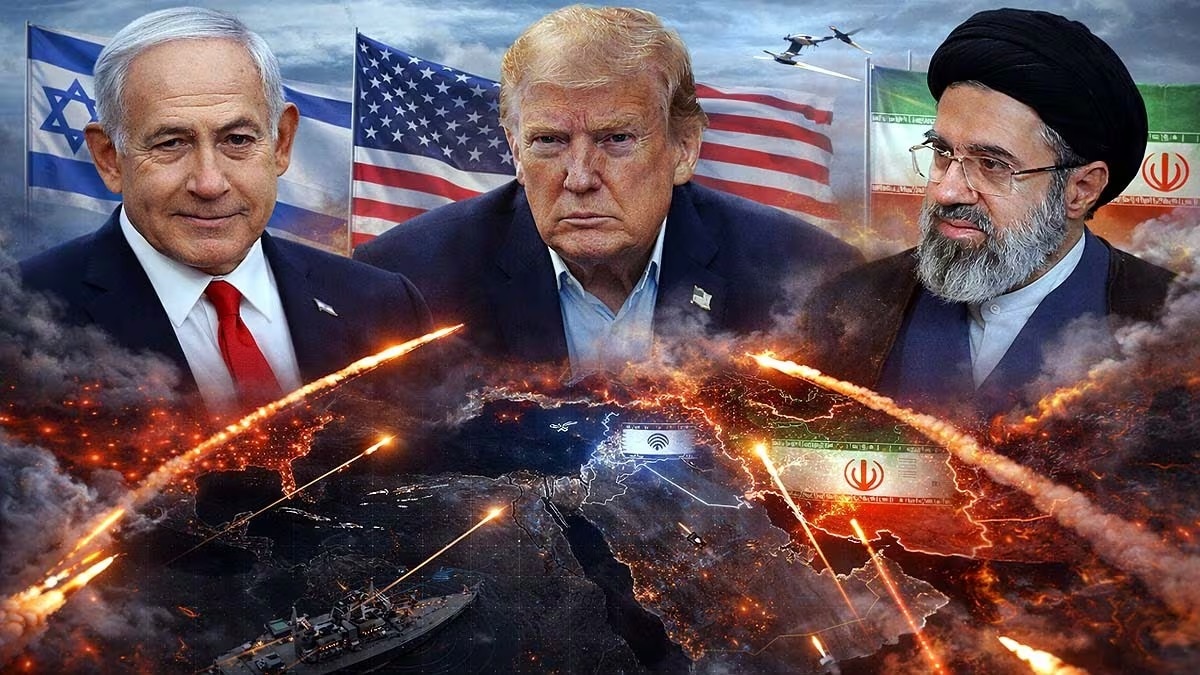
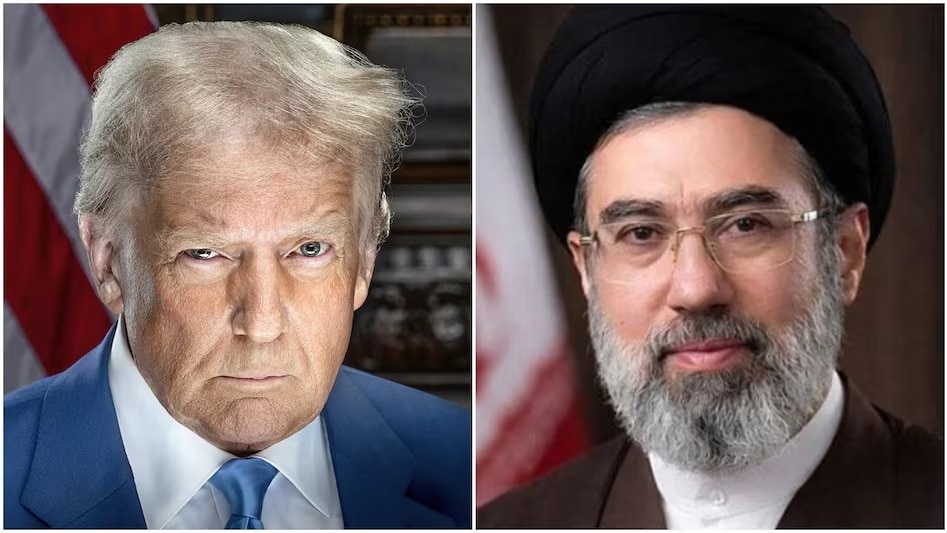
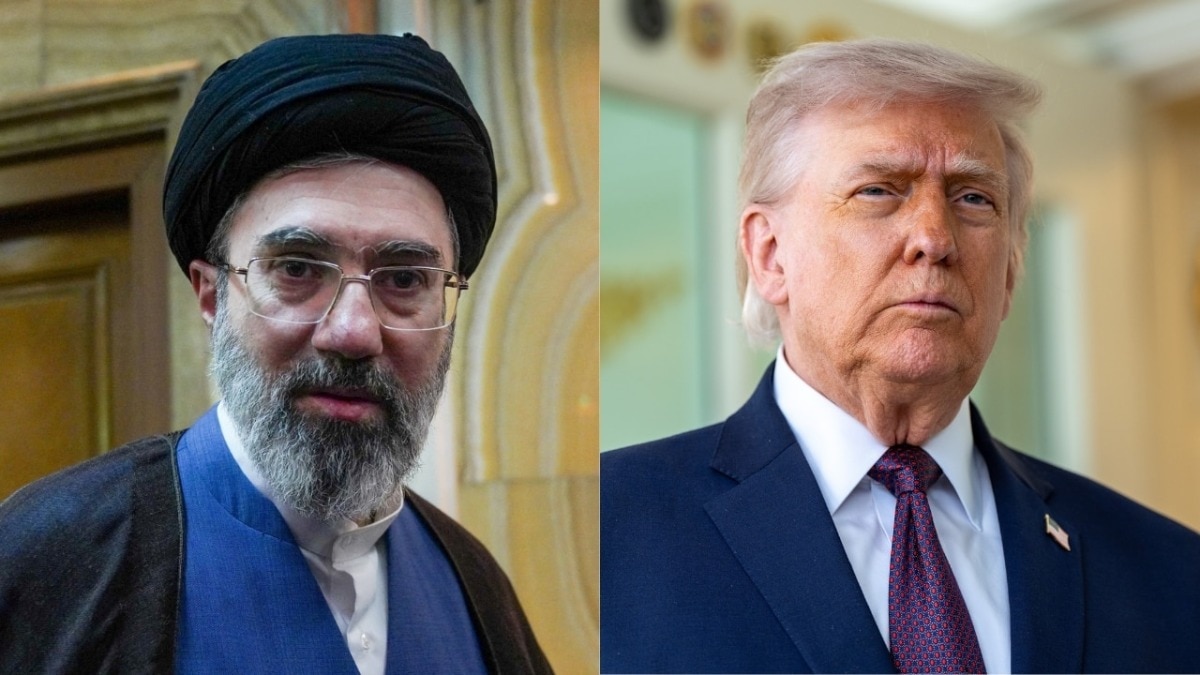
Donald Trump has claimed that the infighting between moderates and hardliners in Iran’s leadership is so intense that the country has “no idea who their leader is”, but many Iranian experts questioned his analysis, saying that – given the mass assassinations of senior commanders – the country has shown remarkable institutional cohesion.
Trump’s allegations of “CRAZY” splits in the Iranian leadership – the second outing for this argument in three days – is remarkable since he has previously said either he has little knowledge of the new Iranian leadership or that there has already been regime change.
But Trump’s team, either through Pakistani mediators or more direct contacts, may be picking up that different factions are demanding different preconditions for the talks to restart. Trump at a minimum is implying that military hardliners have taken charge from the civilian diplomatic leadership.
It is hardly a secret that Iran has been riven for decades over how to approach the US and the wisdom of negotiations, but some Iranian academics and observers are accusing Trump of cognitive warfare: attempting to create what Mohamed Amersi, a member of the Global Advisory Council at the Wilson Centre, described as “chronic systemic paralysis in which the country’s decision making machine becomes deadlocked”.
You can read the full analysis here: