1 month ago
US and Iranian negotiators met in Switzerland as Donald Trump renewed pressure on Tehran. The talks exposed sharp differences over Lebanon, the Strait of Hormuz, sanctions and the nuclear programme.

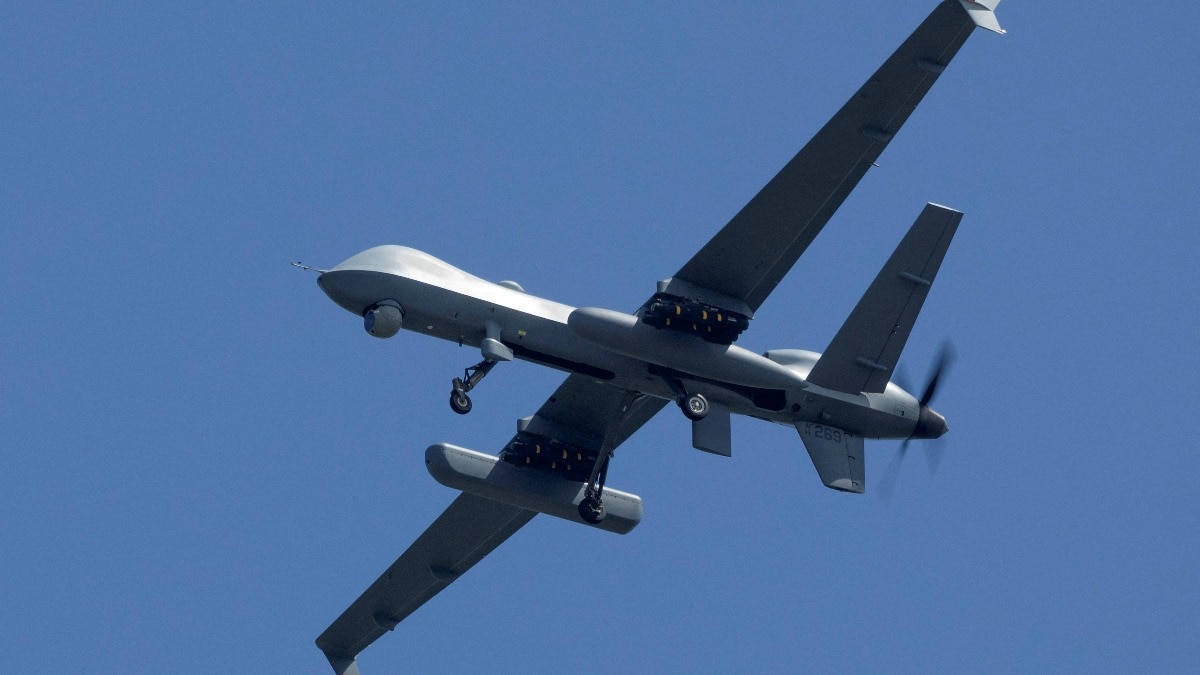
Stock photo used for illustration

Washington,UPDATED: Jun 22, 2026 05:44 IST
US President Donald Trump kept up his threats against Iran on Sunday even as fresh talks began in Switzerland on the next steps under the interim agreement signed last week to end the war. The discussions come as both sides remain divided over Lebanon, the Strait of Hormuz, Iranian assets and Tehran's nuclear programme.
The US team is led by Vice President J D Vance and includes Jared Kushner and Steve Witkoff. Iran's side is led by Parliament Speaker Mohammad Bagher Qalibaf and Foreign Minister Abbas Araghchi, with Pakistan and Qatar acting as mediators. On the eve of the talks, Tehran said it had again closed the Strait of Hormuz over Israel's ongoing military campaign in Lebanon against the Iranian-backed Hezbollah militant group.
The interim deal is meant to stop fighting on all fronts, including Lebanon, but Iran has said the talks must first address that issue. The US has said shipping traffic through the crucial waterway is continuing, while Trump has threatened to impose American tolls in the strait if a final deal with Iran is not reached in 60 days. Other issues on the table include unfreezing billions of dollars in Iranian assets and addressing the core dispute over Iran's nuclear programme.
A senior US diplomat involved in the talks said negotiators were expecting to work through the night. The diplomat, speaking on condition of anonymity to discuss private talks, said the Iranians had remained in the discussions despite some reports suggesting otherwise. The diplomat added that much of the conversation had focused on clarifying what Iran meant in some of its recent statements about the Strait of Hormuz, and that negotiators had also discussed various "mechanisms" to keep the strait open and ensure a ceasefire in southern Lebanon is enforced.
Oil prices rose slightly on Sunday amid continued uncertainty over the Strait of Hormuz, a vital route for the world's oil and natural gas supplies. US crude rose nearly 3 per cent to USD 78.70 per barrel, while Brent crude, the international benchmark, was up a little over 1 per cent at USD 81.70 per barrel.
Members of Iran's delegation, briefing their media, said Sunday's talks had mainly focused on Lebanon, though the release of frozen Iranian assets and Iran's oil exports were also discussed. Hamid Bovard, chief executive of the Iranian Oil Co and part of Iran's delegation in Switzerland, said negotiators had pursued the issue of lifting oil-related sanctions and linked waivers. He was responding to a question from a correspondent of Iran's state-run IRNA news agency.
In Iran, the country's 0-0 World Cup draw with Belgium and goalkeeper Alireza Beiranvand's seven saves also fed into the political mood. Some Iranian media shared images of Beiranvand appearing to block the Strait of Hormuz. Qalibaf, who is leading Iran's talks in Switzerland, posted a photo of one of the saves on X and wrote: "This is how we protect our land."
In Jerusalem, Israeli Prime Minister Benjamin Netanyahu brushed aside criticism that the war had fallen short of its goals. Speaking at the JNS Policy Summit on Sunday, he said he believed the Iranian government would collapse as a result of the military campaign. "I think we created the conditions for its future fall," Netanyahu said. "That is what will be the real triumph, when the Iranian people take their own destiny in their hands, and they knock out this brutal regime that is terrorizing them and terrorizing the rest of the world."
Syrian President Ahmad al-Sharaa said Syria had no desire to intervene militarily in Lebanon, despite Trump's remarks suggesting Syria could help "take care of Hezbollah". In an interview with UAE network Al Mashhad on Sunday, al-Sharaa said Trump's remarks had been "misunderstood". He said Trump "spoke about Syria's role in finding a safe and peaceful solution, but the statement was misinterpreted as if Syria were going to invade Lebanon tomorrow morning".
Israel's military said residents in the north near the border with Lebanon would be able to move freely without restrictions from Monday morning. For months, residents there had faced restrictions because of the threat of attack by Hezbollah in southern Lebanon. The military did not explain what led to the decision, though it has said a fragile ceasefire is in place. The announcement came as the US and Iran met in Switzerland over their interim deal, while Iran continued to insist that Israel's attacks in Lebanon must be addressed first. Netanyahu, however, said Israeli forces would remain in southern Lebanon.
Overall, the talks in Switzerland moved ahead amid continuing threats, market nervousness and competing demands over Lebanon, the Strait of Hormuz, sanctions and Iran's nuclear programme, with negotiators preparing for a long round of discussions.
With PTI Inputs
- Ends
Published By:
India Today Web Desk
Published On:
Jun 22, 2026 05:44 IST