1 hour ago
China has warned that glaciers across the Tibetan Plateau are becoming more unstable after the deadly Tibet-Nepal disaster. Scientists say future risk assessments must track how such collapses rapidly intensify downstream.

Image used for representational purposes only

Beijing,UPDATED: Sep 3, 2026 16:58 IST
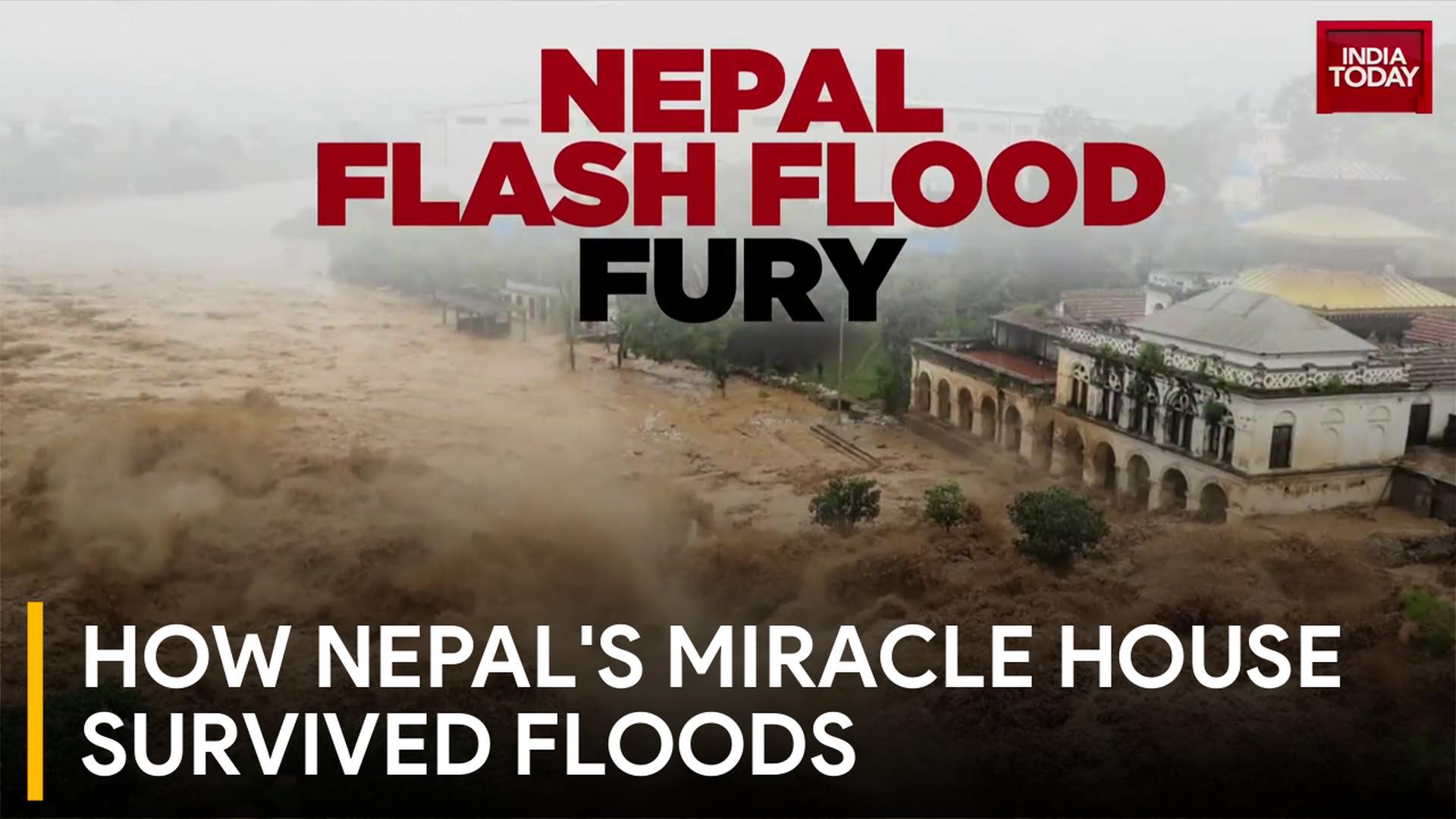
Glaciers on the Tibetan Plateau are likely to become more unstable in the coming years, raising the risk of more collapses and disasters like last week’s deadly flash flood on the Tibet-Nepal border, a senior Chinese climate official has warned. The warning came after the August 26 ice-rock avalanche near the Nepal-Tibet border triggered flash floods that devastated towns and villages in northern and central Nepal.
Chinese officials said on Wednesday that 21 people died and 541 were missing after the flash flood at Gyirong Port on the Tibet side of the border. In Nepal, the death toll from the floods rose to 1,252 on Thursday as more bodies were recovered from the affected areas.
Gao Rong, deputy director of China’s Climate Centre, said, “Over the past 60 years, the glacier area on the Tibetan Plateau has shrunk by around 24 per cent, with around 7,000 small glaciers disappearing completely.” He added, “Looking ahead, the structural stability of glaciers across the Tibetan Plateau will decline further. Glacial disasters are likely to become more frequent and could amplify in destruction and reach through cascading effects,” according to the Hong Kong-based South China Morning Post.
According to figures released on August 30, the missing at Gyirong Port included 261 foreigners, including 49 from India and people from 22 other countries, state-run Xinhua news agency reported, quoting an official briefing in Tibet.
A report by the Institute of Tibetan Plateau Research under the Chinese Academy of Sciences said the mudslide created by the glacier collapse travelled 22 km along the valley and reached Gyirong Port in just seven minutes. Scientists said hazard assessments can no longer depend only on measuring the initial collapse. Researchers studying satellite and field data from Gyirong county found that collapsing ice and rock rushed down the valley, scoured the riverbed, pulled in debris from the banks and mixed with water, turning a high-altitude collapse into a destructive mudslide.
The Chinese research said disaster risk assessment in frozen high-mountain regions must look beyond the initial volume of material breaking away from the mountain and also consider how much more material can be added as it moves downhill, along with risks to people and infrastructure downstream. “What truly determines risk is not just how much collapsed on the mountain, but how much can be entrained in the gully, and what critical infrastructure and populations downstream are exposed to the hazard chain,” it said.
An article published in Nature on Wednesday underlined the need to improve future monitoring and forecasting systems. The Post reported that the disaster was difficult to predict because it was caused by the sudden failure of a high-altitude glacier-rock system, rather than more common warning signs such as extreme rainfall or rising glacial lakes. Manoochehr Shirzaei, a geophysicist at Virginia Tech in Blacksburg, told Nature that conventional monitoring tools were not enough to predict such events and stressed the need for better integrated detection systems. “What is still largely missing is a regional satellite-based system that routinely searches for accelerating glacier and rock-slope deformation and then connects that information directly to downstream flood and avalanche modelling,” the article said.
The latest warning and research findings have linked the Tibet-Nepal disaster to growing glacier instability on the Tibetan Plateau, with officials and scientists saying future risk assessments and monitoring systems will need to account for how such collapses can quickly grow into far more destructive downstream events.
With PTI Inputs
- Ends
Published By:
India Today Web Desk
Published On:
Sep 3, 2026 16:58 IST