 10 minutes ago
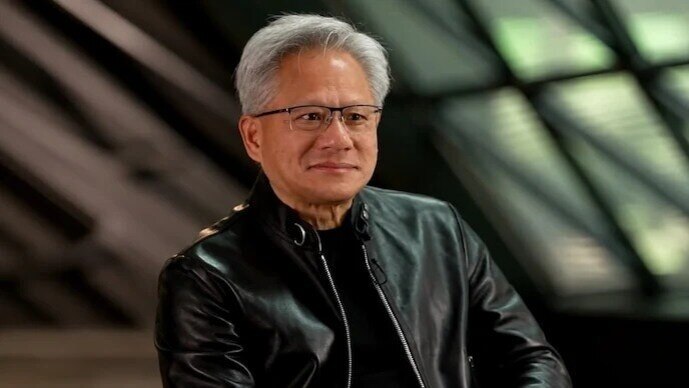
Jensen Huang built Nvidia into one of the most powerful companies of the artificial intelligence era. Behind Nvidia's extraordinary rise was a leader known for his intensity and uncompromising style. But his exit has put the spotlight on an intensely driven executive whose reputation for arrogance, explosive temper and forceful leadership has been eclipsed by allegations of three affairs.
Stephen Witt, author of The Thinking Machine, a biography of Huang, argues that the Nvidia chief's downfall is not fundamentally a technology story. It is a story about hubris, arrogance and a volatile temper, which, according to Witt, left even senior executives afraid to challenge him.
"We live in the age of artificial intelligence -- an age that Jensen Huang, perhaps more than any other single person, has made possible," Witt wrote in an opinion piece for The New York Times. But, he argued, Huang's unravelling was instead "a timeless tale of masculine hubris, of a man undone by reckless overconfidence".
That contrast -- between the public profile of a visionary technology leader and the picture painted by former employees and reports of his personal conduct -- lies at the heart of Huang's extraordinary fall.
WHEN THE THINKING MACHINE LOST CONTROL
When Witt named his biography The Thinking Machine, the title referred partly to the microchips powering artificial intelligence. But it also described Huang himself: an intensely driven thinker whose mind, according to Witt, appeared to operate without pause. That relentless personality helped define Nvidia.
Huang co-founded Nvidia in 1993 and remained at its helm for 33 years. Under his leadership, the company moved from being a relatively obscure chipmaker to one of the giant companies powering the AI boom of the world.
The same relentless temperament that drove Nvidia's spectacular rise also made Huang a demanding and, at times, difficult leader. Witt said that when he first met Huang in 2023, the Nvidia chief was presented as a humble, people-oriented billionaire. Huang frequently redirected praise towards his employees and executives. He spoke about his early days working as a dishwasher and was known for visiting modest restaurants.
Witt recalled meeting Huang at a Denny's restaurant, where the billionaire left the waitress a USD 1,000 tip in hundred-dollar bills. It was the kind of story that reinforced Huang's carefully cultivated image as a self-made, approachable executive.
But his biographer came to believe there was another side to that persona.
THE TEMPER BEHIND THE HUMBLE IMAGE
According to Witt, Huang could be intensely difficult when challenged. He described an executive who had little patience for disagreement and could become furious when people contradicted him, even on relatively minor issues.
"Stick to your position and soon he exploded, screaming at you for your idiocy," Witt wrote. He claimed that Huang's outbursts could continue for an hour or more and that some senior executives appeared genuinely afraid of him.
Witt compared the atmosphere to the abusive music instructor played by J K Simmons in the film Whiplash, which is a comparison that captures the difference between Huang's public image and the private accounts described by people who worked around him.
But the ousted Nvidia CEO's private life has now exposed a far uglier side of the man behind Nvidia's success. Three alleged affairs have now surfaced.
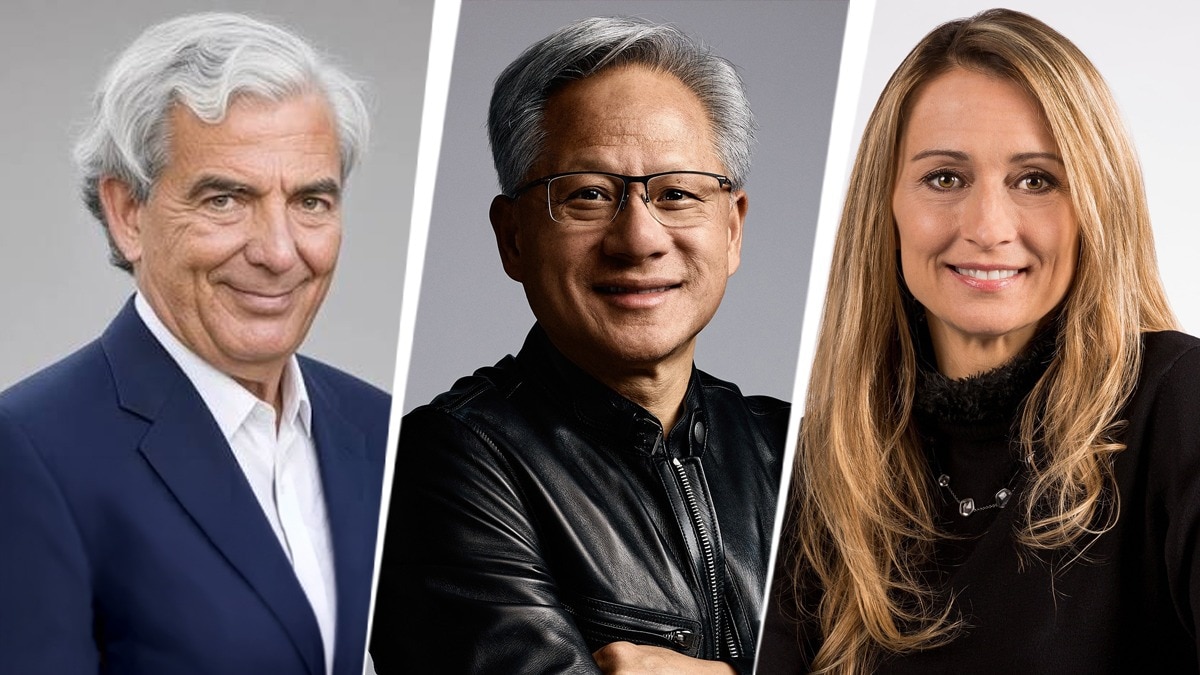
The first involved Alice Huang, a Chinese businesswoman and former executive linked to a Singapore-based cloud company. US intelligence officials reportedly determined that she had links to Chinese intelligence. The relationship became particularly sensitive because companies operating data centres in Southeast Asia have been scrutinised over whether Nvidia equipment was being diverted into China despite US export restrictions.
Witt went further, arguing that it was difficult to believe Huang was unaware of the activities surrounding Alice Huang given his reported romantic relationship with her. The second reported affair involved Kimberly Powell, Nvidia's vice president of healthcare and, according to Witt, Huang's direct subordinate.
A former Nvidia employee told Witt that the relationship was well-known inside the company. The third reported relationship emerged after the first two scandals and involved another Nvidia employee whose identity has not been disclosed.
THE BIGGEST BETRAYAL WAS AT HOME
Perhaps the most striking element of the scandal is the contrast with Huang's carefully maintained image as a devoted family man. Huang met his wife, Lori, when he was 17. They were lab partners in an electrical engineering course, and Huang took six months to ask her out.
She was his first girlfriend. They married in their early 20s.
Lori stepped away from the workforce to raise their children while Huang pursued his ambition of building a technology company. Huang has repeatedly spoken about the sacrifices she made so that he could pursue that dream. The couple went on to build a family and a vast fortune together. Their children, Madison and Spencer, later joined Nvidia in executive roles. That makes the reported affairs particularly jarring.
Witt wrote that he had spoken to some of the couple's oldest friends while researching his biography. When he raised the possibility of infidelity or marital problems, he said he was told the Huangs' marriage was happy and even ideal.
His conclusion was blunt: "His betrayal of her is absolute."
'THE NARCISSIST'S HIGH'
The most damaging description in Witt's account came from a former Nvidia employee who was asked why Huang would risk an affair with a subordinate when his own children worked at the company.
The answer, according to Witt, was chilling. The former employee said it "got him high -- a narcissist's high."
Witt said he began hearing rumours about Huang's infidelities earlier this year but initially could not confirm them. He attributed the difficulty partly to what he described as a culture of silence at Nvidia.
In his account, the wall eventually broke not because Nvidia's internal culture changed, but because reporters and US intelligence agencies uncovered information that the company's internal culture had kept out of public view.
Witt's central point is that this combination of brilliance and power may have created its own problem.
"He built Nvidia from nothing but, through his arrogance and toxic self-regard, he has left an empty space that might be impossible to fill," Witt wrote.
The man who helped build the infrastructure of the AI revolution was also, according to those who knew him and the allegations now surrounding him, a man who appeared increasingly convinced that the rules applied differently to him.
- Ends