1 hour ago
American employers hiring Indian professionals are now on the firing line of right-wing commentators on social media. A Financial Times report found that US companies were being accused of trying to replace American workers with Indian counterparts.
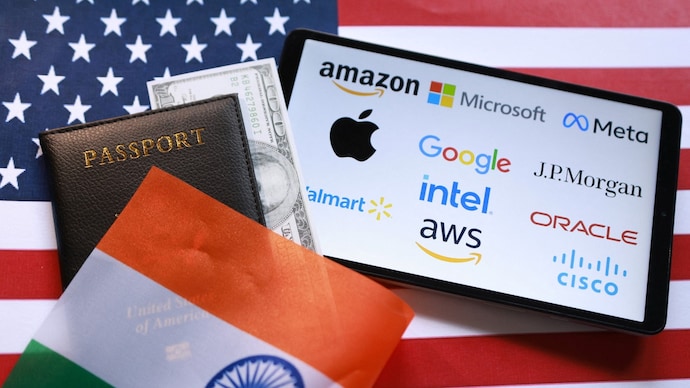
Indian professionals and their employers are coming under racist attacks from right-wing commentors on social media. (Image for Representation: File)
A surge in anti-Indian racism in the United States is increasingly targeting American companies, as the Trump administration’s tightening of skilled-worker visas fuels hostility against firms seen as hiring Indian professionals, the Financial Times reported.
According to the report, several major US corporations in sectors like logistics, retail and telecom companies, including FedEx, Walmart, and Verizon, have faced coordinated online abuse, harassment campaigns and boycott calls, with critics accusing them of replacing "American workers" with Indians. The backlash has intensified following the Trump Administration's overhaul of the H-1B visa programme, which disproportionately affects Indian nationals who make up the bulk of skilled foreign workers in the US.
The shift in rhetoric marks a significant escalation as, while earlier debates focused on immigration policy, American firms are now being singled out and attacked for employing Indian-origin executives or staff. Social media platforms have been flooded with posts accusing US firms of enabling an "Indian takeover", often accompanied by racist slurs and threats.
WHY ARE US FIRMS FACING BACKLASH FOR HIRING INDIAN PROFESSIONALS?
The Financial Times reported one particular flashpoint, which came after a road accident involving a FedEx vehicle late last year. Online commentators quickly linked the incident to the Indian heritage of the company’s chief executive, calling for boycotts and invoking past culture-war campaigns against US brands. "Stop the... Indian takeover of our great American companies," one post noted.
The Financial Times reported accusations that FedEx chief executive Raj Subramaniam had been laying off White American workers and replacing them with Indian workers by several right-wing commentators, including Andrew Torba, founder of the social media platform, Gab.
The company denied allegations that it favoured Indian workers and reiterated its commitment to merit-based hiring. "For more than 50 years, FedEx has fostered a merit-based culture that creates opportunity for everyone," the company said. "We take great pride that this has resulted in a workforce that represents the diversity of the more than 220 countries and territories we serve."
Monitoring groups tracking online extremism say such incidents are no longer isolated. The Centre for the Study of Organised Hate has documented what executive director, Raqib Naik, dubbed "co-ordinated campaigns" against Indian-American entrepreneurs and executives, particularly those linked to government-backed business loans or large corporate hiring programmes.
According to Naik, there has been a "spike in discrimination and harassment in the US portraying Indians as job stealers and visa scammers" since last year. The Financial Times report cited data from advocacy group Stop AAPI Hate and counterterrorism company Moonshot, which stated that threats of violence against South Asian people increased 12% in November last year. The groups also found that the online use of slurs against South Asians grew 69% in the same period.
IS THE TRUMP ADMINISTRATION TO BLAME FOR ANTI-INDIA RACIST ATTACKS ON US FIRMS?
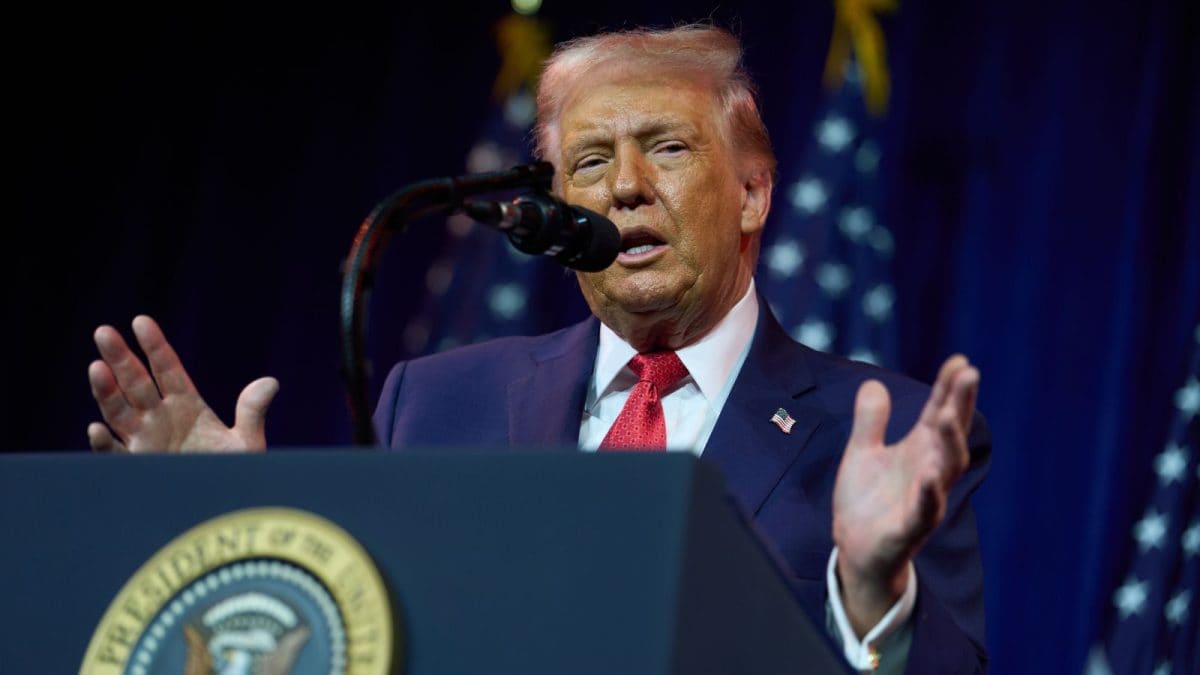
Experts monitoring anti-Indian sentiment online say hatred increased after President Donald Trump announced changes to the H-1B visa program to restrict the entry of foreign skilled labour into the US in September.
New rules include a steep $100,000 application fee and wage-based prioritisation under the H-1B programme, which the administration says is designed to "protect American workers".
From February, US authorities are expected to prioritise the highest-paid applicants, Level-IV H-1B applicants, further narrowing pathways for skilled migrants.
The backlash has also been amplified by investigations into alleged visa fraud. According to the Financial Times report, following the launch of a federal probe dubbed 'Project Firewall' into H-1B hiring practices of US employers, anonymous accounts published personal details of employees at companies such as Walmart, Verizon and Dish Network, accusing them of illegally selling jobs to Indian nationals. "Indian Green Card Managers must be kicked out of the country", said one post featuring screenshots of a Walmart recruiter’s LinkedIn page.
While most firms declined public comment, advocacy groups warned that such actions risk encouraging real-world violence.
Indian nationals currently account for about 71% of H-1B visa holders, according to the Financial Times report, placing both Indian workers and the companies that employ them at the centre of political scrutiny. US employers in technology, healthcare, education, logistics and engineering have long relied on Indian professionals to fill persistent shortages of skilled workers.
Some of America’s most high-profile executives have benefited from the H-1B visa programme and are of Indian origin, including Google’s Sundar Pichai and Microsoft’s Satya Nadella. But all this, instead of stopping the flood of anti-Indian rhetoric, has exacerbated it.
Some conservative voices have pushed back against the rhetoric. Vivek Ramaswamy, a Trump ally and gubernatorial candidate, publicly condemned attacks based on ethnicity, saying the idea that some Americans are "more American" than others is fundamentally "un-American".
Yet many companies remain cautious. With diversity and inclusion initiatives already under political pressure, corporations are increasingly reluctant to speak out against racial targeting. Advocacy groups said the shift had made companies more hesitant to speak out against anti-Indian racism or to support cultural celebrations such as Diwali.
"Indians have become a victim of an increasingly ethnocentric narrative around migrants," said Siddharth Venkataramakrishnan, an analyst at the London-based Institute for Strategic Dialogue to Financial Times. "I think where we go from here is, unfortunately, that we see anti-immigrant rhetoric increasingly moving in the direction of a 'war for the soul of America'."
One thing is clear, Indians and Indian-Americans, who were once considered a "model minority" are now slowly transitioning to being one of the US' most-watched communities.
- Ends
Published By:
Shounak Sanyal
Published On:
Jan 14, 2026
Tune In