3 hours ago
Chainalysis says Russia, Iran and North Korea used cryptocurrencies to keep funds moving under sanctions in 2025. The report points to a fast-growing digital route for sanctions evasion, theft and restricted transactions.
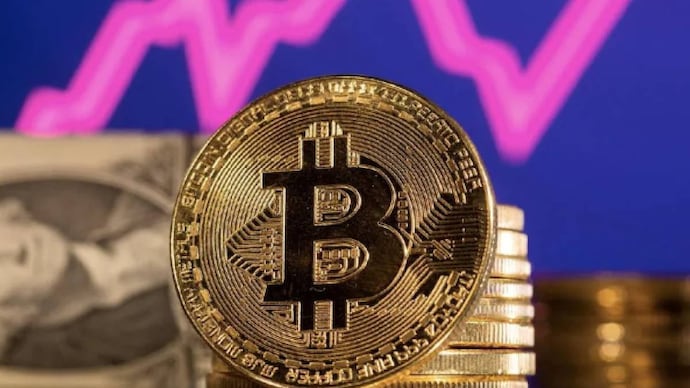
Crypto activity linked to sanctioned entities grew sharply during 2025. (File Photo)

New Delhi,UPDATED: Jul 14, 2026 00:54 IST
Russia, Iran and North Korea are increasingly relying on cryptocurrencies to keep money moving despite sweeping Western sanctions, with sanctioned entities and networks conducting an estimated $104 billion (around Rs 9.92 lakh crore) worth of crypto transactions in 2025, according to a new report by blockchain analytics firm Chainalysis.
The findings highlight how digital assets have become an increasingly important financial tool for countries and organisations cut off from the traditional banking system. While the United States and its Western allies have tightened sanctions in recent years, the report suggests cryptocurrencies are offering new ways to move funds across borders and reduce dependence on conventional financial networks.
SANCTIONED CRYPTO ACTIVITY SURGES
According to the 2026 Chainalysis Crypto Crime Report, crypto activity linked to sanctioned entities grew sharply during 2025. The report estimates that illicit cryptocurrency transactions reached at least $154 billion last year, a 162 per cent increase from the previous year.
Even more striking was the rise in transactions involving sanctioned entities and state-linked networks, which jumped 694 per cent year-on-year to nearly $104 billion.
The figures suggest that while regulators have intensified enforcement efforts, sanctioned governments and affiliated organisations are continuing to find alternative financial channels through blockchain technology.
One of the report's biggest findings centres on A7A5, a ruble-backed stablecoin launched in 2024.
Within just one year, transactions involving the digital token reportedly reached $93.3 billion, making it one of the largest cryptocurrency networks linked to sanctioned economies.
According to Chainalysis, A7A5 has become an important payment mechanism for Russian businesses and sanctioned entities seeking access to international markets despite restrictions imposed by the United States and the European Union.
Although several cryptocurrency exchanges associated with the token have already been sanctioned by Western governments, its rapid adoption suggests demand for alternative payment systems continues to grow.
IRAN'S IRGC PLAYS GROWING ROLE
The report also points to the expanding role of Iran's Islamic Revolutionary Guard Corps (IRGC) and its affiliated financial networks.
During the final quarter of 2025, more than half of Iran's sanctioned cryptocurrency activity was linked to the IRGC or organisations connected to it.
Chainalysis said blockchain data indicates that crypto assets have increasingly been used by Iranian-linked networks to bypass sanctions, facilitate oil-related transactions and support other restricted financial activities.
NORTH KOREA POSTS RECORD YEAR FOR CRYPTO THEFT
North Korea recorded its most successful year ever for cryptocurrency theft in 2025, according to the report.
Hackers linked to Pyongyang stole more than $2 billion worth of digital assets during the year, making it one of the largest state-backed cybercrime campaigns on record.
Western intelligence agencies believe part of the stolen funds is used to finance North Korea's nuclear weapons and ballistic missile programmes.
One of the most significant incidents cited in the report was the February 2025 hack of cryptocurrency exchange Bybit, in which around $1.5 billion worth of Ethereum tokens were stolen.
The Center for Strategic and Studies (CSIS) has attributed the attack to North Korea's notorious Lazarus Group, which has long been accused of carrying out cyberattacks to generate foreign currency for the isolated regime.
WHY SANCTIONED CRYPTO FLOWS ARE HARD TO STOP
Unlike traditional banking systems, cryptocurrencies operate on decentralised blockchain networks that are not controlled by a single government or financial institution.
That makes them attractive to sanctioned countries, criminal groups and cyber hackers looking to move funds outside conventional financial channels.
Although every blockchain transaction leaves a permanent public record, investigators often face difficulties tracing the people behind digital wallets, particularly when transactions pass through multiple exchanges or privacy-enhancing services.
The report says stronger international cooperation and tighter regulation of cryptocurrency exchanges will be essential if governments hope to curb the growing use of digital assets for sanctions evasion and illicit finance.
Despite continued action by the United States, the European Union and the United Kingdom against crypto exchanges and money-laundering networks, the sharp rise in sanctioned crypto activity suggests enforcement efforts are struggling to keep pace with the rapidly evolving digital financial ecosystem.
- Ends
Published By:
Satyam Singh
Published On:
Jul 14, 2026 00:54 IST