 1 hour ago
Niger's junta survived a serious mutiny after the presidential guard and Africa Corps intervened. The episode exposed how deeply the regime now depends on Russian backing.
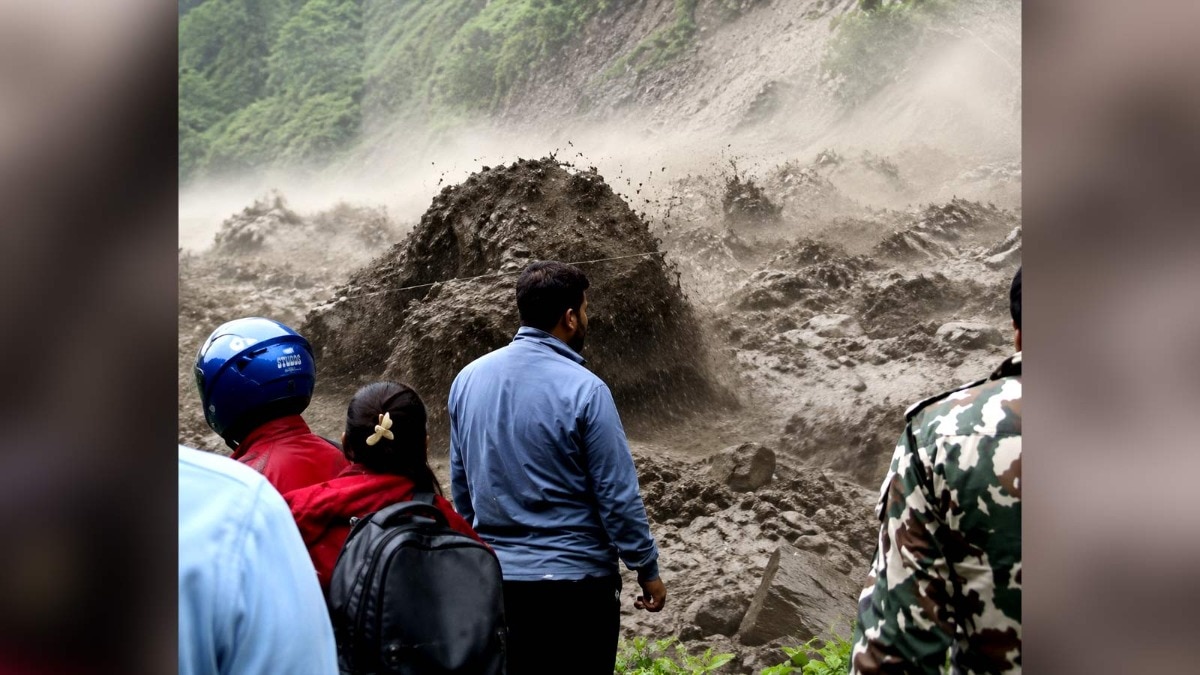
Image used for representational purposes only

Abuja,UPDATED: Aug 31, 2026 17:36 IST
Niger's military junta has survived what analysts describe as its most serious internal threat since taking power in a 2023 coup, after renegade soldiers staged a mutiny over the weekend that led to a 24-hour standoff in the capital. The confrontation ended after the presidential guard, backed by Russia's Africa Corps paramilitary group, subdued the mutineers.
The incident has again drawn attention to the role of Russian forces in Africa's Sahel region, where military rulers in Niger, Mali and Burkina Faso have cut ties with Western partners and turned to Moscow for security support. Analysts say the events in Niger showed both the value of that support to the junta and its growing reliance on it.
According to several analysts and diplomats, the mostly young soldiers took some of their colleagues hostage at Base 101, a strategic military base at Niamey's international airport. They also fired shots near the presidential palace, about 12 kilometres away, before they were brought under control.
Russia's ambassador to Niger, Viktor Voropayev, told Russian media that Niger had asked for support from the Russian force and that the mutineers were "neutralised, particularly thanks to the intervention" of Africa Corps. Nigerien authorities are yet to comment on the episode.
Analysts said the clashes at Base 101 could have gone either way because of the mutineers' numbers and determination until Russian troops stepped in. It was the second time this year that Africa Corps had intervened to protect power centres in the Sahel. In May, Russian troops helped put down major attacks by jihadis and rebels across junta-led Mali.
"Fighting jihadis comes as a second priority (for the Africa Corps), but the first priority is to sustain regimes and they are succeeding in this," said Wassim Nasr, a senior research fellow at the Soufan Centre, a New York-based think tank.
Across the Sahel, militaries that seized power citing security failures have broken with longtime Western security allies and moved closer to Russia. They first welcomed the Moscow-backed Wagner private mercenary group, which was later replaced by Africa Corps under the direct command of the Russian Defence Ministry.
It is not known how many Russian mercenaries are in Niger, Mali and Burkina Faso, but estimates put the number at between 1,700 and 2,000. In the Central African Republic, Wagner is estimated to have around 1,000 personnel.
As Russia competes with the United States, Europe and China for influence in Africa, analysts say its forces have helped Moscow deepen its role in security, politics and the economy. "The security arrangements that are currently in place, whether it's counterinsurgency support, military equipment, and other economic deals along the side, are heavily dependent on the leadership of these three countries," said Beverly Ochieng, a security analyst specialising in the Sahel for Control Risks consultancy.
Ochieng added that although Russia has limited resources to deploy, "they really know how to balance the diplomacy, counterinsurgency, and the sort of geopolitics to demonstrate that they're an all-weather friend". Nasr said the arrangement with Wagner and later Africa Corps has proven to be "good business for Russia (at) a low cost".
Even as these military partnerships have helped protect juntas from direct threats, the broader security situation in the Sahel has worsened, with armed groups increasingly targeting cities and urban centres. Niamey airport itself was attacked twice this year: in June by the al-Qaeda-linked JNIM group, killing 11 soldiers and two civilians, and in January by Islamic State's Sahel Province, which targeted expensive drones.
Analysts say threats such as the latest mutiny could push juntas to focus even more on protecting themselves, at the cost of wider security. The Senegal-based Timbuktu Institute for Peace Studies said the events in Niger "highlight the vulnerabilities of a regime whose stability increasingly relies on a Russian partnership" and added: "The intervention of an external partner to help contain an internal crisis raises a central question: how far can the pursuit of strategic autonomy go when it is accompanied by a growing dependence on Moscow?"
Nathaniel Powell, West Africa analyst at Oxford Analytica, said Russia's success in helping keep juntas in power could increase Moscow's appeal to other African governments. Russian Foreign Minister Sergey Lavrov has recently said Moscow is ready to support African countries in their fight against terrorism, though analysts say governments are likely to be cautious about any partnership involving Africa Corps because of its reputation for human rights abuses.
Powell said, "having a foreign anti-coup force has advantages in that they have no local interests that could compete for their loyalty, and might be seen to be militarily superior to national military formations, thus deterring potential coup-makers". The mutiny in Niamey ended with the junta still in control, but it also underlined how central Russian support has become to the survival of military-led governments in the Sahel.
With PTI Inputs
- Ends
Published By:
India Today Web Desk
Published On:
Aug 31, 2026 17:36 IST