 1 month ago
A rare heat dome has pushed temperatures across Europe to dangerous highs, disrupting travel, schools and tourism. The extreme spell has turned deadly and is straining farms, power supplies and public health systems.
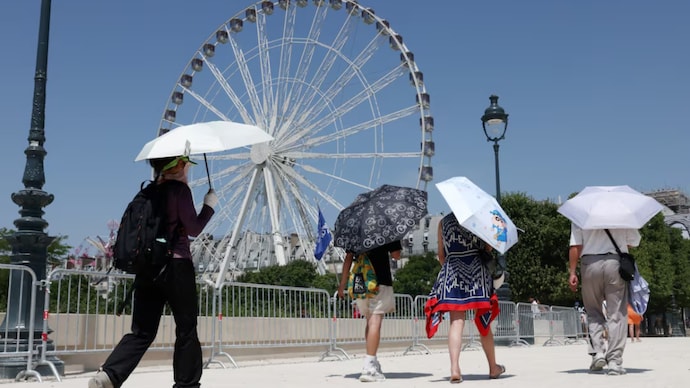
The heatwave's impact has stretched from workplaces to tourist attractions and cultural events. (Photo: Reuters)
A relentless heatwave has gripped Europe, breaking temperature records, disrupting daily life and causing dozens of deaths as millions endure unusually high temperatures. From Britain and France to Italy and Spain, schools have closed, transport networks face disruptions and authorities have issued emergency health alerts as temperatures rise far above seasonal averages. With the mercury crossing 44 degrees Celsius in parts of France and forecasters warning of more extreme conditions ahead, Europe is confronting one of its most severe early-summer heatwaves in years.
France, Britain, Italy, Spain, Belgium, the Netherlands and Switzerland were among the countries hit by the extreme conditions on Wednesday, with temperatures in some areas soaring up to 18 degrees Celsius above seasonal averages.
France recorded its hottest day since weather records began nearly 80 years ago, with temperatures reaching 44.3 degrees Celsius in the southwestern town of Pissos. More than 50 French departments were placed under the highest-level weather alerts as authorities battled power outages, public health emergencies and mounting pressure on infrastructure.
The heatwave has already claimed lives. French authorities reported at least 48 drowning deaths in recent days as people sought relief in rivers, canals and other waterways. Two young children also died after being left in a parked vehicle during the scorching conditions. In Spain, two elderly people died from heatstroke as temperatures climbed above 40 degrees Celsius.
HEAT DOME TRAPS EUROPE UNDER EXTREME CONDITIONS
Meteorologists say the crisis is being driven by a rare atmospheric phenomenon "Omega block" or "heat dome".
The weather pattern traps a large mass of hot air beneath a high-pressure system, allowing temperatures to build day after day while preventing cooler air from moving in.
Experts have compared the current event to Europe's devastating 2003 heatwave, which lasted more than two weeks and was linked to an estimated 80,000 excess deaths across the continent.
The World Meteorological Organisation has repeatedly warned that Europe is warming at more than twice the global average rate, making extreme and prolonged heat events increasingly frequent.
"Heatwaves are becoming more frequent, longer and hotter with climate change," climate scientist Hayley Fowler of Newcastle University said.
DAILY LIFE THROWN INTO CHAOS
The record temperatures have changed everyday life across Europe.
In Britain, Met Office issued only the second extreme heat warning in the country's history. Temperatures approached record June levels, prompting school closures, travel disruptions and public health alerts.
Train operators introduced speed restrictions amid fears that rails could buckle in the heat, while Eurostar cancelled several services between London and Paris.
France's iconic Eiffel Tower reduced visiting hours, while museums and public attractions adjusted operations to protect visitors and staff.
Across the Netherlands, outdoor sporting events were cancelled, public transport services were scaled back and schools shortened classes. In Belgium, a primary school near Brussels moved final examinations to a church in search of cooler conditions.
Switzerland opened air-conditioned cinemas and public spaces to help residents escape the heat.
Even the centuries-old Changing of the Guard ceremony outside Buckingham Palace was modified because of the dangerous temperatures.
FARMERS, WORKERS AND BUSINESSES FEEL THE IMPACT
The heatwave has also begun taking an economic toll.
Hundreds of thousands of poultry birds died on farms in western France after temperatures overwhelmed livestock facilities. Agricultural authorities advised farmers on managing carcasses while awaiting disposal and environmental inspections.
French farmers have shifted some harvesting operations to overnight hours to protect workers and reduce wildfire risks.
Construction companies across Europe have adjusted schedules, with many workers starting before sunrise and finishing early afternoon to avoid peak temperatures.
In Italy, several regions have suspended outdoor work during the hottest hours of the day when severe heat warnings are issued. Similar protections are in place across parts of Spain, Belgium and Poland.
Retailers have reported surging demand for cooling equipment. In Britain, supermarket giant Tesco said sunscreen sales were expected to jump by more than 70 per cent, while sales of ice cream and frozen treats were also soaring.
Fans and portable air-conditioning units have rapidly sold out in several major European cities. Wholesale power prices in France and Germany climbed to their highest levels since January.
NUCLEAR POWER OUTPUT CUT AS ENERGY DEMAND RISES
The heatwave is also affecting Europe's energy system.
France, which relies heavily on nuclear energy, was forced to reduce reactor output because rivers used for cooling reactors became too warm.
Data from French utility EDF showed nuclear production fell by about 4.1 gigawatts, equivalent to roughly 7 per cent of national electricity demand.
Several reactors either reduced production or temporarily shut down because environmental regulations prohibit excessively warm water from being discharged into rivers.
FROM FASHION WEEK TO THE VATICAN, EUROPE SEARCHES FOR RELIEF
The heatwave's impact has stretched from workplaces to tourist attractions and cultural events.
At Paris Fashion Week, luxury brands adjusted schedules to avoid afternoon temperatures. Some shows were moved to early morning as guests and models struggled through the heat.
In Milan, fashion houses handed out fans, umbrellas and cooling devices to visitors attending menswear events.
At the Vatican, tourists queued under blazing sunshine while seeking water and shade around fountains and cafes.
Others opted for "coolcations", abandoning traditional southern European destinations for cooler countries in northern Europe.
Meteorologists say relief may arrive in some western regions over the coming days, but temperatures are expected to remain dangerously high across parts of southern and central Europe.
- Ends
With inputs from agencies
Published By:
Satyam Singh
Published On:
Jun 24, 2026 21:48 IST